







Household Electricity Data May be a Click Away for Illinois Residents
Written By

Share
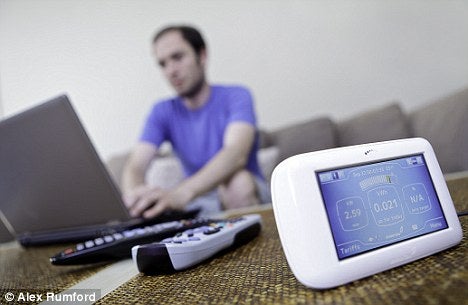
Energy data collected via smart meters could lead to services that improve people’s lives and cut harmful carbon pollution. This is true if customers have easy access to the energy data they need to control their own energy use and reduce their electricity bills – which isn’t always the case.
When the Illinois General Assembly passed the Energy Infrastructure Modernization Act in 2011, local utilities ComEd and Ameren touted their many benefits, including greater control over peak energy load, electric grid resiliency, and cost savings resulting from the energy conservation efforts of their electricity customers. Now that smart meter deployments are well underway, utilities need to enable the many benefits of smart meters by empowering customers with easy access to their own energy data.
To facilitate this endeavor, EDF and Citizens Utility Board (CUB) joined forces to develop the Open Data Access Framework, a first-of-its-kind proposal, which the groups presented to the Illinois Commerce Commission (ICC) on Friday, August 15th.
Knowledge is power
The Framework sets a minimum state regulatory standard to ensure consumers can quickly obtain smart meter data in convenient forms, either directly from the meter or through the internet, a web portal, or mobile applications. This data includes insight for customers into their electricity consumption – how much are they using and when – and could help unlock new third-party businesses and services to help consumers better understand and manage their home energy use. Combined with smart thermostats and other smart appliances, this new framework has the power to transform Illinois’ electricity system.
The framework declares:
- The customer as the principal owner of home energy consumption data, and the utility as the guardian of such data
- Customers should have access to their electricity consumption data – in machine-readable formats – in as short intervals as possible, with 15-minute intervals recommended, but never in intervals greater than one-hour
- Utilities should provide data as quickly as possible to customers – real-time if accessed directly from the smart meter, or within an hour if through the internet
Unlocking energy data
This new standard could make Illinois the first state that requires utilities to adopt, at a minimum, a national standard data access protocol, such as Green Button Connect.
Green Button was developed by the energy industry as a national voluntary standard to ensure consumers have timely access to their own energy data in consumer-friendly and computer-friendly formats. The first iteration, Green Button Download, provided a common standard for customers to “click a button” and download smart meter data from a utility website. The next voluntary standard, Green Button Connect, has been adopted by a handful of utilities and allows customers to request their meter data be shared directly with a third-party software or hardware provider in order to present it to them in new and unique ways. Green Button builds on policy objectives laid out in the Obama Administration’s Blueprint for a Secure Energy Future and Policy Framework for the 21st Century Grid.
Access to this kind of data is a key precursor for an ambitious agenda that promotes investments in demand response, energy efficiency, and clean distributed generation. EDF and CUB hope the Open Data Access Framework will provide guidance to public utility commissions throughout the country on how to set a standard for customer access to their own data, and create a consistent, national regulatory model to enable third-party software and hardware providers to scale to all markets.
The future of real-time, automated and interactive energy technologies is here – all we have to do is unlock the data.