







Marine Resources Economics Grants Award to Authors of Study on Bering Sea Crab Fishery Catch Shares
Posted: in Pacific, Science/Research
Written By

Share
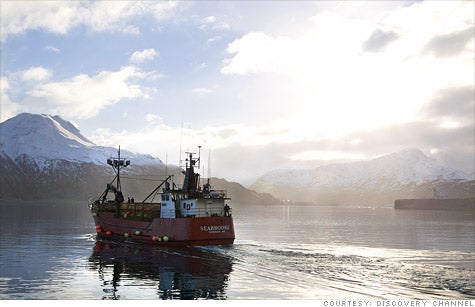
Marine Resource Economics announced Joshua K. Abbott Brian Garber-Yonts, and James E. Wilen as recipients of the 2010 Dr. S.-Y. Hong Award for Outstanding Article. The peer-reviewed article, Employment and Remuneration Effects of IFQs in the Bering Sea/Aleutian Islands Crab Fisheries found that the majority of working crews in the Bering Sea red king crab and snow crab fisheries benefited in the first three years of catch share implementation.
Abbott, an Assistant Professor of Environmental and Resource Economics in Arizona State University’s School of Sustainability, wrote an EDFish blog post on the study in 2010. According to the study, crab fishing in the Bering Sea/Aleutian Islands became more productive following catch share implementation. Crab fishing also became more lucrative for crews – seasons lengthened, employment in crew hours and daily crew pay remained stable, and seasonal crew pay increased substantially.
In Abbott’s 2010 EDFish post on the study, he wrote:
“Catch share management has also substantially changed the nature of a fishing job. Since each vessel knows its annual allocation of crab prior to the fishing season, the prospective wage is far less uncertain to crew than in the derby fishery where luck and skipper skill once played a large role in one’s prospects. Risk to life and limb has also decreased considerably, as skippers avoid fishing in the worst weather and often work their crew for fewer hours in a day.
While these fisheries are still adapting to catch shares, the negative scenarios often levied at this catch share program have not materialized. Rather, the early evidence is that catch shares have provided longer, safer, more reliable jobs to fishermen that are often more lucrative than those available before the management change.”
In place of the boom and bust cycles that were frequent under derby seasons, crab fishing is now stretched out over longer and safer seasons, with reduced financial risk and less risk to human life. To read the full details of the study, click here.