






From Field to Border: How Young African Farmers Are Learning to See Water Differently
Posted: in Global
Written By

Share
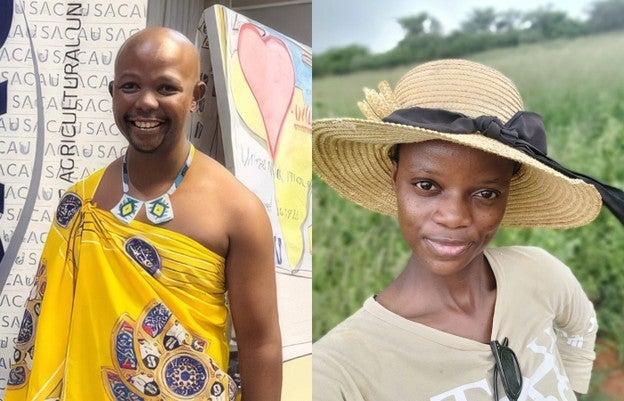
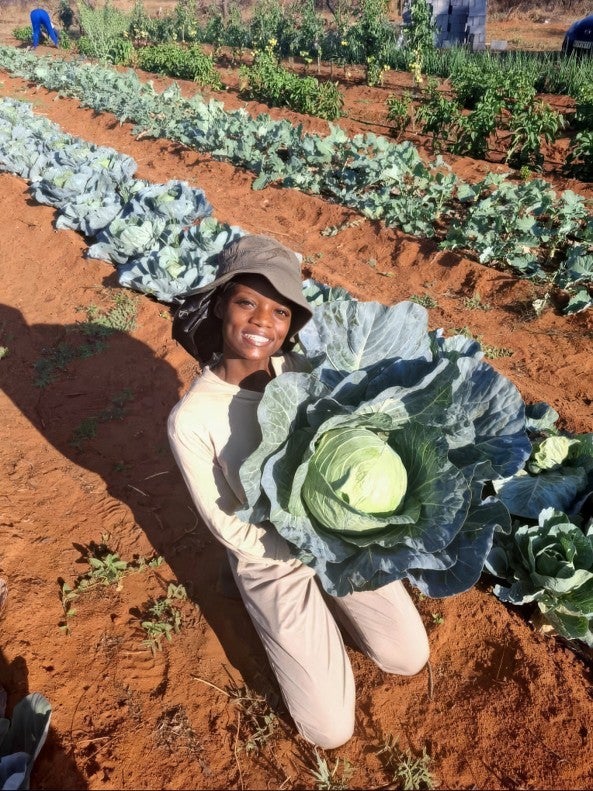
Thobo Marcelino is a young farmer with an analytical eye. A food scientist by training, the 21-year-old is keen to understand and optimize each of the systems that feed her nascent organic horticultural business in Botswana. Water has her attention. “We’re wasting a lot of water,” Marcelino admits. “Not because we just want to. Because we don’t really understand how we’re supposed to take care of our systems.”
Marcelino is not alone in her frustration. Bandile Marrime, a young farmer and agricultural union leader from Eswatini, shares a similar desire to get a better handle on his farm’s water use. “We over-irrigate sometimes,” Marrime reflects, “because we have no understanding of how much the plant needs.”
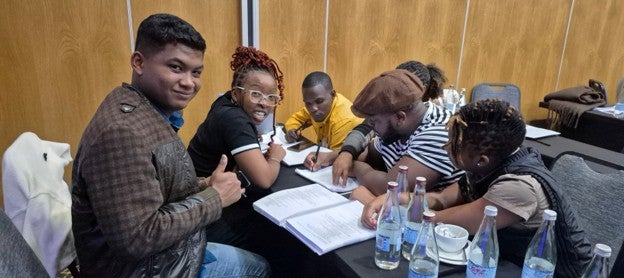
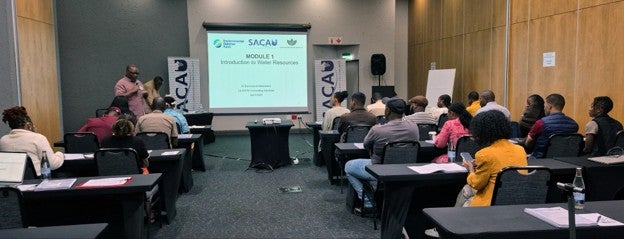
I got a chance to both hear about these challenges and a desire for more water literacy up close earlier this year, when EDF partnered with the Southern African Confederation of Agricultural Unions (SACAU) to create a water literacy course for young farmers from 10 countries. For the past four years, SACAU has operated a youth leadership program that trains around 20 representatives from national agricultural departments across southern Africa.
This year is the first time the program included a water focus, which EDF helped SACAU develop by adapting learnings from our Water Leadership Institute in the western United States into a water literacy module tailored to southern Africa’s challenges. Marcelino and Marrime joined 18 other young farmers to dive head first into five days of modules covering everything from hydrological science to transboundary water governance.
As the training drew to a close, we asked participants what improved water literacy might mean for their daily work. What, exactly, does it help a young farmer see?
Seeing the field
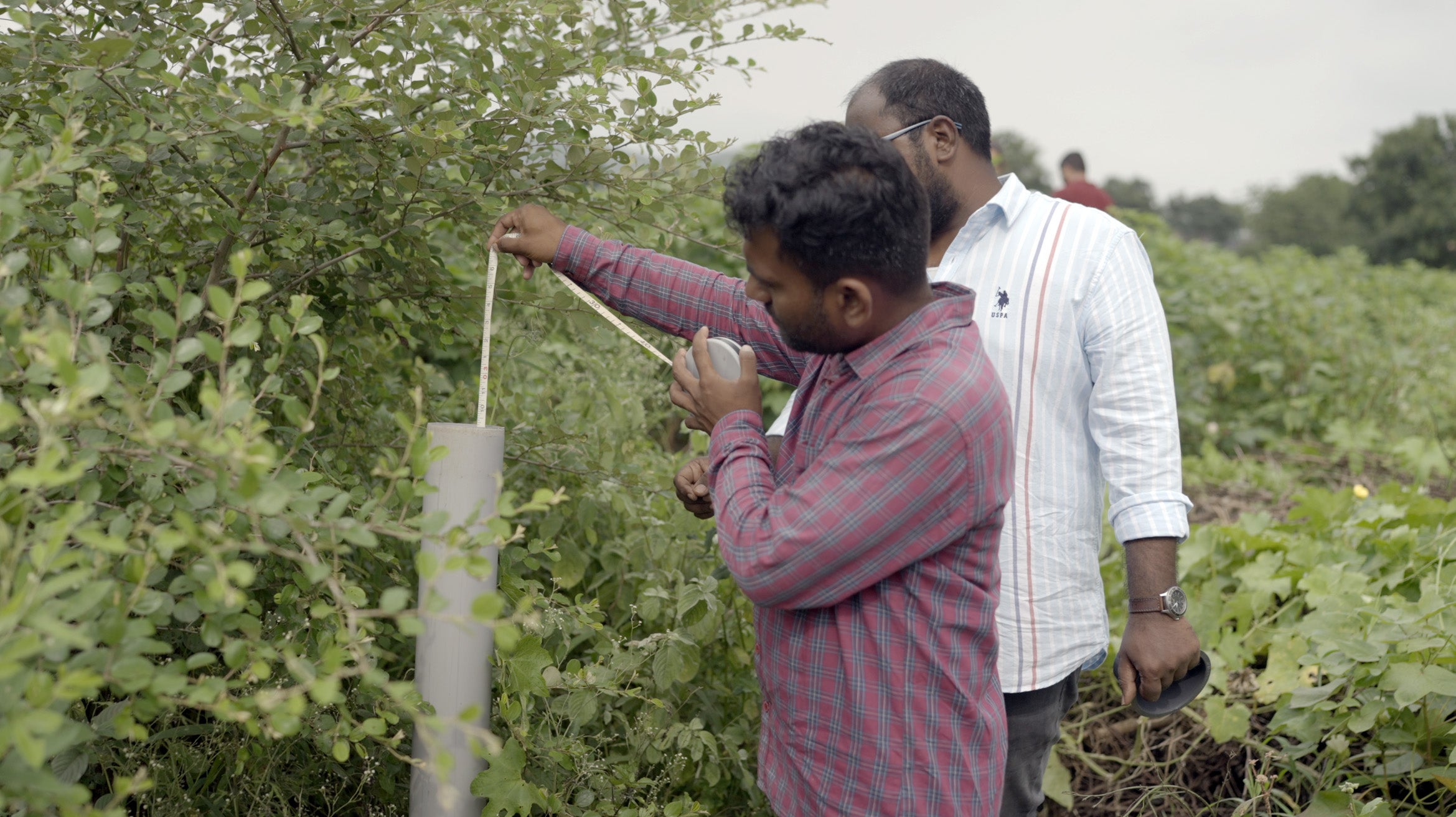
For young digital-native farmers like Marcelino and Marrime, seeing water better means harnessing new data options. Nearly all the participants expressed a desire to better access and understand dynamic, field-specific information on water and soil. As Marrime put it, the training showed “you can use technology to see how much water you’re putting in the ground, which in fact tells you how much water you should be putting in the ground and how much the plant needs.”
To give a sense of the possibilities, I shared EDF’s experience co-developing OpenET and the Groundwater Accounting Platform. OpenET draws on satellite data to provide near-real-time information about crop water use at the field level; the Groundwater Accounting Platform is an open-source tool that helps growers, landowners and water managers track groundwater availability, use and budgets in near real time. While these specific platforms aren’t yet available in southern Africa, remote sensing and digital water management applications are expanding rapidly worldwide, and we spent a significant portion of our discussions on how accessible, dynamic data can transform practices at every level, from field to transboundary basin.
Seeing the well next door
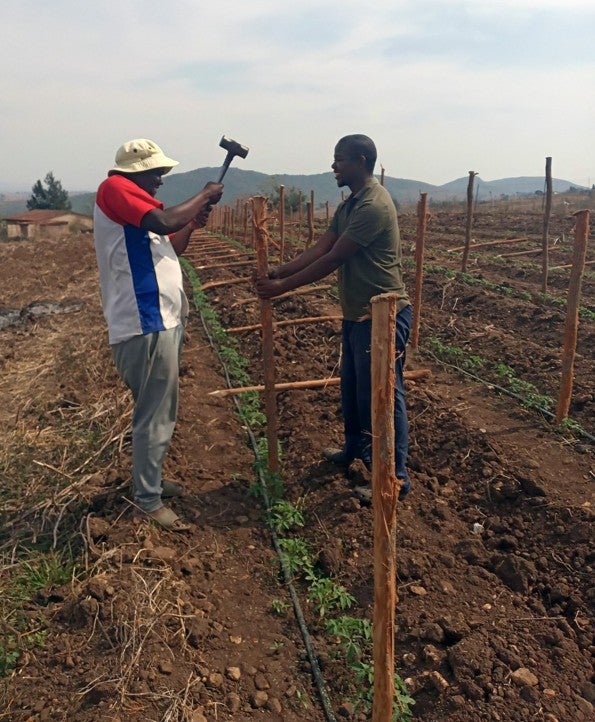
Better data also lets a farmer see past the fence line. The wells and boreholes that feel like private infrastructure are often drawing on a single shared aquifer — a connection that stays invisible until something goes wrong.
For Marcelino, the training made it visible. “We’re over-abstracting from our borehole, which is something I honestly didn’t think was a problem until I realized during our module that the way we’ve been using water on our farm has also affected our neighbor’s farm,” she says.
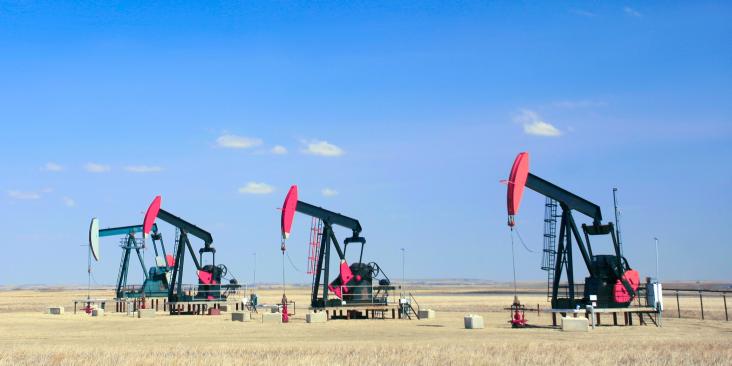
Similar sentiments were echoed by other participants. One described how nearby mines extract groundwater from the same aquifer farmers rely on, forcing everyone’s boreholes to chase the water deeper. The result is a slow, shared drawdown that no individual well owner can see on their own. Learning to see your impact on your neighbor’s well is the first step toward managing a shared natural resource instead of a private supply.
Seeing across the border
Widen the lens again and you reach the institutions, rights and borders that decide how shared water gets divided. The region’s many international boundaries cut straight across key watersheds and groundwater basins, and participants were candid about the institutional and governance constraints that make community-level innovation an uphill task.
But the training also surfaced a sense of stewardship that governance depends on. “Before, what I thought is that water is a God-given resource that anyone can use the way that they like,” Marrime reflects. “But we learned about water governance and how it’s important for other countries to get water as well, and also for us to get water — it’s a shared resource.” He’s already carrying that conversation from national forums back home to young people and fellow farmers in his community. In doing so, he demonstrates the kind of stakeholder coordination that good water governance requires.
Seeing water everywhere
For youth interested in a water-secure future, many of these challenges and ambitions are not confined to southern Africa. The same hunger and the same work of learning to see water differently is showing up wherever rural communities face an uncertain water future. It’s what drives EDF’s Water Leadership Institute in the U.S., whose most recent cohort brought together graduates from both sides of the Arizona-Mexico border to manage water they visibly share. It’s behind our work supporting rural water-sharing initiatives in India, and behind our global push to make groundwater, the most invisible resource of all, something communities can finally see and account for.
For Marrime and Marcelino, that shift is the whole point. “Before, my picture was different,” Marrime says. “I came in like a blank canvas. I got to see water in a different picture.” Marcelino feels water literacy training “opened my eyes to so many things that we’ve been doing wrong that we need to work on and improve, so that at the end of it all, we can all benefit properly and take care of our resources.”
Building this water literacy program in partnership with SACAU is critical to me. Africa has the youngest population in the world and agriculture remains a major source of jobs for young people across the continent. The program’s graduates are returning home to help shape the future of farming in their communities. As Ishmael Sunga, SACAU’s CEO, puts it, “Don’t sell agriculture to the young, sell opportunities.” I don’t believe we can be fully transparent about those opportunities if we aren’t accounting for water and how water availability will shape the future of agriculture for Africa’s youth.