








New Mexico’s water is running out, but these communities aren’t waiting
Written By

Share
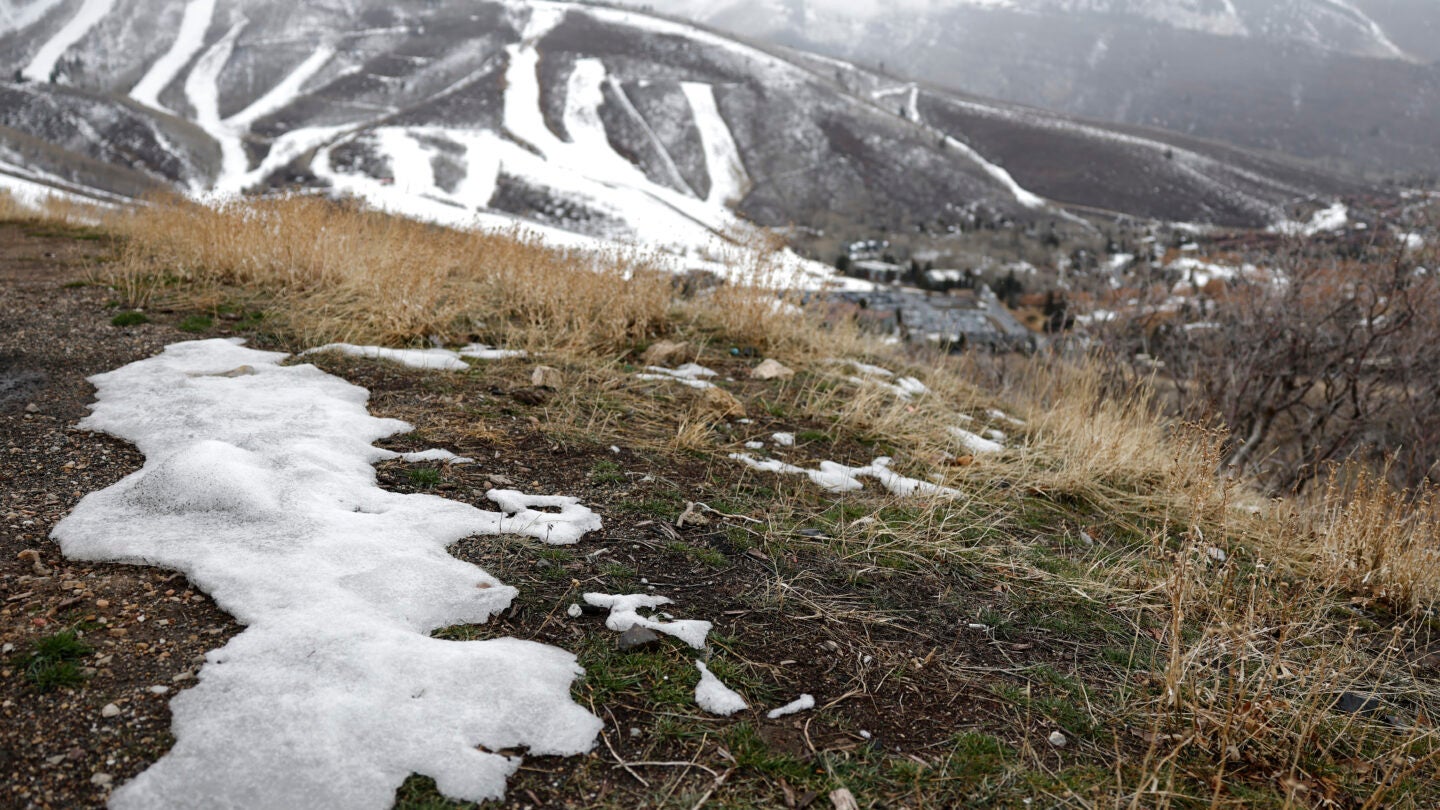
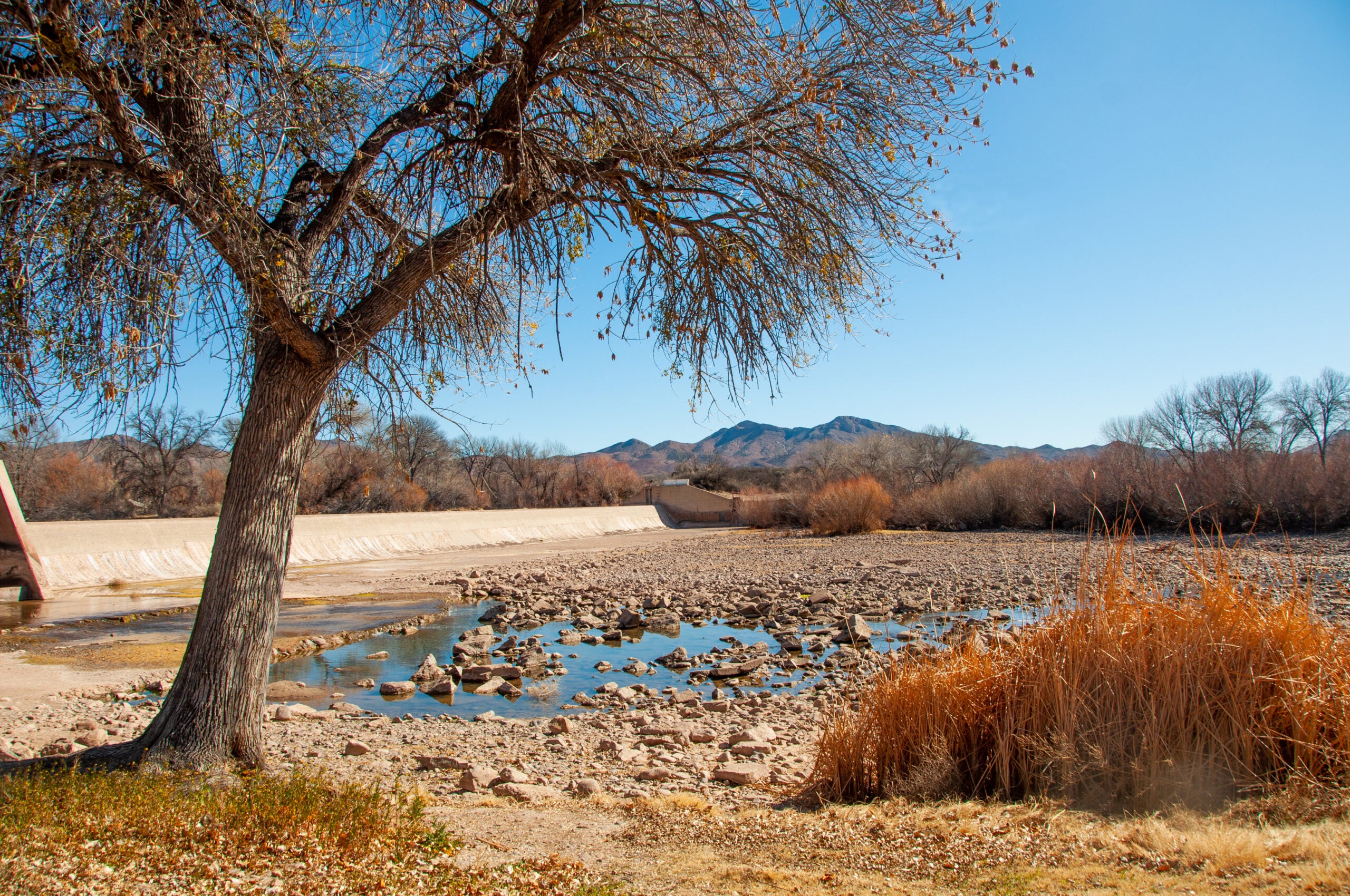
New Mexico is on the front lines of climate change. Temperatures are rising, aridification is accelerating and water supplies are drying up in some regions. As river flows decline, communities are turning to groundwater to fill the gap. But in some areas, that underground water supply is also falling to record low levels.
Our aquifers provide 50% of New Mexico’s total water supply and drinking water to 78% of the state’s public water systems. Where we have groundwater data, we know these vital supplies are declining.
The New Mexico Groundwater 360 Report, published in January by the New Mexico Groundwater Alliance, documents these challenges in depth and highlights a few communities that are already implementing solutions. At a recent EDF-hosted webinar, three of the report’s co-authors shared their solution stories. Their approaches are different, but each one is building local groundwater resilience.
Eastern New Mexico: Paying farmers to stop pumping
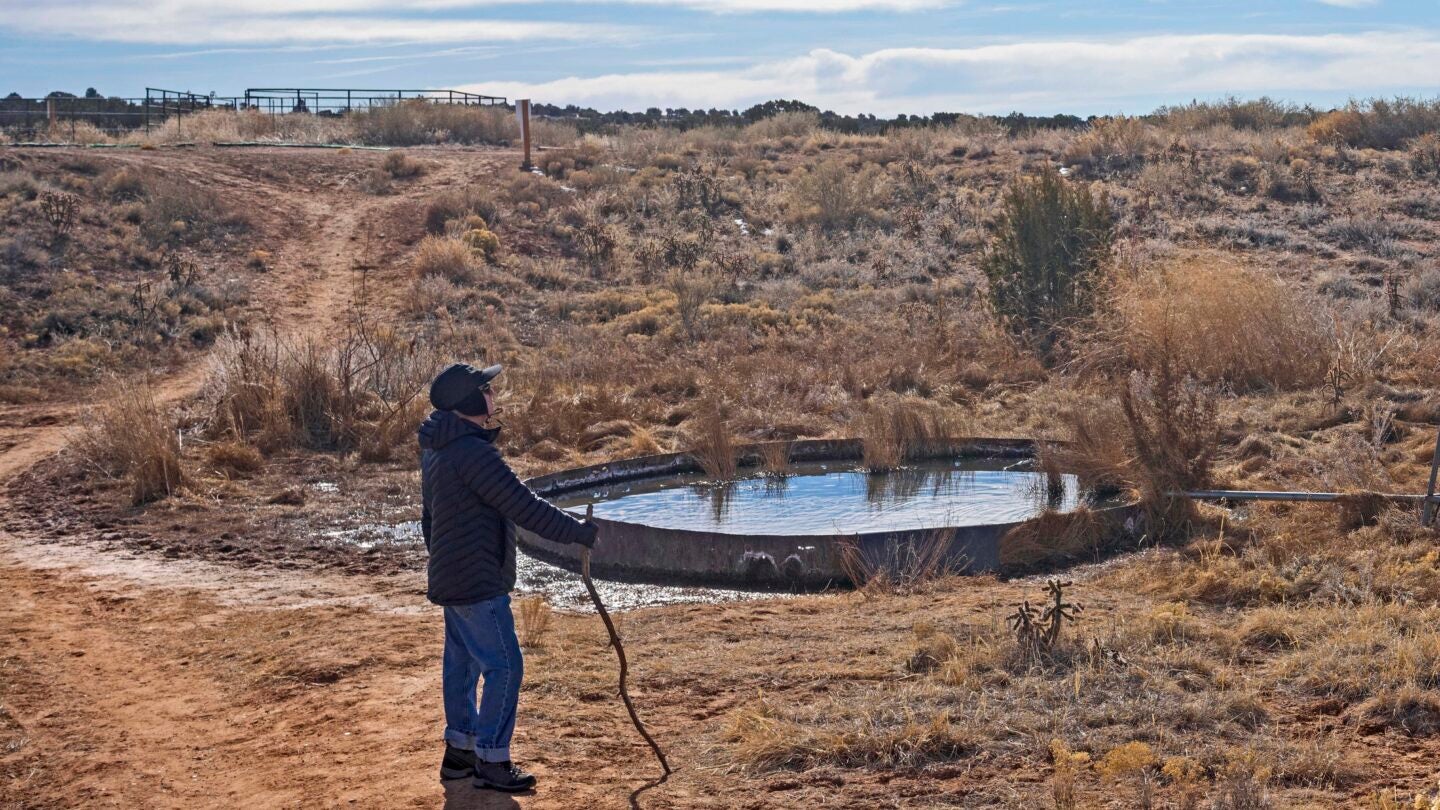
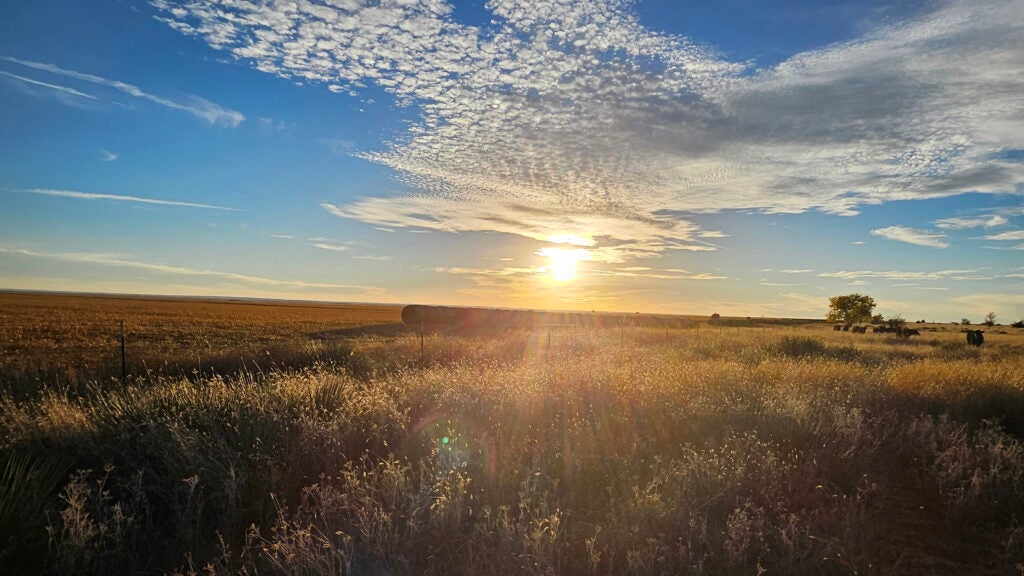
Ten miles from the Texas border, the communities of Clovis, Portales and Texico face a situation that Ladona Clayton describes as “a matter of survival.” There are no rivers, no streams, no backup water supply. The Ogallala Aquifer is their only source of water, and it is in fast decline.
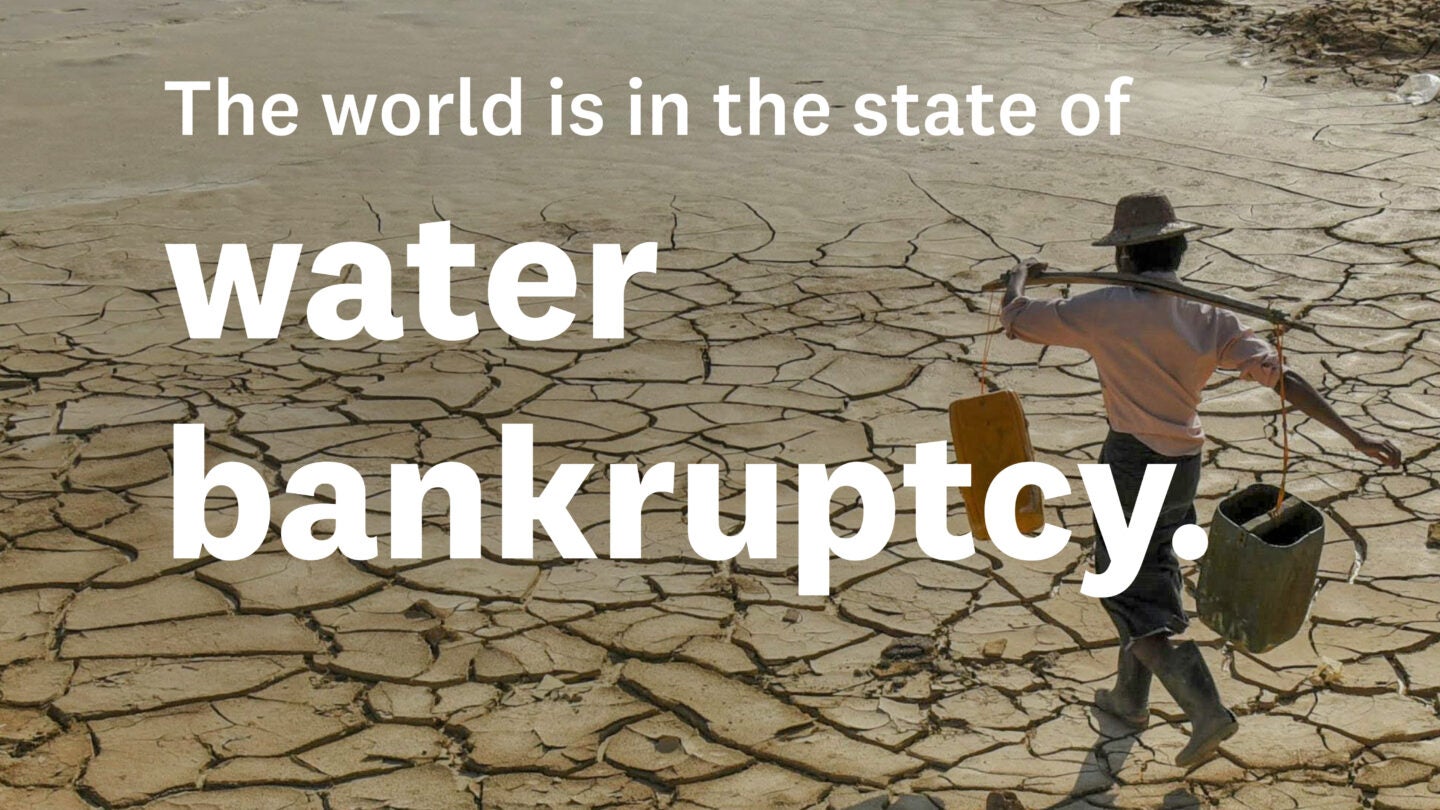
Since 2018, more than 20% of the groundwater in the area has been used up, with irrigation for farming accounting for roughly 95% of all groundwater use. To make matters worse, groundwater recharge, as Clayton puts it, is “negligible.” Projections in the Groundwater 360 Report caution that without intervention, Clovis could run out of water in the next five to10 years.
As founding executive director of the Ogallala Land and Water Conservancy (OLWC), Clayton has built a community-driven, two-phase model to address the crisis before it turns into a complete groundwater bankruptcy. In the first phase, the conservancy enters voluntary water-right lease agreements with local farmers, who are compensated annually to stop irrigation.
“This is a matter of survival for us. Our producers have stepped up voluntarily — there’s no eminent domain, there’s no forcing anyone. This is strictly voluntary.”
— Ladona Clayton, Ogallala Land and Water Conservancy
The second phase focuses on long-term protection through permanent groundwater conservation easements. These easements leave 80% of the conserved groundwater untouched as a strategic reserve, and the other 20% can be used by landowners for livestock, domestic use or potential sale to support municipal needs during drought. Clayton’s team also supports farmers through the transition, investing in dryland cropping, regenerative agriculture, and restored wetlands so that retiring irrigation wells doesn’t eliminate farming.
“Once it’s gone, it’s gone,” Clayton said of the groundwater. But her community is proving it doesn’t have to come to that. Over four years, the program has conserved nearly 37,000 acre-feet of groundwater and retired 56 irrigation wells. New Mexico Tech monitoring has found that water levels have been rising for two consecutive years, including in city of Clovis municipal wells that previously had been declining for years.
Roswell: 95 years of getting groundwater right
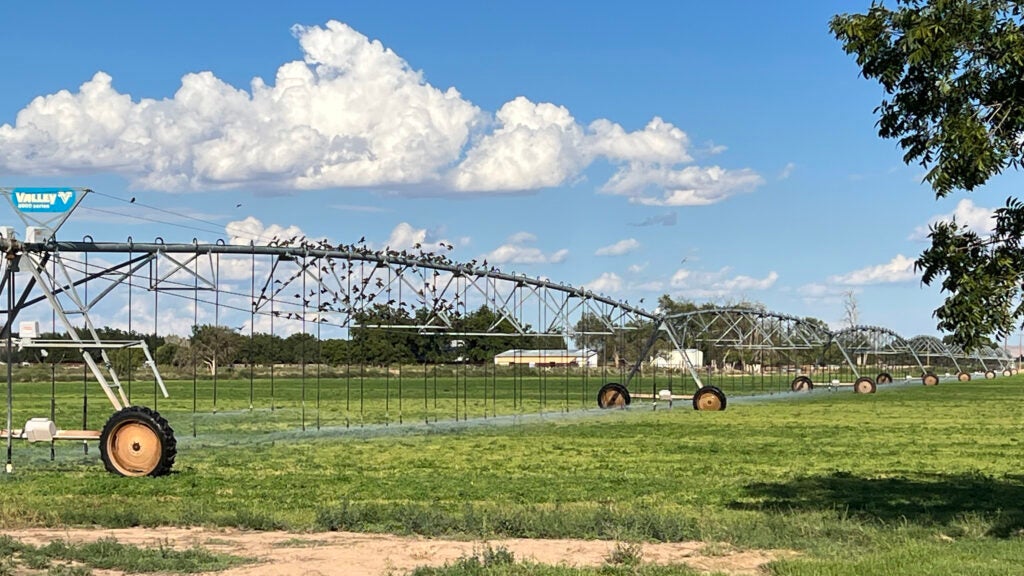
Not every groundwater story in New Mexico is a response to a crisis. The Pecos Valley Artesian Conservancy District (PVACD) has been engaging in groundwater management for nearly a century. Aron Balok, the district’s superintendent, says the reason management works in his district comes down to a few fundamentals, and a mantra he’s had printed on t-shirts: “You can’t manage what you don’t measure.”
Every production well in the district with an associated water right carries a PVACD-owned meter. The district funds the state engineer’s water master to track and report total diversions, so they know exactly how much is coming out of the aquifer at any given time. The district also commissioned a hydrological survey of the basin in the late 1920s, before this active management even began.
Balok is a strong believer in the prior appropriation doctrine. “It’s an exhaustive, expensive process, but it’s an extremely fair process,” he says. When the PVACD wants to reduce pumping, it avoids fighting landowners over restrictions by instead purchasing valid water rights and removing them from production.
Because groundwater and surface water are connected, the district manages them together. “If you’re managing one, you absolutely should be managing the other,” Balok said.
The PVACD is governed by a board elected by the community it serves and funded through a local property tax. That shared investment, Balok argues, is part of what makes the district work. “I think it’s a biological impossibility for you to not be a water user,” he says.
“Everybody needs water and we’re all invested in that,” Balok says. Nearly a century in, the results speak for themselves.
Outside Santa Fe: When the well runs dry
In July 2020, the 68 residents of Cañada de los Alamos experienced what water experts call “Day Zero.” Their only water source, a 30-foot infiltration well drilled in 1958, went dry.
Ramón Lucero, a regional field manager with the nonprofit Rural Community Assistance Corporation (RCAC), worked closely with the community through the crisis. The community spent its entire $44,000 in savings hauling water from Santa Fe County over a ten-month period. Monthly bills shot up to $720 per household, which is roughly ten times the statewide average for comparable systems.
“About 86% of community water systems across the state only have one well, so a lot of them are really vulnerable to the drought conditions that we’re currently in.”
— Ramón Lucero, Rural Community Assistance Corporation
Thanks to a combination of emergency and long-term funding, including $335,000 from the State Board of Finance and $566,000 from USDA Rural Development, Lucero’s team helped the community drill a second shallow well, rehabilitate the original infiltration gallery and upgrade its storage infrastructure. Today, the system produces about two gallons of water per minute, which is enough for a community that has come to prioritize conservation. Unfortunately, connecting to Santa Fe County’s water system, which could serve as a permanent solution, would require another $12 million that hasn’t yet been secured.
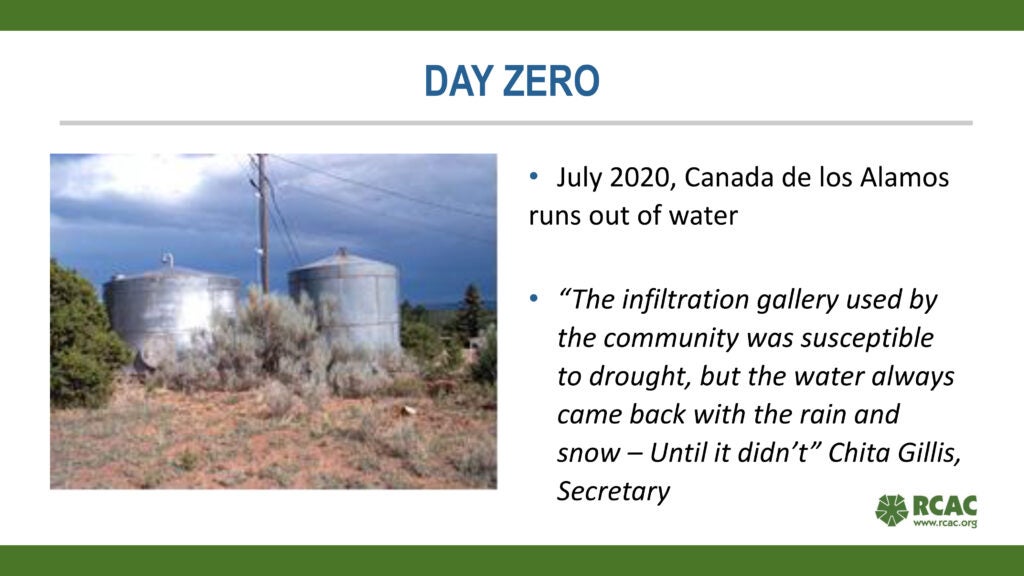
Cañada de los Alamos is far from alone. As outlined in the Groundwater 360 Report, New Mexico has approximately 625 community water systems, and 95% of them serve fewer than 3,300 connections. These smaller communities carry the same regulatory requirements as larger ones, like the city of Albuquerque, but only have a fraction of the staff and financial resources.
Lucero’s lessons from this case are urgent and direct: Every community needs a secondary water source, regularly monitored groundwater levels, and organizational capacity before a crisis hits, not after.
Three communities, three different problems, one message
All of these examples in New Mexico are very specific to localized water conditions. But each provides an example of how the community has come together, voiced their values, and created systems they support in one way or another to locally manage their resources. The New Mexico Groundwater 360 Report is a call to action, and these three communities are showing what answering that call looks like.
Climate change projections estimate a 25% to 30% reduction in surface water availability in New Mexico by 2050, and aquifer declines are already reaching crisis levels in some areas. The urgency for proactive and comprehensive groundwater management could not be clearer.