








3 ways Oregon uses data to improve water management
Written By

Share
Across Oregon, growing demand for water and dwindling supplies are converging to make good water data more important than ever. Oregon’s leaders have taken important steps to improve the state’s ability to collect, analyze and distribute high-quality data on water supply and demand, but as budgets tighten, some of that progress is at risk.
One of the most effective ways of understanding water use is by measuring evapotranspiration (ET), which is the water consumed by plants as they grow. ET data is a core component of a water budget because it often represents the largest loss of water in a basin.
ET can vary significantly across landscapes and through time, and errors in estimating the ET part of the water budget can have major implications for short-term management and long-term planning. Historically, ET data has been too costly to produce and limited for the scale needed for decision-making.
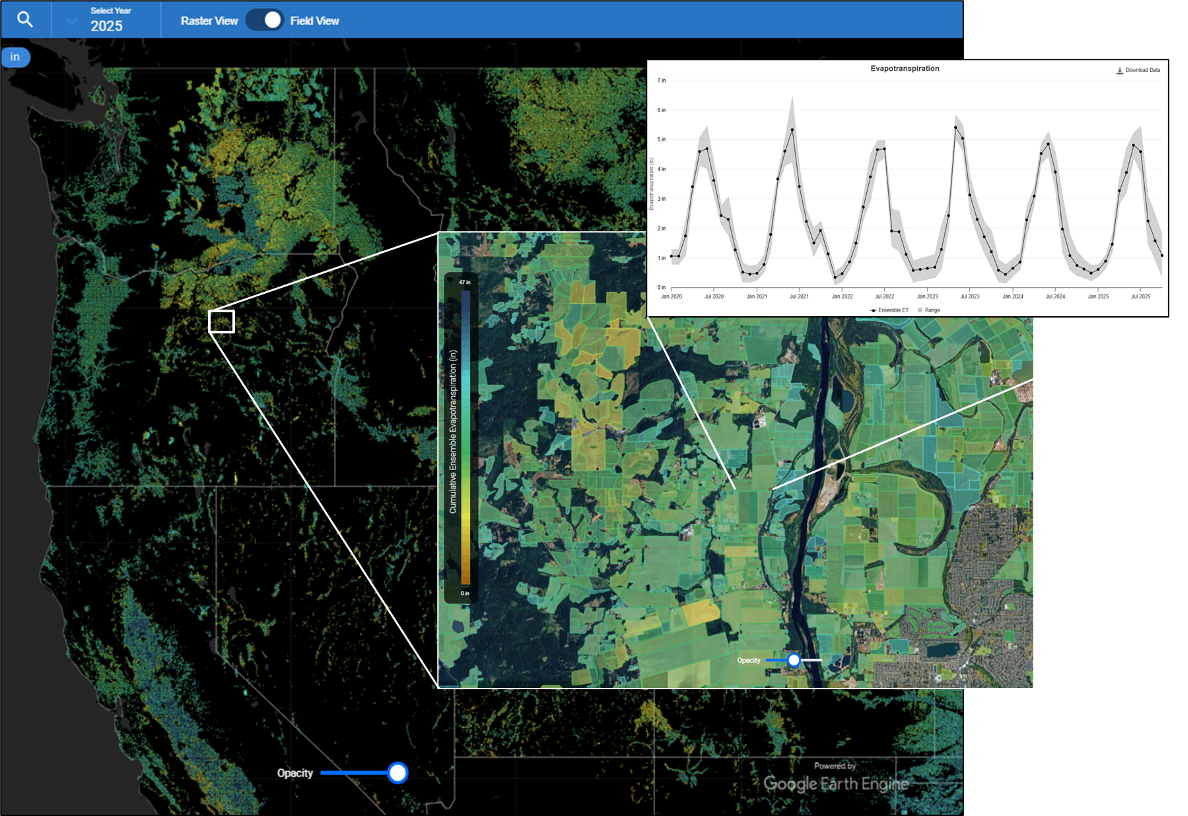
Enter OpenET: an online platform that uses satellite imagery to deliver transparent, scientifically rigorous ET data from the field to watershed scale. For Oregon, OpenET means water managers, farmers, researchers and policymakers can have a shared source of information about how water is being used on the landscape.
Three ways OpenET is advancing data-driven water management in Oregon
1. Informing groundwater budgets and community planning efforts
Groundwater budgets are a critical foundation for sustainable water management. As Oregon develops basin-by-basin accounting of water availability (supply) and use (demand), these budgets will calculate how much water is entering and leaving a basin and highlight where imbalances exist.
The Oregon Water Resources Department (OWRD) plans to use OpenET in basins across the state, including Harney, Walla Walla, Deschutes, Klamath and Fifteenmile. By using ET data across multiple studies and planning processes, OWRD is improving understanding of groundwater and consumptive water use (water that is removed from a system and can no longer be used). This much-needed data helps communities with local land use and water planning and management efforts. More information on how OWRD plans to use ET data is described in this report.
2. Supporting water conservation in the Harney Basin
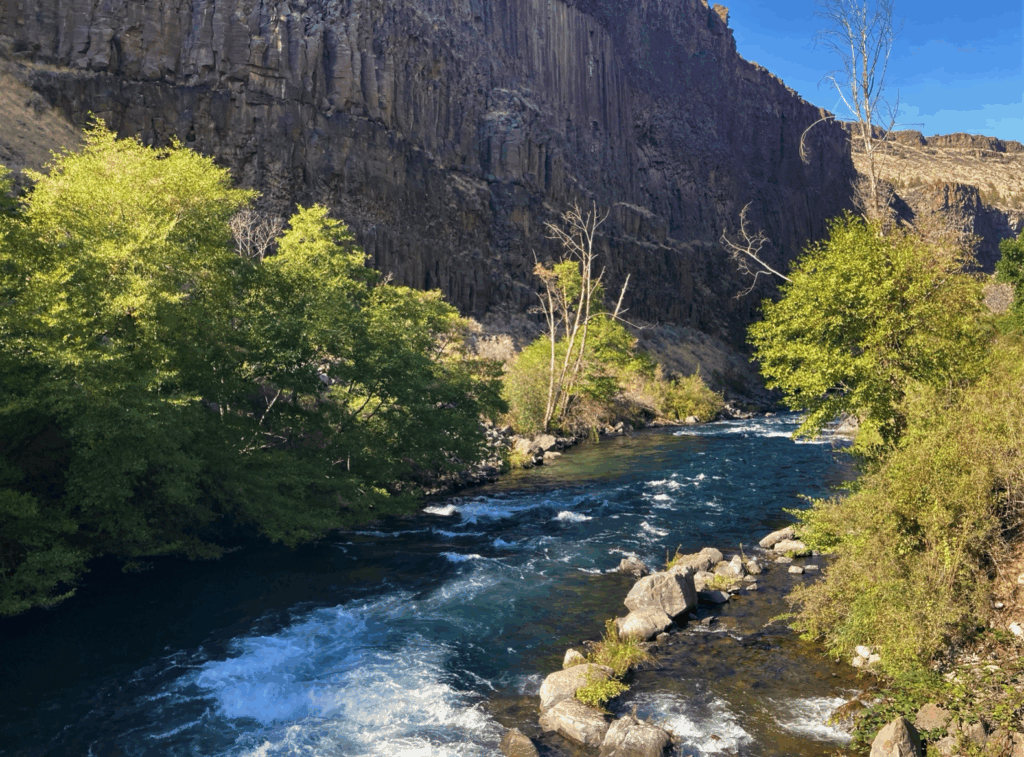
In the Harney Basin, groundwater declines have created urgent challenges for farmers, rural residents and groundwater-dependent ecosystems. The Harney Basin Conservation Reserve Enhancement Program (CREP) is designed to address those challenges by compensating farmers who voluntarily reduce their groundwater use.
OpenET plays an important role in this effort by providing independent data on historic and current crop water use that can be easily accessed by both water managers and farmers. This data helps establish credible baselines and a transparent method to verify groundwater reductions.
3. Advancing innovation for on-farm irrigation management
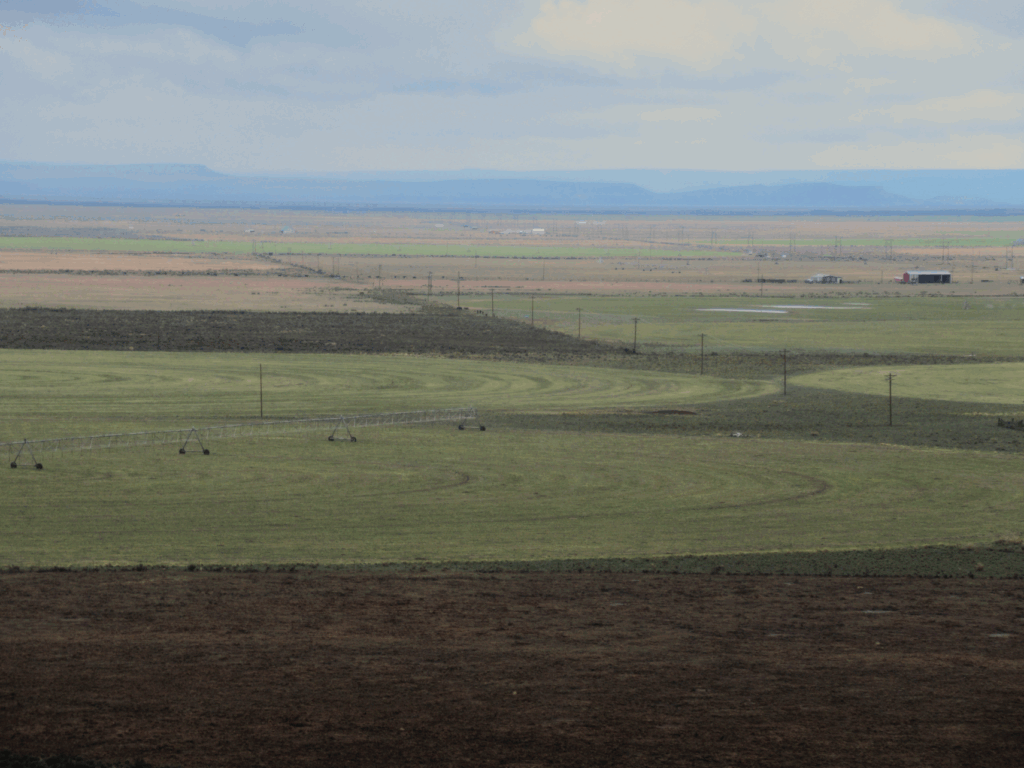
Oregon State University (OSU) researchers are using OpenET data to improve understanding of agricultural water use. Because OpenET data is open and standardized, it allows researchers to spend less time assembling basic datasets and more time generating insights that can support producers.
Just this month, OSU submitted a funding proposal to lead development of an open-source tool that integrates OpenET, weather and field data into existing on-farm irrigation tools. The project aims to improve irrigation timing and bolster drought response across diverse crops, supporting science-based water management as supplies become more limited.
Protecting investments in data and science is essential for a sustainable water future
Oregon is not alone in grappling with water scarcity. Across the West, OpenET is being used to support groundwater sustainability plans, voluntary conservation programs and on-farm water management. More applications for forest and plantation management are also expected to be developed now that OpenET is providing data across 48 states.
Modern water management requires tools that are transparent, accessible and actionable. OpenET meets those criteria. It also lowers transaction costs; reduces conflict over basic facts; and enables more targeted, cost-effective water investments.
Oregon’s continuing investment in statewide OpenET data is an investment in informed decision-making. Policy decisions made during the 2026 legislative session will ripple into the state’s water future, and it is more important than ever to leverage our best water tools to find the best solutions to ensure we have enough water now and for decades to come.