






Is the western U.S. experiencing a “water bankruptcy?”
Posted: in Agriculture, Arizona, California, Colorado River, Drought, Global, Groundwater, India, Land Repurposing, Texas
Written By

Share
Because March 22 was designated World Water Day by the United Nations, I thought it made sense to revisit the U.N.’s recent report, “Global Water Bankruptcy: Living Beyond Our Hydrological Means in the Post-Crisis Era,” which I read during a trip to Dakar for planning meetings for the U.N. Water Conference in December.
With much of the EDF Water Team’s work concentrated in the western United States, I inevitably read the report through a western water lens. What struck me most is that some parts of the West have already begun adopting the report’s recommendations, such as California with the Sustainable Groundwater Management Act (SGMA), while others seem to be avoiding them, such as the Colorado River Basin.
Despite its dire diagnosis, the report was still inspiring with its calls for transformative institutional frameworks and a new global water agenda, using the 2026 and 2028 U.N. Water Conferences as milestones to reset how water is governed worldwide.
I agree that many water systems have crossed critical tipping points that require fundamentally different governance to prevent further collapse. But I couldn’t help thinking that waiting until 2028 to take meaningful action on a global water agenda is too late. Communities are already seeing groundwater wells go dry. Water levels in Lake Powell are falling to perilously low levels that could threaten energy generation and water deliveries. Corpus Christi, Texas, could run out of water next year. In India, where EDF also works, farmers have committed suicide under the crushing pressure of debt associated with drilling deeper bore wells. It’s clear that we need a new actionable global water agenda now.
Water bankruptcy — and a fresh start
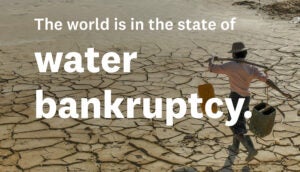
The U.N. report introduces the term “water bankruptcy” because the often-repeated phrase “water crisis” no longer adequately describes the situation we’re in.
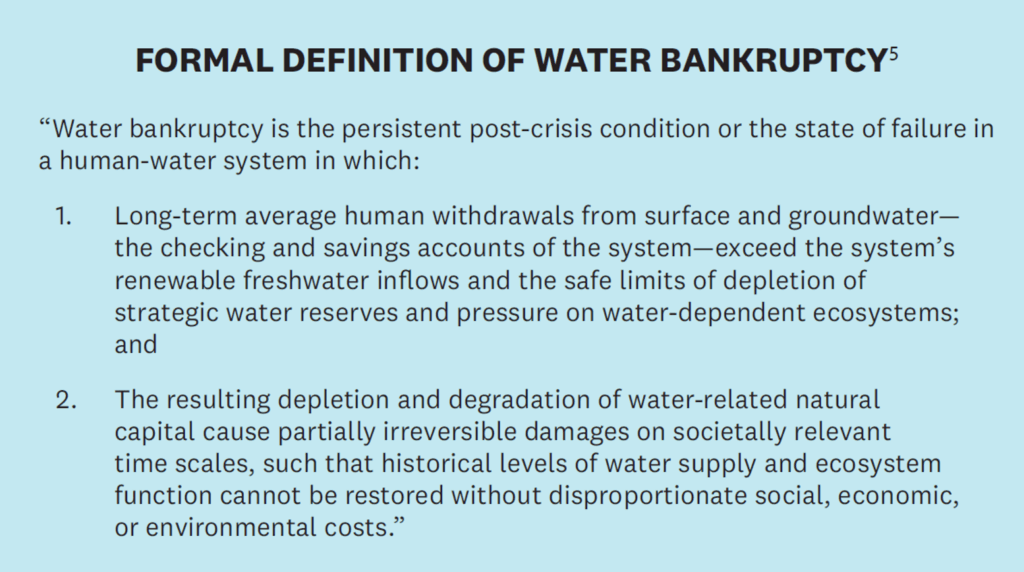
In many basins, aquifers and ecosystems, the combination of chronic overdraft, ecological degradation and crossed tipping points signals a transition to water bankruptcy: a persistent post-crisis condition in which water use has exceeded renewable inflows and safe depletion limits, and the old normal cannot be restored.
Crisis management is designed to absorb a shock and return a system to something close to its previous state — if only we can survive this drought, repair this dam or wait out the next dry year. Bankruptcy is different.
In finance, bankruptcy is declared when spending beyond one’s means has accumulated into unsustainable debt. While it’s an admission of failure, it is also the first step toward a fresh start: claims are written down, expectations are reset and a more realistic balance sheet is negotiated to prevent further collapse.
Declaring a water bankruptcy serves a similar function. It creates the political and institutional space to move beyond the illusion that past conditions can be restored, and instead design governance frameworks to prevent further collapse.
Similarly, declaring a water bankruptcy is the first step toward a fresh start with improved governance frameworks aimed not at returning to the baseline but preventing further collapse.
Anthropogenic drought
While the details vary by geography, the report highlights two key drivers of water bankruptcy that are all too familiar in the western U.S.
The first is “anthropogenic drought” — chronic water deficits driven largely by human activity rather than natural variability alone. Overallocation, groundwater depletion, land and soil degradation, deforestation, pollution, and climate change all contribute. Western North America is explicitly named among the regions experiencing this kind of drought.
More than 1.8 billion people were living under drought conditions in 2022–2023. Drought-related damages total roughly $307 billion per year, and that figure is likely low as it predates the deadly Los Angeles fires.
Inertia and denial
The second pathway is institutional inertia and denial. Even as evidence mounts, decision-makers continue operating under the assumption that the old normal will return. Water rights, subsidies and infrastructure investments reinforce overuse, while politically difficult decisions about demand reduction, reallocation and adaptation are postponed.
But declaring water bankruptcy opens the door to resetting expectations, renegotiating claims and designing arrangements that are realistic and just, the report argues.
This pattern closely mirrors California’s experience before the severe 2012–2016 drought, which ultimately forced lawmakers to confront groundwater overdraft and its very real impacts and pass historic groundwater legislation. Today, groundwater sustainability agencies are doing the difficult work of setting allocations and developing water budgets to balance groundwater demand and supply.
Other states such as Arizona and Texas that were once ahead of California in managing groundwater are now facing the limits of their patchwork approaches amid the arrival of large, new water users.
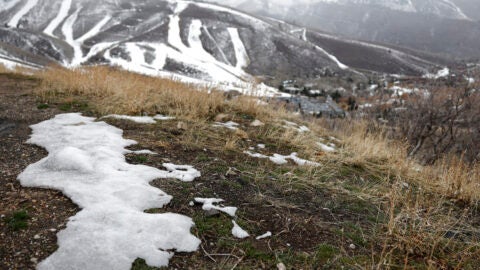
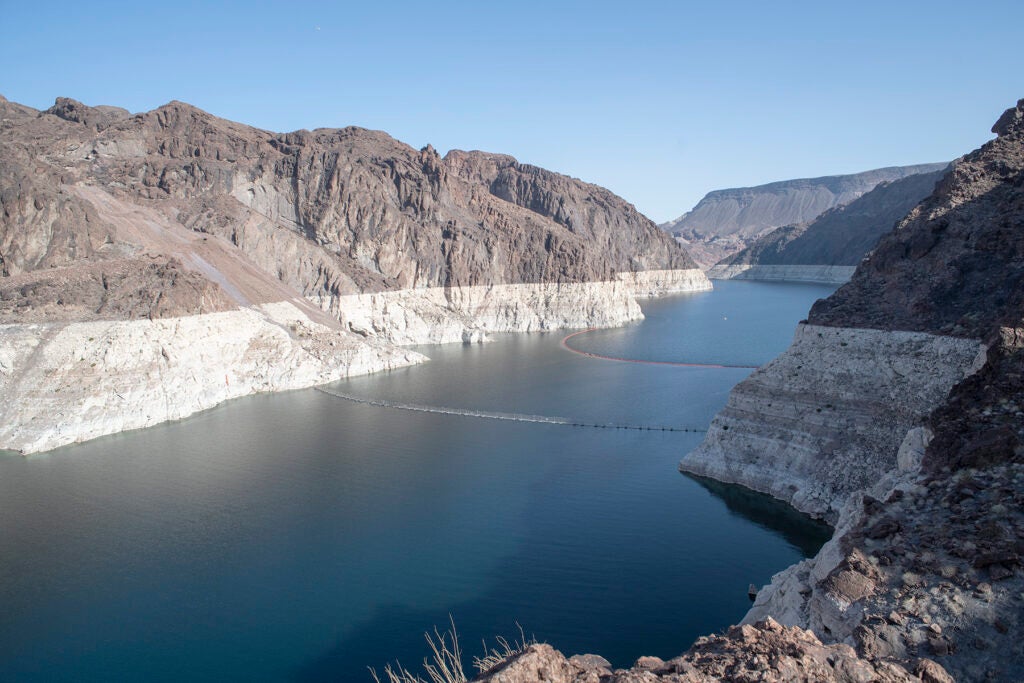
In the Colorado River Basin, where Lakes Mead and Powell remain at historically low levels and many areas are suffering a snow drought, it’s impossible to assume the old normal will return. Yet the inability to reach an agreement on new river guidelines suggests that some leaders continue to avoid politically difficult decisions.
How do we respond to water bankruptcy?
The report diplomatically concludes that “existing governance and agendas are no longer fit for purpose.” In many basins, the sum of legal water rights, informal expectations and development promises far exceeds today’s hydrologic reality.
The report highlights that carefully transforming agriculture — the largest global water user — as central to any solution. Roughly 70% of global freshwater withdrawals go to agriculture, much of it from groundwater, an often-overlooked resource I was encouraged to see emphasized.
Some key groundwater stats:
- 40%+ of irrigation worldwide comes from aquifers being steadily drained
- 70% of major global aquifers show long-term declines, many effectively irreversible.
- 50% of global domestic water now derived from groundwater
In water-bankrupt systems, incremental efficiency gains are not enough if irrigated acreage, crop choices and production models remain misaligned with hydrologic realities.
The report also cautions that abrupt allocation cuts or poorly designed subsidy reforms can devastate livelihoods and erode support for change. Instead, it rightfully calls for a just transition that reduces pressure on water while protecting farmers and rural communities.
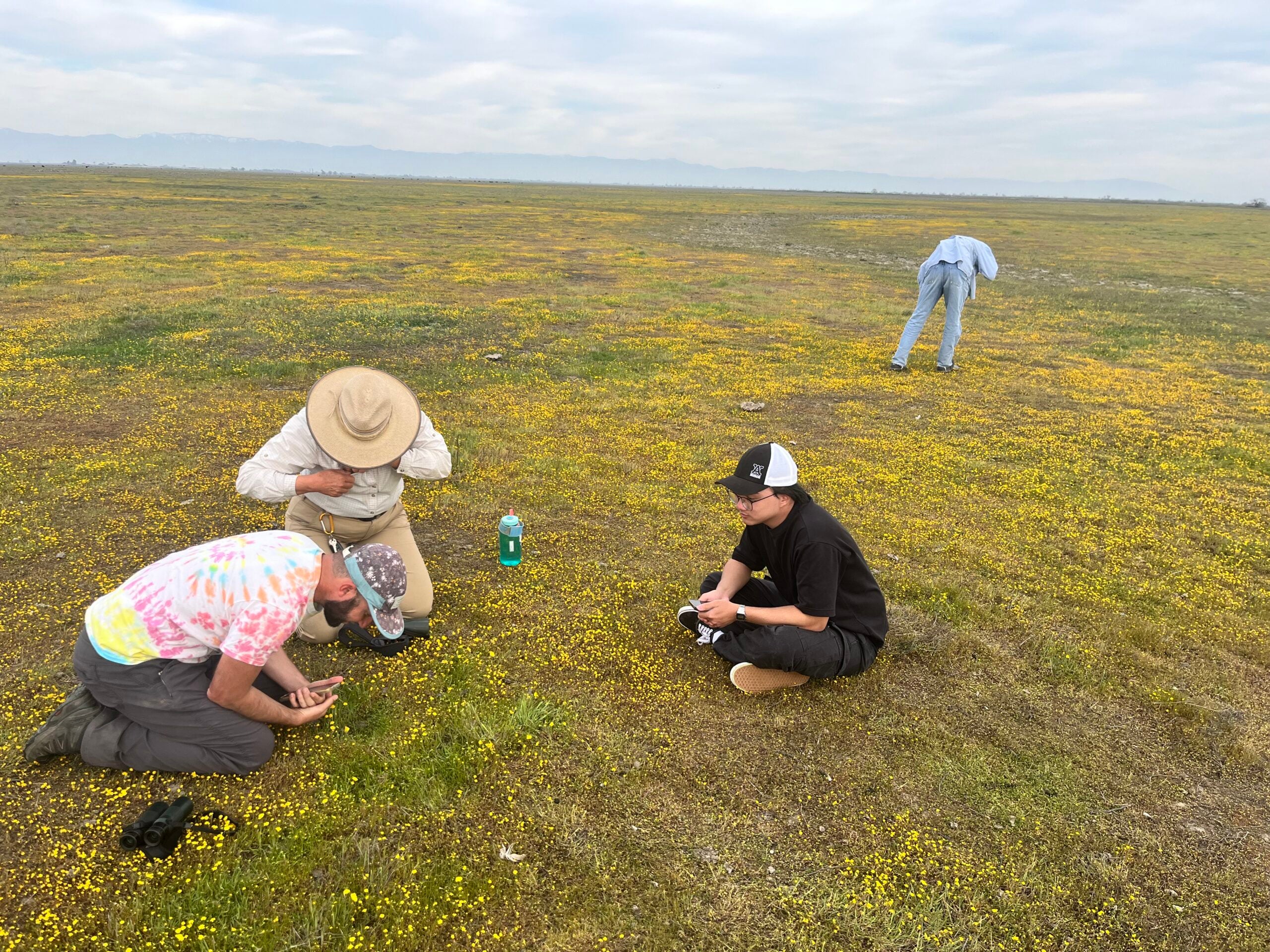
This resonates in California, where roughly one million acres in the San Joaquin Valley are predicted to come out of production over the next two decades to balance groundwater supply and demand. The transition will be difficult. But programs like California’s Multibenefit Land Repurposing Program are helping to support a just transition, with nearly 5,000 acres of projects converting agricultural land to new uses that reduce groundwater pumping and deliver new benefits, such as lower water use crops, habitat, open space and flood mitigation. And the program is expected to ramp up significantly to meet growing demand for land repurposing.
From local to global
Water bankruptcy is experienced locally, but its drivers and consequences are increasingly global, the report notes. Food grown in overdrawn basins is shipped worldwide, and climate change is reshaping hydrology everywhere.
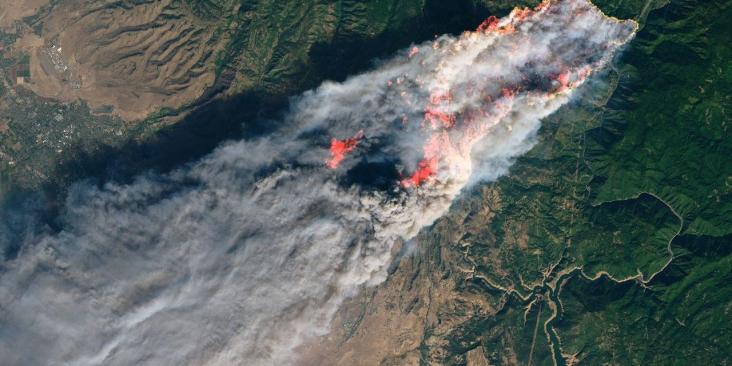
The report concludes change is needed at every scale — local, basin, national and global — with stronger international cooperation and a higher profile for water in U.N. efforts on climate change, biodiversity, and desertification. As we experience a record heat wave in the West — triple digits before April! — we are painfully familiar with these connections between water, climate change, desertification, biodiversity loss and wildfires. I look forward to the 2026 U.N. Water Conference and helping to sound the alarm about the urgent need for a new, transformative and action-focused global water agenda now.