






New Report: California Multibenefit Land Repurposing Program Surpasses 4,800 Acres of Projects
Written By

Share
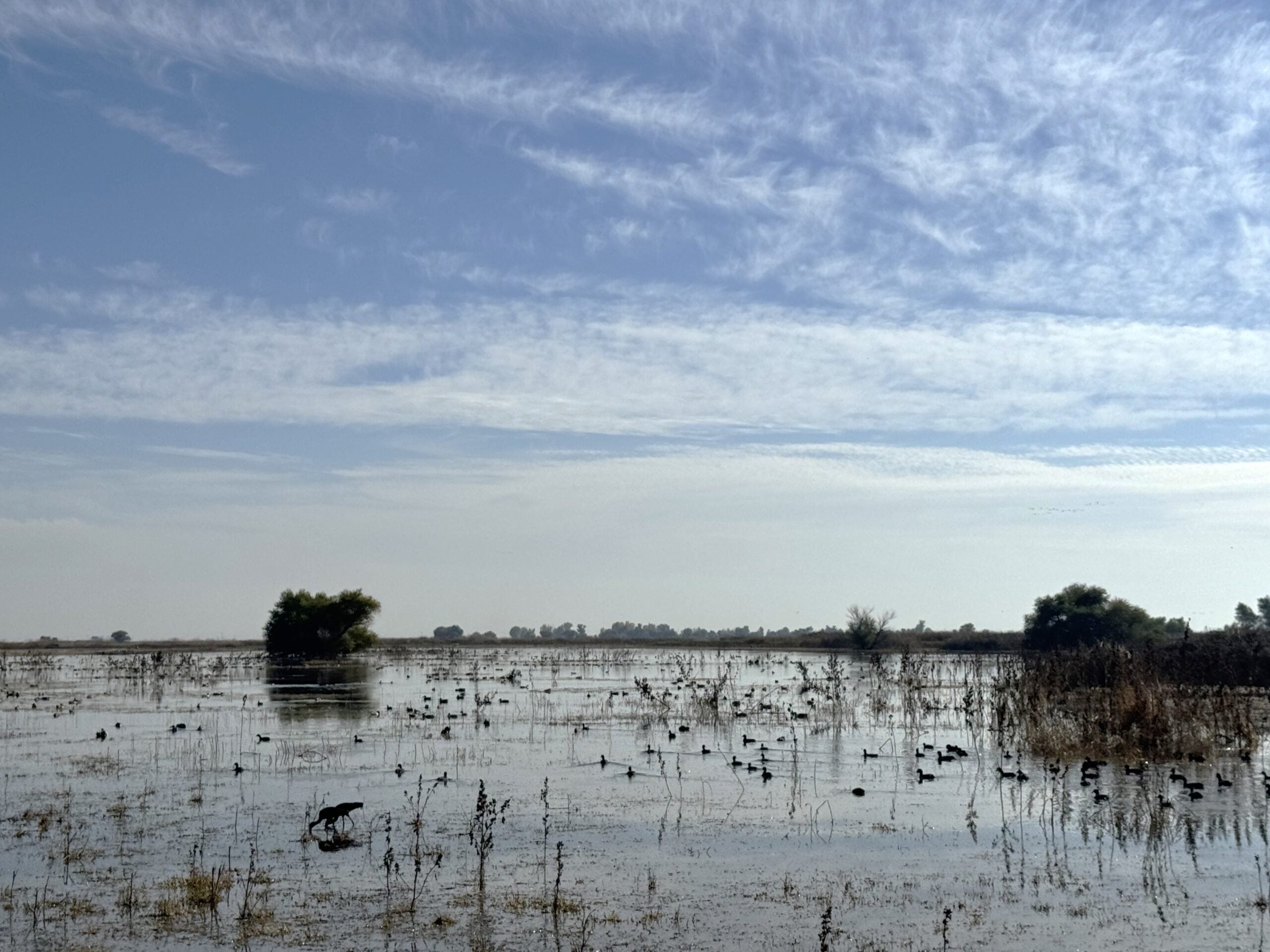
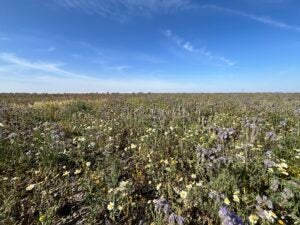
Transitioning 1,090 acres of active agricultural land to wildlife habitat while supporting farmer leadership in cover cropping. Repurposing 150 acres of almond orchards to cattle rangeland and native grasslands, reducing groundwater use and improving wildlife habitat. Converting 12 acres of pistachio orchard into a groundwater recharge basin with integrated renewable solar infrastructure, capturing floodwater and increasing groundwater recharge.
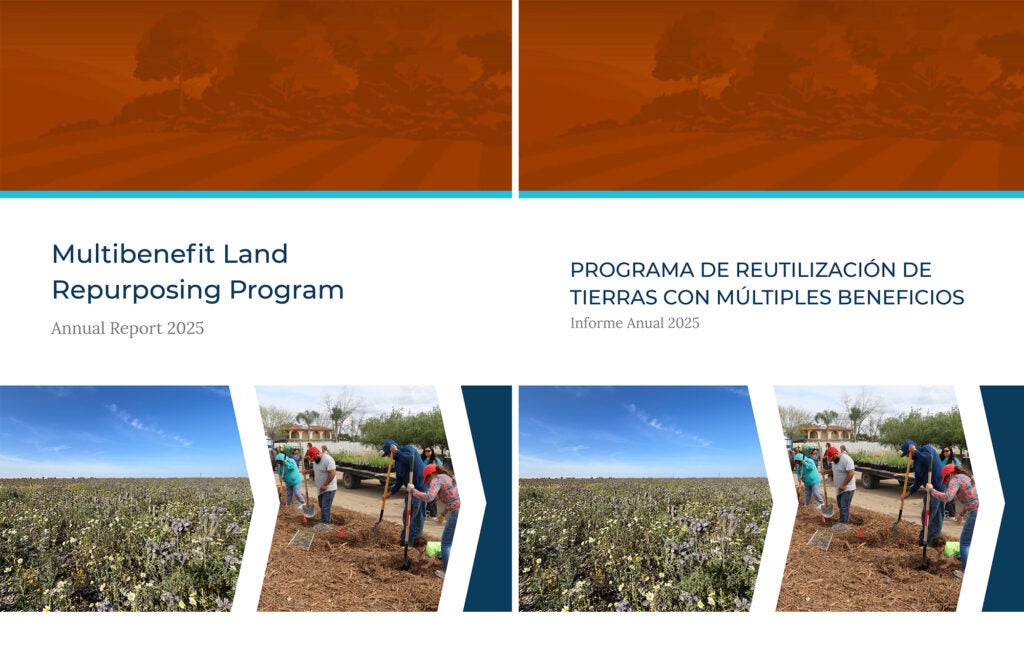
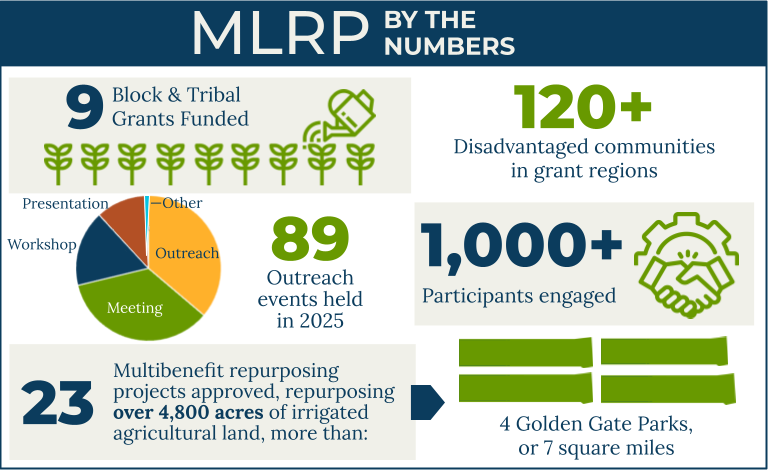
These three projects are among 13 projects that the California Department of Conservation approved in 2025 to receive funding from the state’s Multibenefit Land Repurposing Program (MLRP). Details about these projects and updates on 10 others approved in previous years are featured in the new Multibenefit Land Repurposing Program 2025 Annual Report (available in English and Spanish).
Since launching in 2022, MLRP has allocated nearly $80 million to support regional land repurposing planning and projects across nine regions. The program is picking up momentum with more than 4,800 acres of projects approved or breaking ground and the establishment of a strong peer network of local and regional staff who are helping to implement MLRP in their areas.
Interest in the program among growers and community members remains strong, with such regions as Madera County and the Kaweah Subbasin receiving more than two dozen applications — far more than they could fund in this initial round.
Benefits of community engagement
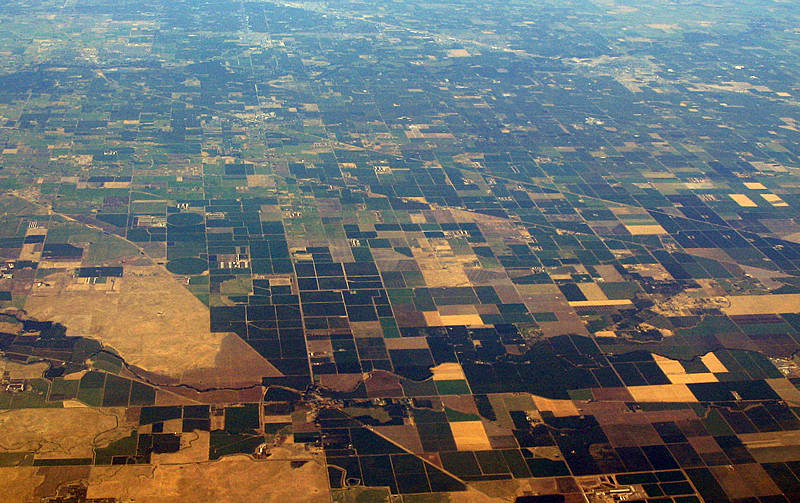
MLRP seeks to strengthen California’s long-term groundwater resilience by repurposing the least-viable irrigated agricultural lands to other uses that benefit communities and ecosystems. The program is an important tool in helping communities transition to pumping less groundwater to comply with the Sustainable Groundwater Management Act.
For example, five approved projects feature recharge or flood control basins, eleven projects offer habitat or environmental benefits, and five projects continue working lands practices more sustainably, such as switching to grazing land or planting less water-intensive cover crops.
Community involvement is a cornerstone of MLRP, which features a unique requirement for comprehensive outreach to determine community priorities. When outreach efforts brought growers, communities and implementing partners together, block grantees noted improved alignment between regional priorities and proposed projects.
Four of the 13 projects approved in 2025 are designed to not only conserve groundwater but also deliver meaningful benefits to disadvantaged communities:
- The Mini Farm project in Santa Cruz County restores 63 acres of former farmland to wetland habitat, improving water quality, reducing groundwater use and supporting wildlife habitat.
- The Fairmead Stormwater project in Madera County is envisioned to repurpose an almond orchard to a 4.5-acre stormwater retention basin and 10 acres of open space with a walking trail and pollinator habitat. The project is designed to reduce groundwater use, increase groundwater recharge, expand recreation access, and support community outreach and education.
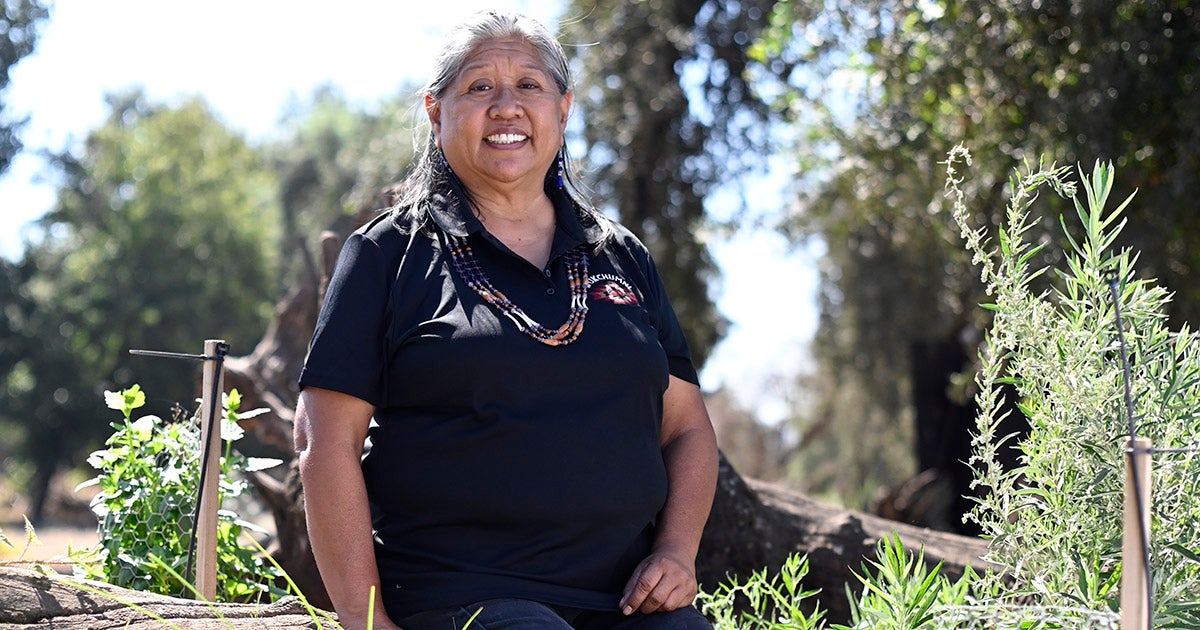
- A community and cultural space project in Madera County repurposes 4.2 acres of almond orchard into a multibenefit cultural and wellness site. The project includes pollinator habitat, areas for rotating culturally significant plants and space dedicated to Indigenous land stewardship practices. Planned features include off-grid solar infrastructure, a traditional sweat lodge and areas to support cultural gatherings.
- The Le Grand Community Park project in the Merced Subbasin will repurpose 20 acres of agricultural land to public open space with cover crops, pollinator habitat and walking trails. While reducing groundwater use, the project will provide community benefits such as open space and improvements to air, water and soil quality.
Cultivating peer learning
Another unique feature of MLRP is its emphasis on creating a peer learning network across the state. The Department of Conservation administers MLRP grants to regions and Tribes and funds a Statewide Support Entity to provide technical assistance and facilitate learning through an MLRP Community of Practice.
In 2025, the Statewide Support Entity, led by Self-Help Enterprises and EDF, hosted 11 learning exchange opportunities focused on topics ranging from “Protecting Groundwater Quality in Recharge” to “Corporate Investment and Funding for Long-term Operations and Maintenance.” In addition to bringing in external experts, the MLRP Community of Practice provides space for grantees and their partners to learn from each another, share resources and solve implementation challenges.
What’s ahead for the Multibenefit Land Repurposing Program
In 2026, the first two rounds of grantees will be continuing planning efforts and focusing increasingly on project solicitation and implementation. For fiscal year 2025-26, MLRP will receive $32 million in funding from California’s Proposition 4 Climate Bond, which aims to protect communities from climate change impacts and increase long-term resilience.
This spring, DOC will release draft guidelines for this initial round of Climate Bond-funded MLRP grants and will award new grants by the fall. The Climate Bond approved by voters in November 2024 commits a total of $200 million to MLRP.