






5 Things You Should Know About New Mexico’s Groundwater
Written By

Share
In New Mexico, like most western states, drought and climate change coupled with increasing water demands have pushed an invisible, yet vitally important natural resource — groundwater — into a crisis.
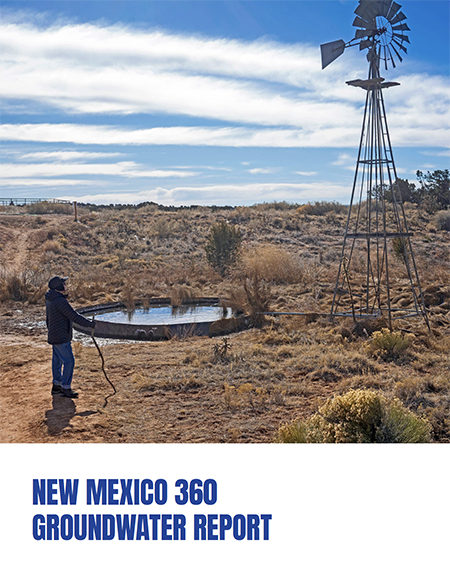
The New Mexico Groundwater Alliance, which includes Environmental Defense Fund, recently released the New Mexico 360 Groundwater Report to elevate the urgency of the groundwater crisis facing New Mexico. The alliance seeks to build long-term collaboration to co-create lasting statewide groundwater management solutions.
On Feb. 19, we will join the New Mexico Water Advocates workshop to discuss the New Mexico 360 Groundwater Report, which details significant data gaps, challenges and opportunities to protect the state’s declining groundwater supply.
Here’s a sneak peek at the most important points and priorities about groundwater in New Mexico from the report.
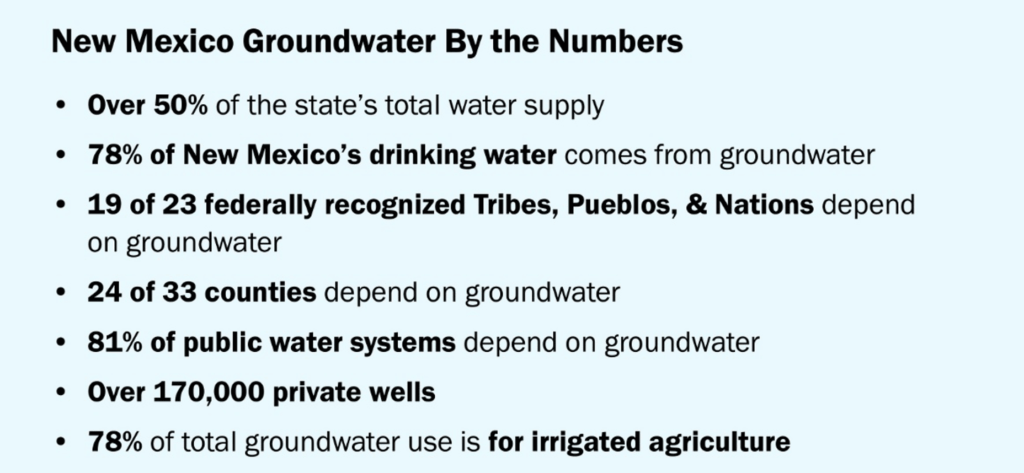
1. Groundwater is a lifeline for New Mexico’s communities and economies, serving as a critical source of water for drinking and irrigated agriculture.
More than three-quarters of New Mexico’s drinking water comes from groundwater. It’s a critical water source for community water systems, most of which are located in small rural communities. Sustainable groundwater management requires monitoring these vital underground water systems that support hundreds of communities and thousands of private domestic wells. Groundwater also underpins rural economies and agriculture, which is the largest groundwater consumer in New Mexico.
2. Better groundwater data is needed to ensure we have enough water to sustain New Mexico’s communities, economies and the environment for generations to come.
New Mexico’s high dependence on groundwater makes filling groundwater data gaps more urgent than ever. Aquifer studies provide the foundational understanding of the state’s groundwater aquifers, the extensive natural infrastructure that stores and delivers our groundwater. These studies are critical for clarifying rates of groundwater depletion and shaping management responses.
The New Mexico Bureau of Geology and Mineral Resources (NMGMR) conducts the state’s groundwater mapping and characterization studies. These studies are extensive and cost a lot of money. The good news is state legislators look poised to approve $22 million for NMGMR to continue these essential studies. This funding would be a big step in the right direction for sustainable groundwater management in New Mexico.
3. More groundwater metering is needed to better understand demand.
The most accurate way to measure groundwater use is with meters installed on wells that pump groundwater. This data is critical to know how much water is pumped out of our aquifers. Without this information, the ability to effectively manage shared groundwater supplies is limited.
Currently, the majority of New Mexico’s wells are not metered. In areas with metering, such as the Pecos Valley Artesian Conservation District in Chaves and Eddy counties, these groundwater pumping measurements provide essential information to meet legal obligations downstream. While metering was not popular with landowners initially, they eventually embraced this tool for ensuring everyone was playing by the same rules.
A recent op-ed co-authored by New Mexico Groundwater Alliance members Ladona Clayton, Aron Balock and Phil King highlights the many benefits and positive outcomes from metering, noting the whole state would benefit from groundwater meters to better inform local management decisions.
4. Native Nations, Tribes and Pueblos have valued water in New Mexico for time immemorial, and they have valuable knowledge to share about sustainable water management.
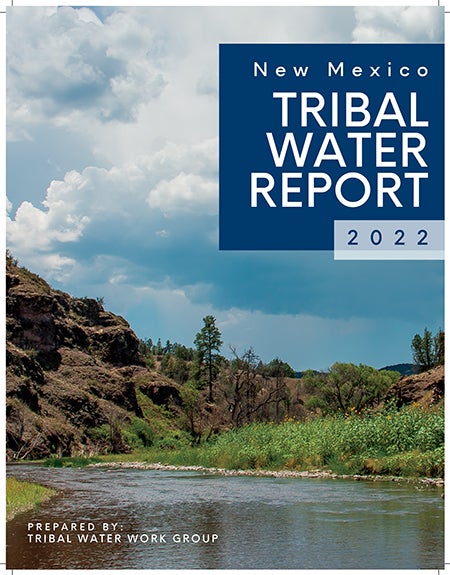
Climate change and water depletions are impacting New Mexico’s Tribal communities. For time immemorial, New Mexico’s 23 Native Nations, Tribes, and Pueblos have valued and recognized water as central to the existence, maintenance, and continuity of their cultural identity and physical well-being, as highlighted in the 2022 New Mexico Tribal Water Report.
“Tribes developed resilient water strategies and technologies in response to unpredictable changes in the physical, social, and cultural environment. Many Tribes developed broad systems of water management engineering, specifically for subsistence agriculture and other regenerative uses,” the report notes.
The report recommends the state of New Mexico issue formal recognition of Indigenous Traditional Ecological Knowledge (ITEK) as contributing to the scientific, technical, social, and economic advancements of the state and to our collective understanding of our environment. The report also recommends the state work with the NM Indian Affairs Department to develop guidance for State agencies on consultation and application of ITEK.”
Improving groundwater management in New Mexico will require partnership, collaboration and coordination with New Mexico’s Nations, Tribes and Pueblos to advance alternative, specific solutions as each Tribal Nation deems effective.
5. Groundwater supports the health of our rivers, streams and springs.
Groundwater is largely unseen, but it plays a vital role in the health of surface water flows throughout New Mexico.
Groundwater and surface water are often thought of as separate systems, but in river corridors they are a connected system. Depending on the physical setting and drought conditions, surface water may be recharging groundwater or groundwater may be discharging to surface water, sustaining base flows.
When groundwater is overpumped in these interconnected systems, surface flows decline, which impacts the river’s ecology, harming fish and wildlife and affecting the availability of those surface supplies for other users. Consequently, in areas where groundwater and surface water are interconnected, they must be managed together.
Co-creating statewide solutions
As a fifth-generation New Mexican (Gretel) and recent transplant (Maurice), we cherish New Mexico’s majestic landscapes, from the high alpine mountains to river corridors and prairies. Managing New Mexico’s precious water resources above and below ground is essential to sustaining these landscapes and our communities, cultures and economies for future generations.
But our water supplies are at risk. New Mexico’s drought-fueled groundwater pumping has spiraled into a statewide crisis, amplified by climate change and population growth. We hope the New Mexico 360 Groundwater Report serves as a call to action for collaborative and proactive development of statewide groundwater management co-created with Native Tribes, rural communities, municipal water managers, agricultural producers, industry and state legislators. We all must come together to protect this vital underground resource we all depend upon, before it’s too late.
Register here to attend the New Mexico Water Advocates workshop on Feb. 19, which will feature a presentation on the New Mexico 360 Groundwater Report.