






Shared Water, Shared Border: Water Leadership Institute fosters connections in Arizona and Mexico
Written By

Share
Water doesn’t follow geopolitical borders, so why should water advocacy? In areas like the Sonoran Desert, encouraging budding water leaders from both sides of the border to collaborate is key to community resilience and safeguarding water security for generations to come.
That’s why the latest Arizona cohort of the Water Leadership Institute (WLI) — a bilingual leadership training program developed by EDF, Arizona Water for All, Water For People and Reconciliación en el Río Santa Cruz — was organized around five sessions in different locations along the Santa Cruz River, which crosses the border in two locations.
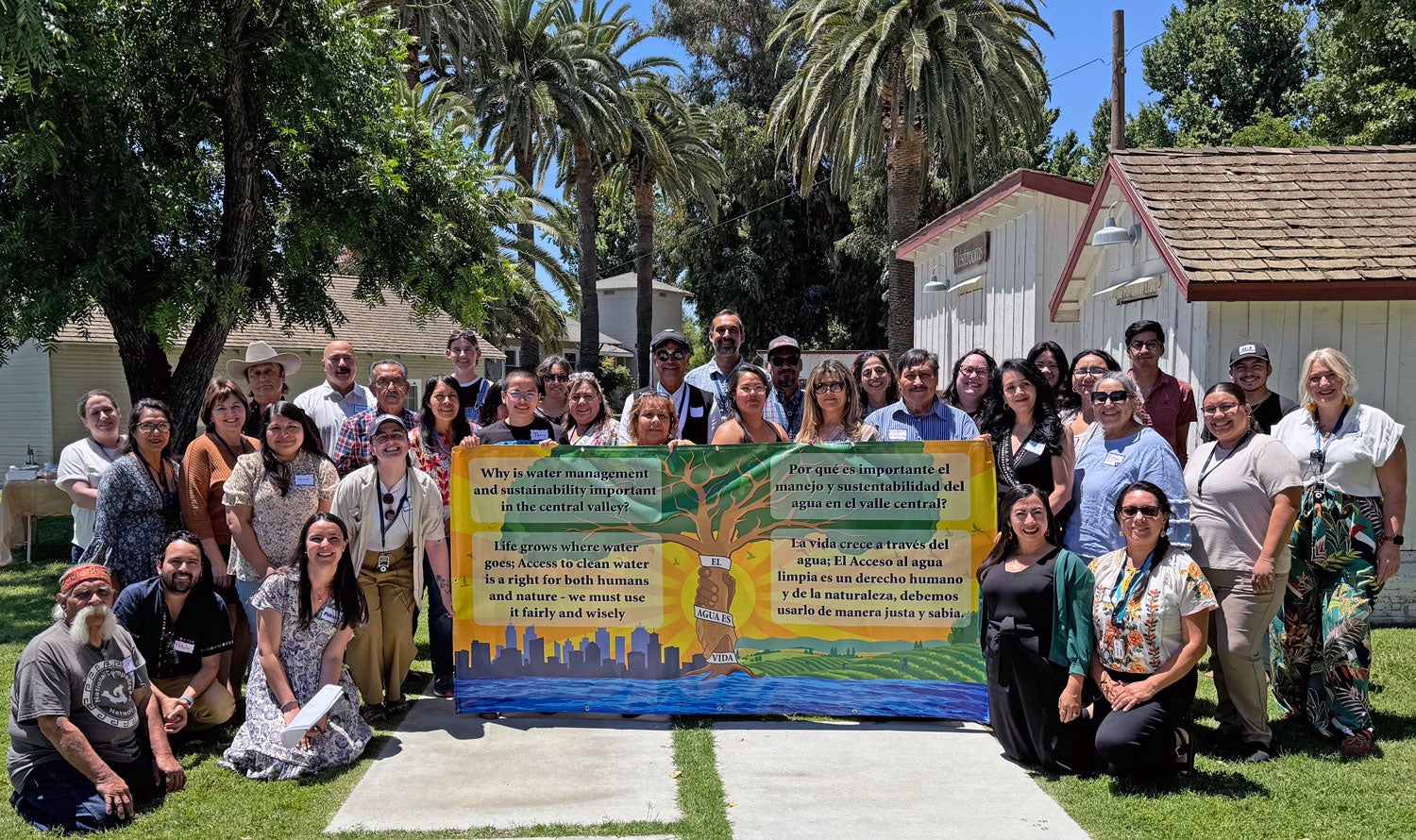
The guiding question, “What is my relationship to water?” was woven throughout the curriculum, which included sessions on the historical context of water; transboundary resilience; and water, sanitation and hygiene (known as WASH in the water sector) related to the local region. Six of the 38 participants came from Mexico, some as far as Hermosillo, three hours south of the border.
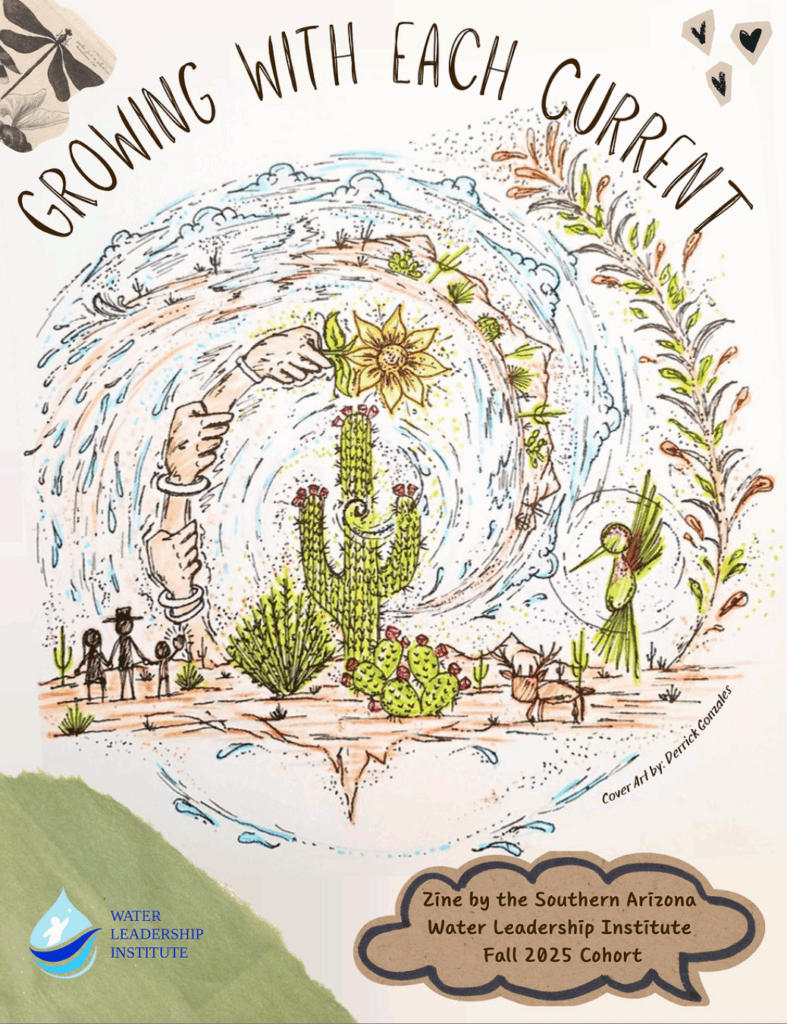
Throughout the program, participants not only learned from and connected with local water leaders, but they also connected with one another by reflecting on their own lived experiences and relationships to water. They put together a beautiful collection of “zines” as their final project, with each contribution reflecting the individual’s relationship to water. We interviewed a graduate from each side of the border to learn more about their WLI experience and what they plan to do next, and have shared excerpts from those interviews below.
Finding Community Solutions in Sonora, Mexico
For Leticia Daniela Haro González, the Water Leadership Institute came at a pivotal moment. As she began to explore the intersection of social and environmental justice in school, WLI offered something her university education didn’t.
“I wanted to learn more about water, and here in my university, there’s a lack of information,” Leticia said. “This program gives us the information and knowledge about the recent problems we have at the border.”
The program curriculum connected directly to Leticia’s thesis on the government and the community’s management of the Sonora River – Río Sonora, one of the region’s most important waterways. “Here in Sonora, we waste a lot of water. I was excited to get to know more alternatives for saving water and how to get involved with the community,” she said.
“This program gave me the tools that I needed to understand and dive deeper into the history of a community where people have fought for justice,” she added.
While participating in the Water Leadership Institute. Leticia realized there’s a gap in how Mexico approaches environmental education. “I would love for Mexico to replicate these [WLI] programs, especially in schools with little kids. I think we need more people who are really well prepared and who truly appreciate what nature gives us.”
Finding Activism Close to Home
Ally Alvarez was involved in environmental activism throughout college, but afterward, she struggled to find similar opportunities in Rio Rico, the small border town where she lives.
“In joining WLI, I was really looking for people with similar passions so I can make a tangible contribution towards conserving our environment,” she said.
Ally’s passion for water issues is rooted in her family’s experience. “I have a lot of family living in Mexico. They would go through periods where they wouldn’t have running water, and they needed to have the water driven into neighborhoods on tanks,” she said. “From a young age, I was cognizant that some people don’t have access to things that we take for granted.”
For Ally, the binational nature of WLI facilitated important conversations about shared water resources. “Having people from Hermosillo there was incredible,” she said. “The collaboration and the binational aspect of [WLI] brought so much more conversation to the table, and it highlighted the importance of working together.”
The best part of the Water Leadership Institute for Ally was discovering the Friends of the Santa Cruz River, a local nonprofit that hosted WLI participants in Tumacarcori, Arizona, and led them in a water quality testing and river cleanup activity.
“Friends of the Santa Cruz River is made up of a bunch of retired people who are so passionate about the river and maintaining it,” Ally explained. “They remember the struggles that the community went through during the mining era and the issues with the river drying. They go to the river every month doing citizen science, getting soil samples, taking notes, putting it all on data sheets, and sharing that with the city.”
Now Ally is not only helping the friends of Santa Cruz River with citizen science activities, but also managing their social media accounts.
WLI has motivated Ally to think differently about environmental engagement in her community, particularly about access to nature and outdoor spaces. “I think when it comes to lower-income and working-class people, environmentalism or enjoying nature sometimes is put on the back burner. I came from a family that didn’t really hike or camp, and I didn’t even find out there was a river here until I was in middle school,” she reflected.
“Being a part of this nonprofit and getting the word out that there are trails here and there’s a river here, and inviting the community to help with events, it has just been wonderful for me.”
Intersted in participating in the Water Leadership Institute? The Northern Arizona cohort launches May 2026, and the Southern Arizona cohort returns in fall 2026. Learn more about the program and fill out an interest form at https://waterleadershipinstitute.com/arizona/.