







Welcome to the first edition of On the Water Front, the new blog and newsletter of EDF’s Water Program
Written By

Share
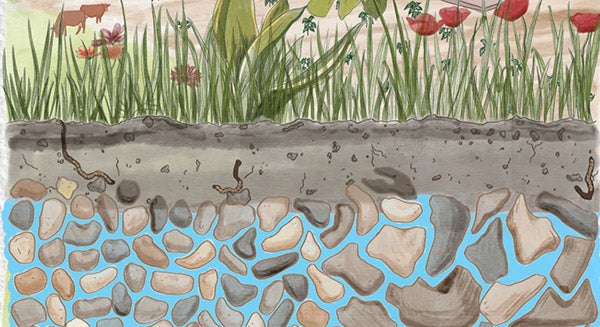
Welcome to the new monthly e-newsletter from EDF’s Climate Resilient Water Systems team. It seemed fitting to launch this effort on World Water Day because the theme this year aligns so closely with our work: “Groundwater — Making the Invisible, Visible.”
Over these past two challenging years, the pandemic, my own health issues and family needs have highlighted some major flaws in our health care system that reminded me of … groundwater. When a crisis arrives, our response can be quick, aggressive and sometimes even highly effective. This same system isn’t as good at long-term health — supporting the patient in their ongoing well-being, anticipating possible or even likely future conditions, and taking actions in advance to avoid a crisis.
I see a similar pattern in how we manage our groundwater. When there’s an obvious crisis from groundwater depletion (wells going dry, land subsidence or saltwater intrusion, for instance), we jump to action, attempting to treat a long-declining patient with a single surgical procedure. Sure, we need these procedures, but often we do them without the support of the whole health care system.
We need to build a robust health care system for groundwater. Until there is an institution in place that stands up and says, “It is our responsibility to maintain the health of this important resource,” we’ll continue down the path of extraction. We’ll be treating symptoms without fully protecting the long-term health of the whole patient — and us, the society that depends on groundwater.
And just as we’re better able to weather health crises when our baseline health is strong, we’re better able to weather droughts (like what we’re experiencing now) when the patient, our groundwater, has been taken care of during the wetter times.
With this newsletter, we humbly hope to share tools and strategies to build resilient groundwater systems through diverse partnerships and across geographies. While groundwater is inherently local, we are finding that approaches in one region can be tailored by local communities to work in new settings. So please scroll down to read about some strategies that are being tested in the West and watch a cautionary tale on groundwater overpumping in Iran produced by a geologist now living in exile.
 Thank you,
Maurice Hall
VP, Climate Resilient Water Systems
Environmental Defense Fund