Climate change solutions
We deliver game-changing environmental solutions that have a real impact for people around the globe.
Jennifer McPartland, Ph.D., is a Senior Scientist with the Health Program.
The Environmental Protection Agency (EPA) took another significant step yesterday to protect against exposures to the highly toxic chemical, trichloroethylene (TCE), proposing a rule to ban its use as a vapor degreaser.
The proposed rule is the second issued under section 6 of the Toxic Substances Control Act (TSCA) as amended by last year’s Lautenberg Act. It follows on EPA’s proposed rule last month to ban the use of TCE as an aerosol degreaser and spot cleaning agent in dry cleaning facilities. Both proposed rules on TCE are critical to protecting consumer and worker health from the harmful effects of TCE and should move swiftly toward finalization. (more…)
Richard Denison, Ph.D., is a Lead Senior Scientist. Lindsay McCormick is a Project Manager.
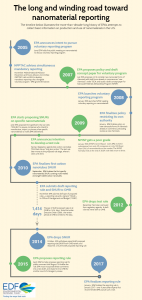
Today, EPA issued its long-awaited rule to gather risk-relevant information on nanoscale materials. The new rule will finally allow EPA to obtain basic data on use, exposure, and hazards from those that manufacture or process these materials, which has long been recognized by experts as essential to understand and manage their potential risks.
Nanomaterials – a diverse category of materials defined mainly by their small size – often exhibit unique properties that can allow for novel applications but also have the potential to negatively impact our health and the environment. Some nanomaterials: more easily penetrate biological barriers than do their bulk counterparts; exhibit toxic effects on the nervous, cardiovascular, pulmonary, and reproductive systems; or have antibacterial properties that may negatively impact ecosystems or lead to resistance.
Tom Neltner, J.D., is Chemicals Policy Director
Accelerating full replacement of lead service lines (LSL) – the lead pipes that run from the drinking water main under the street to homes – is a priority for EDF. These pipes are the primary source of lead in water and, when disturbed, may release lead particles that expose consumers, without warning, to extremely high levels. As part of the effort to encourage safe and effective removal of LSLs replacement, EDF helped launch a new Lead Service Line Replacement Collaborative with 23 national public health, water utility, environmental, labor, consumer, housing, and state and local governmental organizations to help communities develop and implement voluntary programs to eliminate these pipes.
Today, the Collaborative released an online toolkit to assist communities in lead service line replacement. The online toolkit includes:
USA Today highlighted the Collaborative and the toolkit in an article also released today.
Tom Neltner, J.D., is Chemicals Policy Director and Maricel Maffini, Ph.D., Consultant
Last month, the Food and Drug Administration’s (FDA) scientists published a study showing significant increases in perchlorate contamination in food sampled from 2008 and 2012 compared to levels sampled from 2003 to 2006. The amount of perchlorate infants and toddlers eat went up 34% and 23% respectively. Virtually all types of food had measurable levels of perchlorate, up from 74%. These increases are important because perchlorate threatens fetal and child brain development. As we noted last month, one in five pregnant women are already at great risk from any perchlorate exposure. The FDA study doesn’t explain the increase in perchlorate contamination. Yet, it’s important to note that there is one known factor that did change in this time period: FDA allowed perchlorate to be added to plastic packaging.
Reported perchlorate levels in food varied widely, suggesting that how the food was processed may have made a significant difference. The increase in three foods jumped out to me:
The increases are disturbing in light of the threat posed by perchlorate to children’s brain development and the emerging science showing the risk at lower levels is greater than thought a decade ago. The risk is particularly significant for children in those families loyal to those brands with high levels. Unfortunately, FDA’s study does not identify the brand of food tested. (more…)
Tom Neltner, J.D., is Chemicals Policy Director
Transparency is an essential aspect of any successful program to reduce lead in drinking water. Knowing if you have a lead service line (LSL)—the pipe that connects the main under the street to the building—can help you decide whether to use a filter or replace the line. If you are looking for a home to rent or buy, the presence of a LSL can be a factor in your choice. Transparency can also help reassure consumers that their utility is aware of the problem and committed to protecting their health. The challenge for many water suppliers is that they often don’t have perfect information about the presence of LSLs. But incomplete information is not a reason for failing to disclose what is known, what is uncertain, and what is unknown.
In a February 29, 2016 letter to the states, U.S. Environmental Protection Agency (US EPA) asked states to increase transparency by posting on either the state’s website or have it posted on local utilities’ websites:
“the materials inventory that systems were required to complete under the [Lead and Copper Rule] including the locations of lead service lines [LSLs], together with any more updated inventory or map of lead service lines and lead plumbing in the system.”
In response to this letter and systemic issues brought to light about lead in drinking water in the village of Sebring, Ohio and Flint, Michigan, the State of Ohio enacted pragmatic legislation crafted by Governor John Kasich’s administration and the Ohio Environmental Protection Agency (Ohio EPA). Among its supporters was the Ohio Environmental Council. One provision in the law requires community water systems to
“identify and map areas of their system that are known or are likely to contain lead service lines and identify characteristics of buildings served by the system that may contain lead piping, solder, or fixtures . . .”
Utilities must submit the information to Ohio EPA as well as the departments of Health and of Job and Family Services by March 9, 2017 and update this information every five years.
Joanna Slaney is the Legislative Director for EDF Health.
[UPDATE 1/17/17: Today EPA posted a full transcript of the public comments made at its December 14, 2016, meeting, along with the presentations made by EPA staff. MP3 audio files of the public comments are already posted (note they are huge files).]
EPA held a public meeting Wednesday on the implementation of the New Chemicals Review Program under the reformed Toxic Substances Control Act (TSCA). The Frank R. Lautenberg Chemical Safety for the 21st Century Act required EPA to begin implementation of the reforms to the program on the day the legislation was signed into law. The meeting was an opportunity to discuss the effort and progress to date.
As we’ve noted before, and as I noted on Wednesday, the changes made to the New Chemicals Review Program were fundamental to TSCA reform and the promise of a new system that better protects public health and the environment.
Representatives from state government, the Senate, NGOs, and industry gathered to hear a series of presentations by EPA about new chemicals reviews under the reformed law, scientific and data issues the Agency is navigating, and the types of information it needs from manufacturers and processors to facilitate a streamlined review process.
A series of oral comments from various stakeholders included a robust showing of support for EPA’s actions from public interest groups representing labor, the environment, and public health, as well as concerns from some in industry with certain aspects of implementation. EPA concluded with a commitment to meet again in six months to discuss its progress in implementing revisions to the New Chemicals Review Program.