Climate change solutions
We deliver game-changing environmental solutions that have a real impact for people around the globe.
Richard Denison, Ph.D., is a Lead Senior Scientist.
[Use this link to see all of our posts on Dourson.]
According to press reports, the nomination of Michael Dourson to lead EPA’s toxics office is being withdrawn.
Dr. Richard Denison, Lead Senior Scientist, said, “The withdrawal of Michael Dourson’s nomination is good news for the health of American families. It was clear from the beginning that Dr. Dourson was a dangerous choice. His record of mercenary science made clear he would have undermined public health and damaged the historic chemical safety reforms passed by Congress last year.
“The administration should now nominate a person of integrity, with a demonstrated commitment to protecting public health. Dr. Dourson must now leave the EPA, and the Administration should move forward to implement the new law as it was intended. Communities from California to North Carolina will be able breathe easier knowing Dr. Dourson will not be at EPA.”
Richard Denison, Ph.D., is a Lead Senior Scientist.
We’ve already blogged about how changes the agency is making to its reviews of new chemicals under the Toxic Substances Control Act (TSCA) are illegal as well as bad policy. But an industry letter and attachment added last week to EPA’s new chemicals docket shows the chemical industry isn’t done yet in seeking to eviscerate the program.
The letter and position statement were submitted to Jeffery Morris, Director of EPA’s Office of Pollution Prevention and Toxics (OPPT) by something called the TSCA New Chemicals Coalition (NCC).
They raise a multitude of red flags.
The NCC is a creation of the industry law firm Bergeson & Campbell (B&C). The letter to Morris describes NCC as “a group of representatives from over 20 companies that have come together to identify new chemical notification issues under the amended Toxic Substances Control Act (TSCA) and to work collaboratively with you and your team to address them.”
First red flag: Nowhere are the 20+ companies identified, not in the letter or associated position statement, nor on B&C’s web pages for NCC. Such secrecy always sets off an alarm when it comes to the chemical industry’s history of forming misleading front groups and coalitions. Why don’t the companies want their identities known?
Second red flag: The NCC letter and position statement claim that “OSHA has in place an extensive regulatory scheme, as well as enforcement mechanisms, governing chemical exposure in the workplace” and refers to the “robust nature of the existing OSHA regulatory program” and its “overarching and comprehensive requirements” that apply in the workplace. Now, anyone outside of industry readily acknowledges that OSHA’s ability to adequately address workplace exposures has been decimated over time – through sustained industry efforts on many fronts, including mounting legal challenges to OSHA’s authority and successfully pressing for reduction after reduction in its budget and staffing. Those attacks continue today, and if anything have accelerated under the Trump Administration.
Why then, you may wonder, is NCC writing to the director of EPA’s TSCA office to tout OSHA’s sweeping authority over workplace chemical exposures? By now you may be getting a sense of where this is headed … . (more…)
[pullquote]Pennsylvania was already one of the 11 states taking proactive efforts to support LSL replacement since 2015. HB-674 expands that effort. Check our website for what states and communities are doing. [/pullquote]Tom Neltner, J.D., is Chemicals Policy Director
In October 2017, the Pennsylvania General Assembly passed and Governor Wolf signed HB-674 which implements the State’s 2017-18 budget. Section 1719-E of the law includes a provision empowering municipal authorities to replace or remediate private water and sewer laterals if the municipality determines the work “will benefit the public health.” (more…)
Richard Denison, Ph.D., is a Lead Senior Scientist.
EPA held a public meeting today on “Approaches to Identifying Potential Candidate Chemicals for Prioritization” under last year’s reforms made to the Toxic Substances Control Act (TSCA) by the Lautenberg Act.
EPA provided brief opportunities for stakeholders to provide comments. Four of us from EDF gave oral comments at the meeting. Below we provide links to those comments in written form and briefly describe them (in the order in which they were presented).
EDF Senior Attorney Robert Stockman’s comments argue that, under the law, EPA:
EDF Project Manager Lindsay McCormick’s comments:
EDF Senior Scientist Dr. Jennifer McPartland’s comments point to serious limitations and critical caveats relating to some of EPA’s proposed approaches for identifying candidates, including:
Lindsay McCormick is a Project Manager.
This morning, CBS News focused on the tragic story of Kevin Hartley—a young man who died at the age of 21 while working with a product that contains methylene chloride. Kevin’s story, powerfully relayed by his mother Wendy, illustrates the need to ban high-risk uses of this chemical.
As we have previously noted, in January, the Environmental Protection Agency (EPA) proposed to ban methylene chloride in paint and coating removal products. The agency based its proposal on an extensive assessment of the scientific literature, which demonstrated not only lethal risks from acute exposures to methylene chloride but also a host of other acute and chronic health impacts, like harm to the central nervous system, liver toxicity, and cancer.
Products containing this chemical can be readily found in most hardware stores in America and more tragedies are all but certain, if EPA does not promptly finalize its proposed ban.
The ongoing debates in Washington over the implementation of a new chemical safety law passed just last year are often dense and dry. In sharing her son Kevin’s story, Wendy Hartley reminds us that how these policies are applied has a very real human impact. That is why EDF continues to demand EPA better protect American families from toxic chemicals like the one highlighted by CBS News today.
Please watch the story: https://www.cbsnews.com/news/dangers-of-common-paint-stripper-chemical-methylene-chloride/
Tom Neltner, J.D., is Chemicals Policy Director
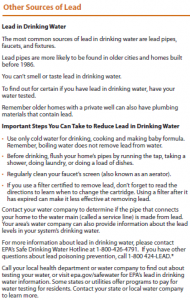
In June 2017, the federal government updated the “Protect Your Family from Lead in Your Home” booklet to expand the information provided on lead in drinking water from a few lines to a full page. Since 1996, when someone rents or buys a home built before 1978, the property owner or landlord is required to provide them with a copy of this booklet. The last update to the booklet was made in 2012.
What is removed?
What background is added?
What are the new recommendations?