Climate change solutions
We deliver game-changing environmental solutions that have a real impact for people around the globe.
The Environmental Protection Agency (EPA) recently released and solicited public comments on its draft Cumulative Risk Assessment (CRA) Guidelines for Planning and Problem Formulation. The purpose of a CRA is to determine the combined health and/or environmental risks from multiple stressors and chemicals that can cause the same harms. These guidelines, intended to be applied to all of EPA’s programs and regions, describe how the agency will determine when to use CRAs and the steps it will take to plan them.
Currently, many EPA programs assess the health and environmental risks of single chemicals, without considering the multiple chemicals that cause the same harms and non-chemical stressors we are exposed to every day. Assessing risks cumulatively, and making regulatory decisions based on this, represents real-world exposures more accurately than single-chemical stressor risk assessments. (more…)
By Tom Neltner, Senior Director, Safer Chemicals, Klara Matouskova, PhD, Consultant, and Maricel Maffini, PhD, Consultant
In our new study, we evaluated Generally Recognized As Safe (GRAS) notices—a total of 403 between 2015-2020—that food manufacturers voluntarily submitted to FDA for review. Our goal was to determine whether industry was adhering to FDA’s Guidance on Best Practices for Convening a GRAS Panel.
The guidance was designed to help companies comply with the law and avoid biases and conflicts of interest when determining whether substances added to food are safe and recognized as such by the scientific community. FDA published a draft of the guidance in 2017 and finalized it essentially unchanged in December 2022.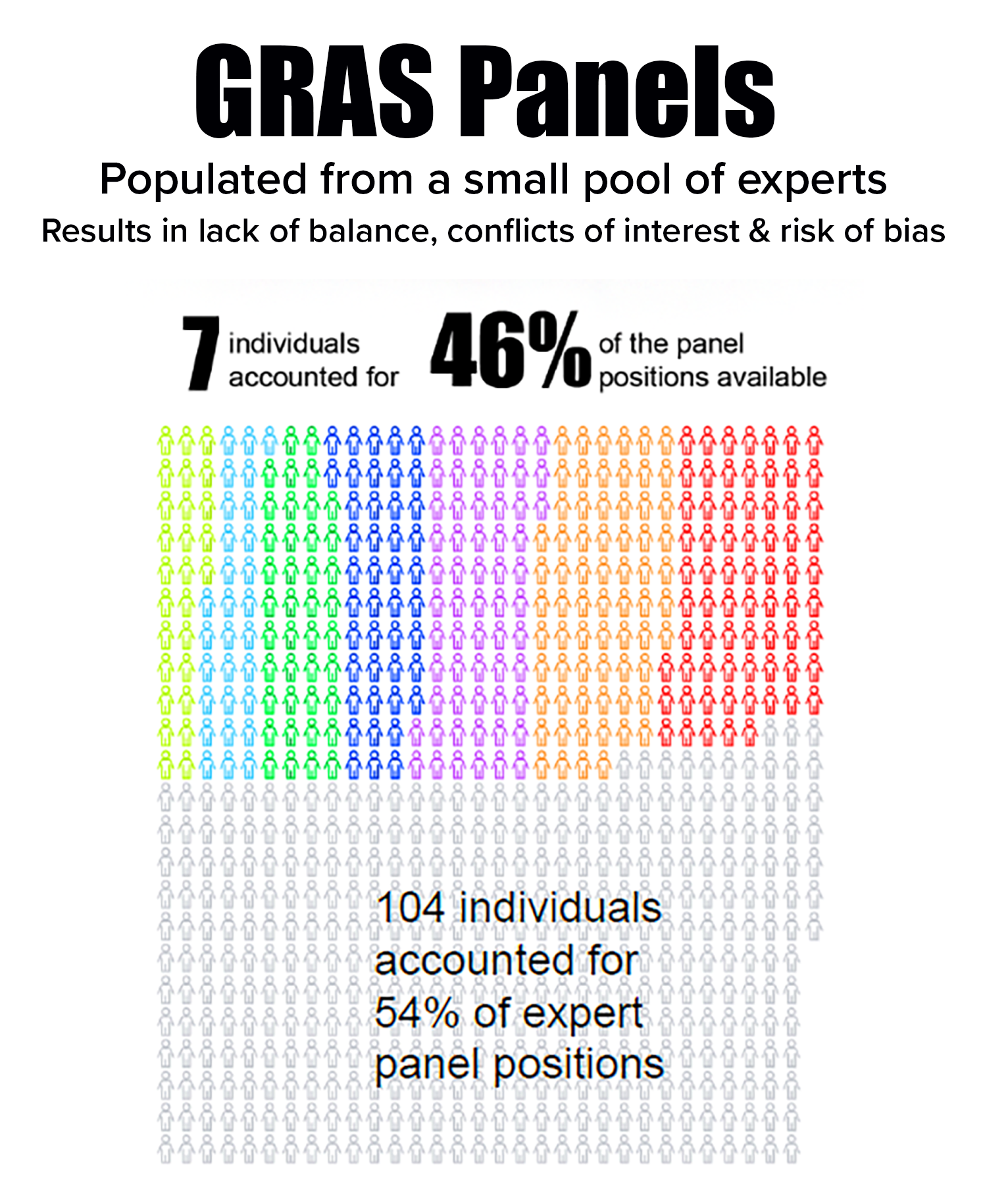
Our study found that no GRAS notices followed the draft guidance. Specifically, we also found there were high risks of bias and conflicts of interest because the companies:
For the first time, FDA has provided guidance on how to evaluate whether metal cookware is prohibited due to lead leaching into food.
As part of an investigation to find the source of elevated blood lead levels in some refugee children, the Hazardous Waste Management Program in King County, Washington [1] encountered high lead levels in certain imported [2] aluminum cookware, including pressure cookers and pots & pans. The program attempted to bring this to FDA’s attention in late 2019, and submitted a formal product report to FDA in October 2021, after several attempts to contact an FDA representative directly.
In May 2022, the Program published a journal article about its findings; a year later, staff emailed FDA again seeking guidance. On June 1, 2023, FDA responded with a letter [PDF, 166KB] providing a method (see below) to evaluate lead in metal cookware. The agency also said:
EPA recently asked its Board of Scientific Counselors (BOSC), comprised of experts in the fields of toxicology and environmental chemistry, to make recommendations on implementing new approach methods (NAMs) for testing the safety of new chemicals.
NAMs encompass a wide array of new evaluation strategies, including testing cell lines or invertebrates (rather than mammals); using computational approaches; and estimating potential harms of new chemicals by looking at existing toxicity data on similar substances.
EPA announced in 2019 that it would be redirecting resources towards developing NAMs to replace those studies. The looming concern is the possibility that NAMs may miss effects that whole animal mammalian testing accounts for and generate false negatives — potentially allowing toxic chemicals to appear in consumer products or end up in our environment.
This could happen because relying only on NAMs or using data from one chemical to predict how a new one might behave opens the door to missing negative effects. NAMs could also cause evaluators to miss opportunities to use the Toxic Substances Control Act (TSCA), the nation’s primary chemical safety law, to limit toxic chemical exposures. (more…)
EDF and other environmental groups recently asked the Environmental Protection Agency (EPA) to withdraw the approval it issued for a group of new chemicals. This approval, also known as a consent order, allows Chevron to create fuels at its refinery in Pascagoula, Mississippi, by using oils produced through a process of superheating plastic waste to break it down (a process known as pyrolysis). The consent order also allows for the use of these fuels derived from waste plastic at more than 100 locations. ProPublica published an article on the issue on August 4, 2023.
EPA is required by law to provide protections against unreasonable risks posed by new chemicals. But in the consent order EPA approved the production and use of these new chemicals despite significant health risks. One of the chemicals posed a 1 in 4 risk of developing cancer for people exposed to it. Another chemical carried risks of a 7 in 100 cancer risk from eating fish contaminated by it and a greater than 1.3 in 1 cancer risk from inhaling it.
When asked about the shockingly high cancer risks it estimated, EPA claimed its cancer risk assumptions were overly conservative but failed to provide any information about what it believes are the actual risks and pointed to undefined controls under other laws as controlling the risks.
Until now, the acceptable risk standard for cancer in the general population has been 1 in 1,000,000. The risk levels EPA identified are up to 1,000,000 times greater than that. (more…)

A blockbuster Wall Street Journal (WSJ) investigation showed that lead-sheathed telecom cables are releasing toxic lead into water or surface soil. We are aware of more than 2,000 of these cables across the nation—and more than 300 of those pose a threat to community drinking water sources.
Recognizing the potential risks to public health, EDF, Clean Water Action, and Below the Blue asked EPA on July 17 to investigate potential harms and replace abandoned lead cables strung between telephone poles, as well as any that are accessible to children.
In response, AT&T reported that it has more than 66,000 miles of lead cables, most of which are the overhead type, with the balance running underwater. This is a stunning amount – enough to circle the earth 2.5 times!
Legislators are already demanding that telecom firms act, and EPA and the Department of Justice say they are reviewing the issue. In addition, New York Governor Kathy Hochul directed three key state agencies to investigate the risks. In response, the agencies sent letters to 246 telecom providers requesting their inventory of lead cables. I also appeared on CNBC’s Squawk Box to explain the situation, EDF’s role in the investigation, and the cables’ potential risks. (more…)