Climate change solutions
We deliver game-changing environmental solutions that have a real impact for people around the globe.
Tom Neltner, Senior Director, Safer Chemicals and Maricel Maffini, EDF consultant
This blog is the fifth in our Broken GRAS series where we explore the Food and Drug Administration’s (FDA) Generally Recognized as Safe (GRAS) system for novel chemicals added to food.
In the spring, folks who ordered from a company that sells pre-assembled smoothies and other frozen foods for home delivery, started getting sick—really sick—after consuming an item called “French Lentil and Leek Crumbles” (Crumbles). Daily Harvest, the manufacturer, recalled the product on June 17. A month later, Daily Harvest said it had ruled out various food-borne pathogens, mycotoxins, heavy metals, and major allergens and had “identified tara flour as the cause of the issue.”
By the end of July, FDA reported the product had been linked to 329 illnesses and 113 hospitalizations in 36 states—a surprising number for a product that sold only 28,000 items. Consumer Reports described the health effects as fever, fatigue, vomiting, diarrhea, and liver problems. At least 25 people who consumed the Crumbles required surgery to remove their gallbladders. (more…)
Tom Neltner, Senior Director, Safer Chemicals
This is the third in our Unleaded Juice blog series exploring how the Food and Drug Administration (FDA) sets limits for toxic elements like lead, arsenic, and cadmium in food and the implications for the agency’s Closer To Zero program.
FDA’s move to establish action levels on lead in juice – and eventually other foods that young children eat or drink – is an important step forward. While we believe that the action levels need to be tougher, any action level has a limited value if labs that analyze samples for contamination provide results that buyers, regulators, or consumers cannot trust.
We recommend that labs meet four criteria to provide credible results:
Here is the list of labs that met these criteria as of August 2021. See below for our in-depth analysis.
Maria Doa, Ph.D., Senior Director, Chemicals Policy
EPA has made the important and long-awaited decision to propose banning nearly all remaining uses of chrysotile asbestos in the United States. EDF submitted comments supporting this proposed ban (with some caveats) because of the high risk of cancer and fatal respiratory diseases for individuals who import, process, distribute, and use chrysotile asbestos. The rule could be significantly improved by requiring a more immediate ban. If EPA chooses a more extended phase-in of the ban, we recommend that the Agency require companies to reduce workplace exposures in the interim to better protect workers.
Summary of Key EDF Concerns and Comments
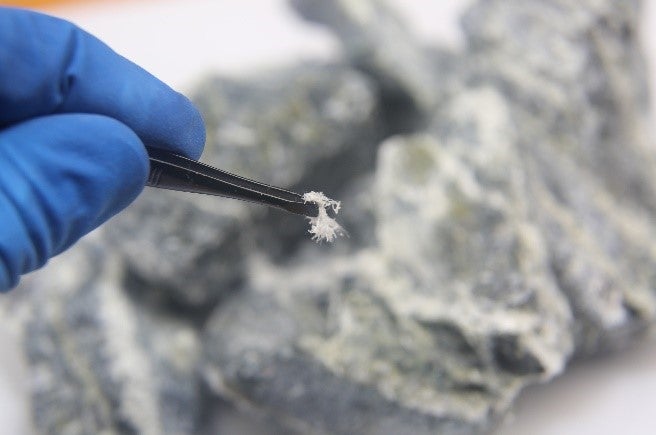
Although asbestos is a known carcinogen, it is still used in automobile brake linings, gaskets, and brake blocks, as well as in permeable separators (diaphragms) at chlor-alkali facilities to produce chlorine and caustic soda. Currently, nearly 40,000 Americans die each year from asbestos-related illnesses. These deaths are preventable and must be stopped, and we applaud EPA for taking this step toward doing so.
In addition, the proposed rule indicates EPA is continuing to include troubling policy decisions in its risk evaluations. Moving forward:
EDF also found many areas of agreement with EPA in the proposed risk-management rule. You can read the full set of comments here.
Tom Neltner, Senior Director, Safer Chemicals; Maricel Maffini, Ph.D., Consultant
On May 19, the Food and Drug Administration (FDA) announced four incongruous actions in response to petitions submitted by EDF and others asking the agency to ban the use of more than two dozen ortho-phthalates (phthalates) in food packaging and processing equipment. We filed the petitions because we were concerned that these hormone-disrupting chemicals were harming people, especially children, who consume food contaminated by this class of chemicals. Since filing the petitions six years ago, the evidence of harm – and our concern for children’s health – have only grown more compelling.
Despite a statutory duty to decide whether the authorized uses were safe, the agency delayed making a decision and then essentially dodged the safety issue, opting instead to allow nine phthalates it had approved decades ago to be used in plastics, paper, and adhesives that contact food or drinks. FDA only acted in response to a lawsuit filed by Earthjustice for EDF and other health and environmental advocates.
FDA’s decisions allow phthalates to continue to seep into our food and do little to protect the public. As a result, EDF and the other advocates, supported by Earthjustice, filed formal objections to the agency’s decisions on two food additive petitions and petitioned the agency to reconsider its denial of a separate citizen petition. We also demanded an evidentiary public hearing to consider the significant new evidence FDA glossed over. (more…)
EPA’s proposed TSCA rule to limit risks from chrysotile asbestos uses a higher “acceptable” cancer risk for workers than the rest of the population
Maria Doa, Ph.D., Senior Director, Chemicals Policy
When it comes to drawing the line on cancer risks, should workers be treated differently than the general population? Of course not. Unfortunately, EPA’s recently proposed rule to manage risks from chrysotile asbestos does just that, using one level of acceptable risk for workers and another – more protective threshold – for everyone else.
EPA says it uses a range for determining acceptable cancer risks under the Toxic Substances Control Act (TSCA), the country’s main chemical safety law. The range spans a risk (or the chance that a person will develop cancer) of less than one in 10,000 to a risk of less than one in one million. EPA says this is consistent with the cancer benchmark used by the National Institute for Occupational Safety and Health (NIOSH).
However, EPA’s proposed TSCA rule for asbestos does not actually use a range and it is not supported by TSCA. EPA instead applies a risk level to workers 100 times less protective than for everyone else! (more…)
Samantha Liskow, Lead Counsel, Healthy Communities; and Lauren Ellis, Research Analyst, Environmental Health
EPA has committed to address the urgent issues presented by PFAS, a harmful class of human-made chemicals that are used widely in everyday products. Last July, as part of this effort, EPA called on companies to voluntarily withdraw some 600 PFAS that were previously allowed onto the market through a fast-track exemption process known as a “low volume exemption” (LVE).
Nearly a year later, however, less than 3% of these low volume per- and polyfluoroalkyl substances (PFAS) have been pulled from the market. That means manufacturers in the U.S. could still be making PFAS that never went through a full safety review – possibly millions of pounds each year. (more…)