
Climate change solutions
We deliver game-changing environmental solutions that have a real impact for people around the globe.
Authors: Maria Doa, PhD and Greg Schweer, Consultant
In case you missed it, an out-of-touch, industry-first proposal from Republicans in the U.S. House of Representatives threatens to significantly weaken the Toxic Substances Control Act, a popular chemical safety law that helps keep dangerous chemicals out of our homes, workplaces and schools. A similar proposal from the U.S. Senate would also roll back these essential public health protections.
Why does this matter? The Toxic Substances Control Act gives EPA the authority and responsibility to review chemicals more effectively – before and after they enter the market. The law underwent a critical reform 10 years ago because it was not sufficiently protecting millions of Americans. Now, the Toxic Substances Control Act is working, and it’s keeping the most dangerous chemicals out of our lives.
In this blog, we’re exploring why the Organization for Economic Cooperation and Development’s experience, policy and modern risk assessment show that country-specific exposure, use patterns and regulatory requirements are more important when evaluating whether to approve a chemical than approval status in other countries.
Note: this is the final blog in a series about how the House Republicans’ proposal would undermine EPA’s ability to protect public health and the environment from toxic chemicals.
A chemical’s risk depends on how it is actually used and who is exposed to it – not whether another country has approved it. Yet, chemical industry advocates argue that the EPA should automatically give the green light to chemicals with approvals granted in other countries. But a chemical’s approval in another jurisdiction does not automatically mean its use is safe here.
The risk posed by a chemical depends on how it is used, who is exposed, the magnitude and duration of exposure, and the protections in place to reduce harm. Different countries may have different uses, exposure patterns, worker protections and regulatory requirements.
That’s why it’s essential for EPA to take into account how it will be produced and used in the United States prior to approval rather than relying on another country’s approval. Congress reaffirmed this responsibility when it modernized the Toxic Substances Control Act in 2016, requiring EPA to evaluate the risks of chemicals under their conditions of use.
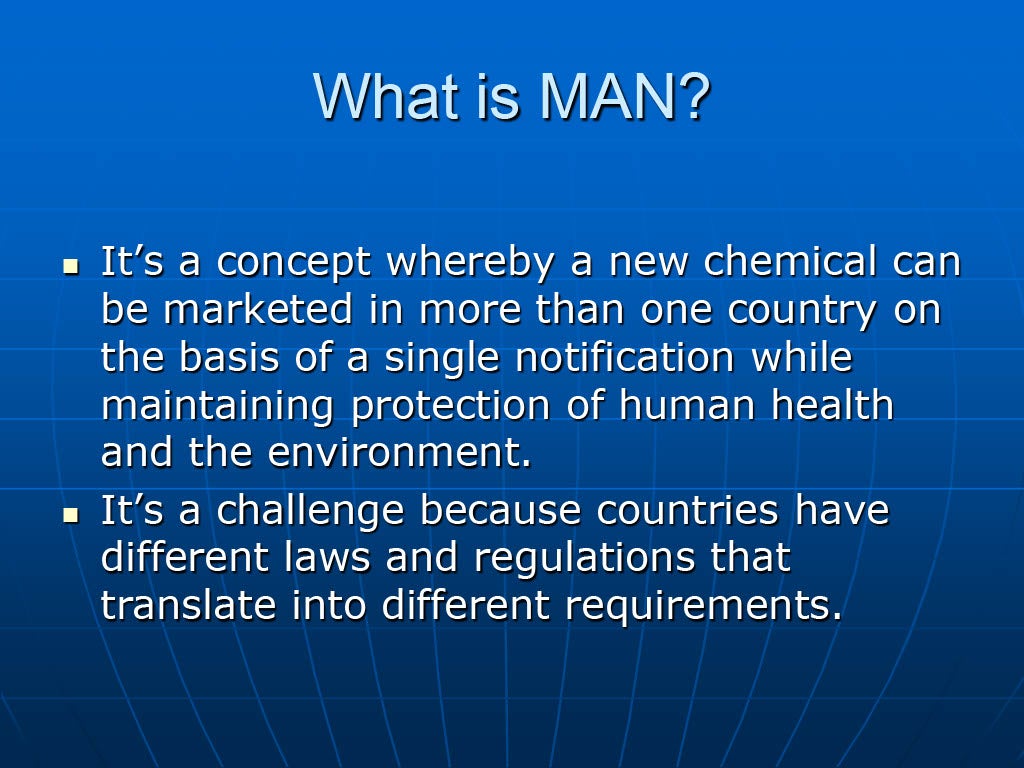
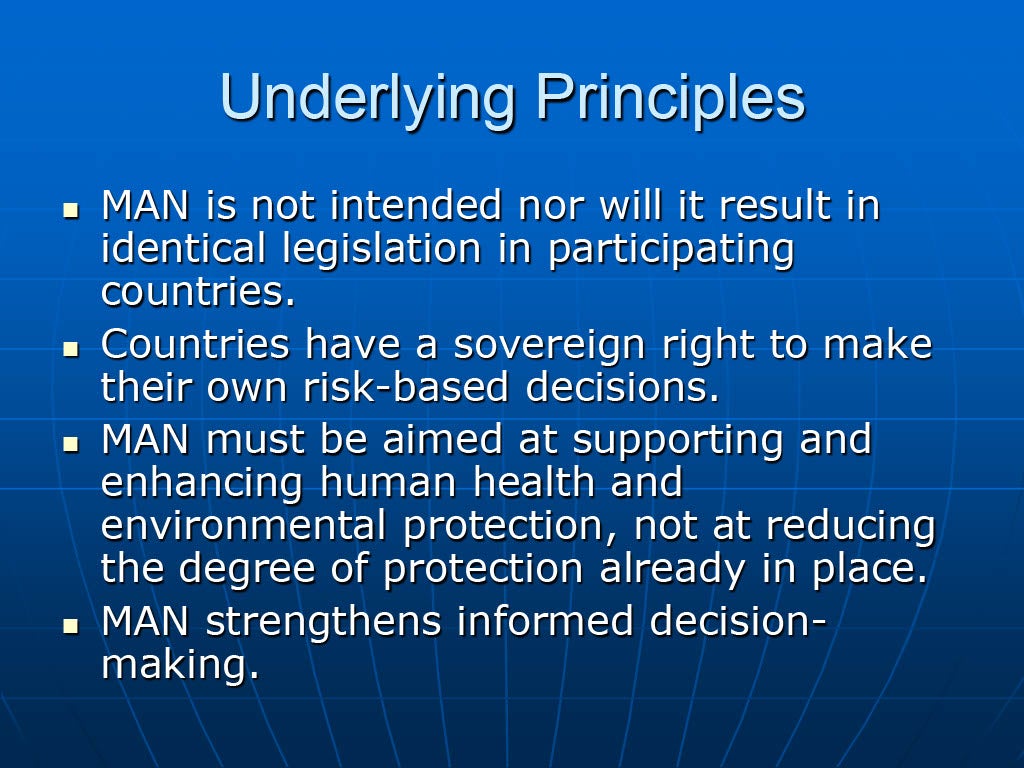
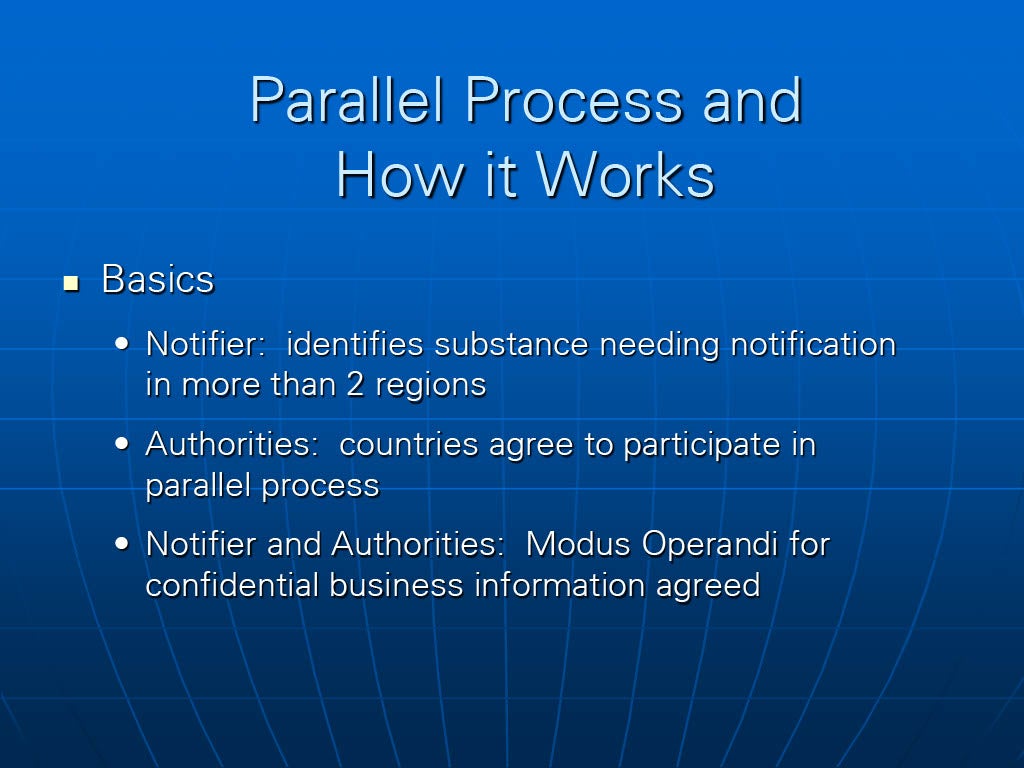
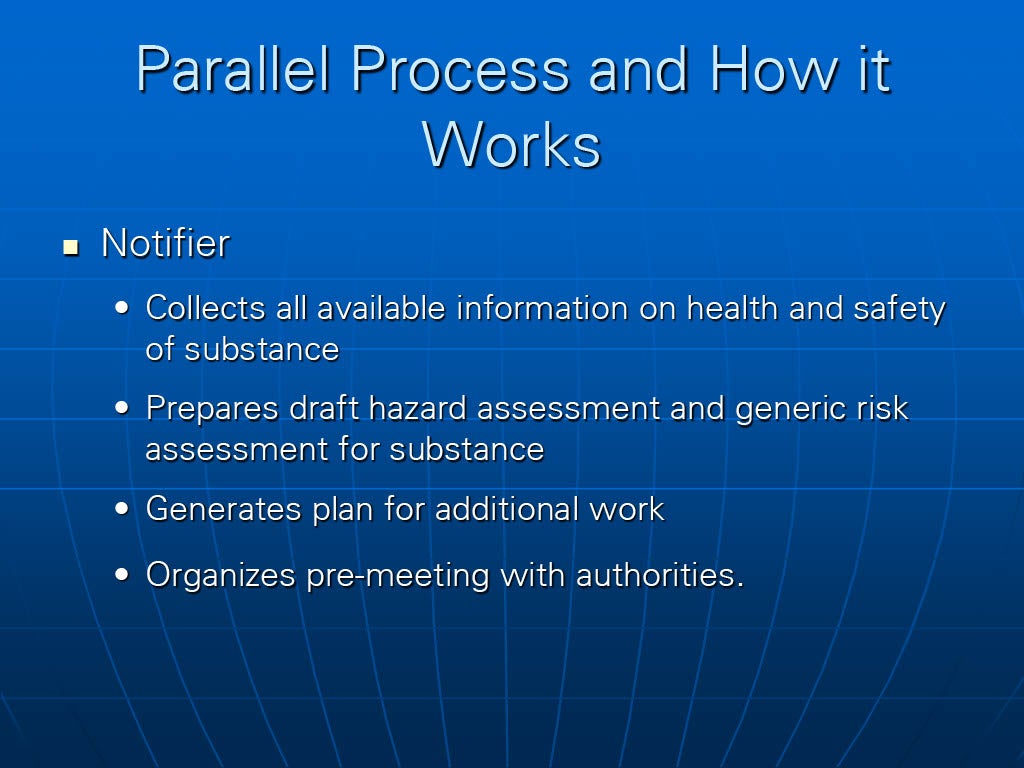
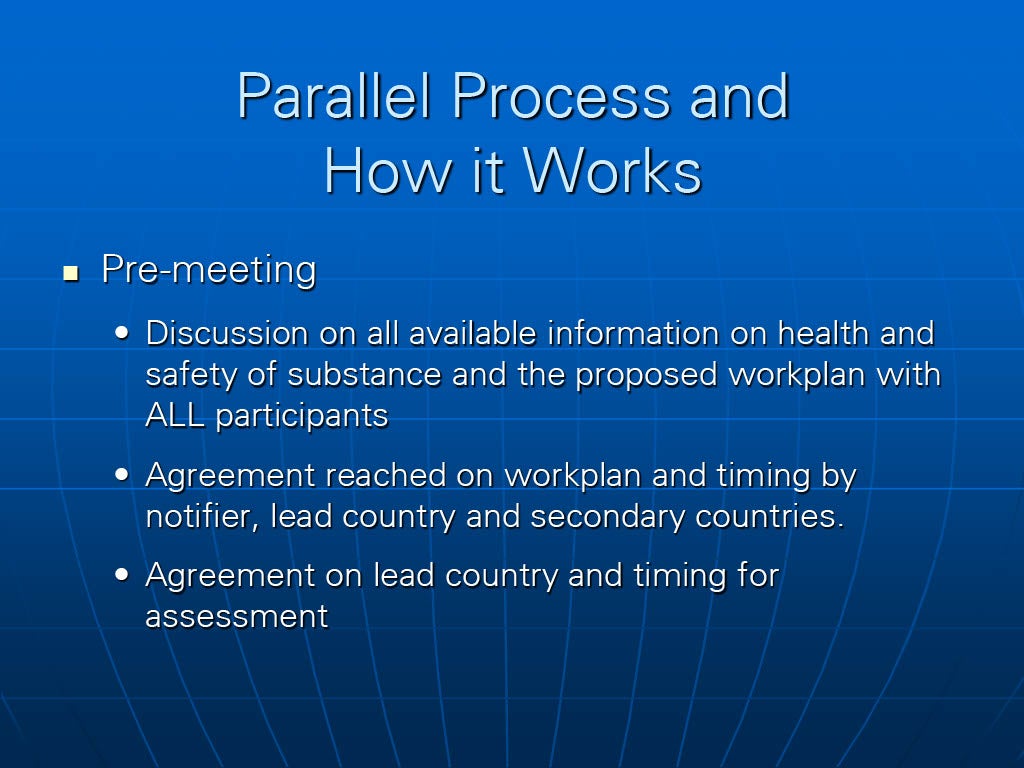
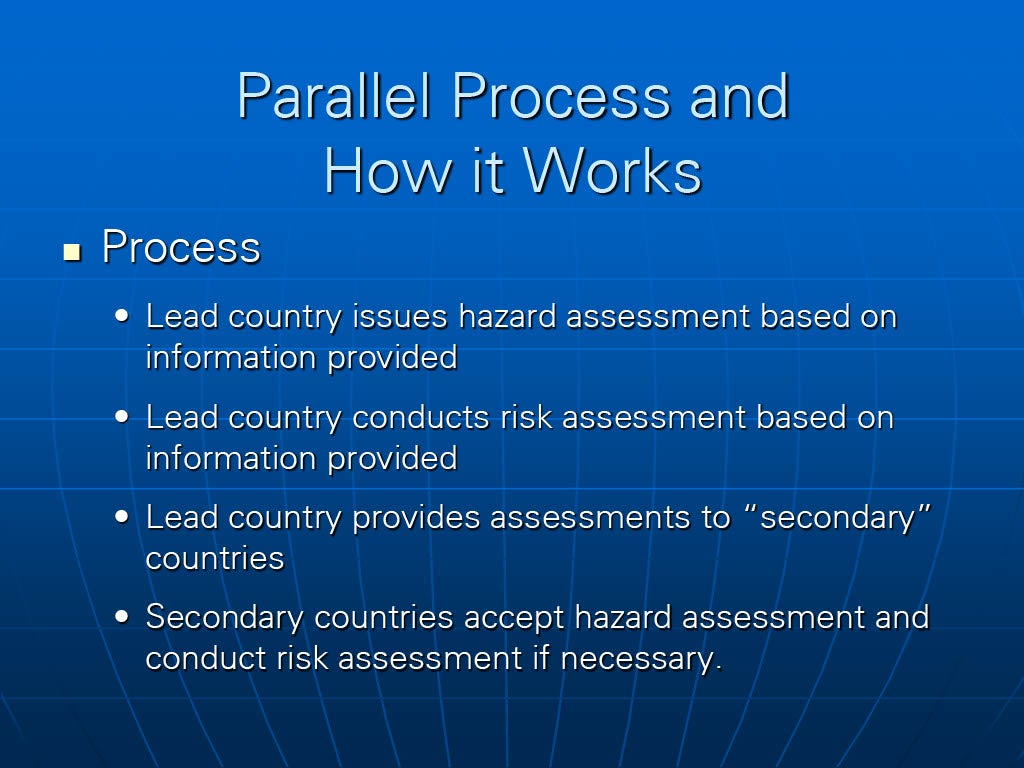
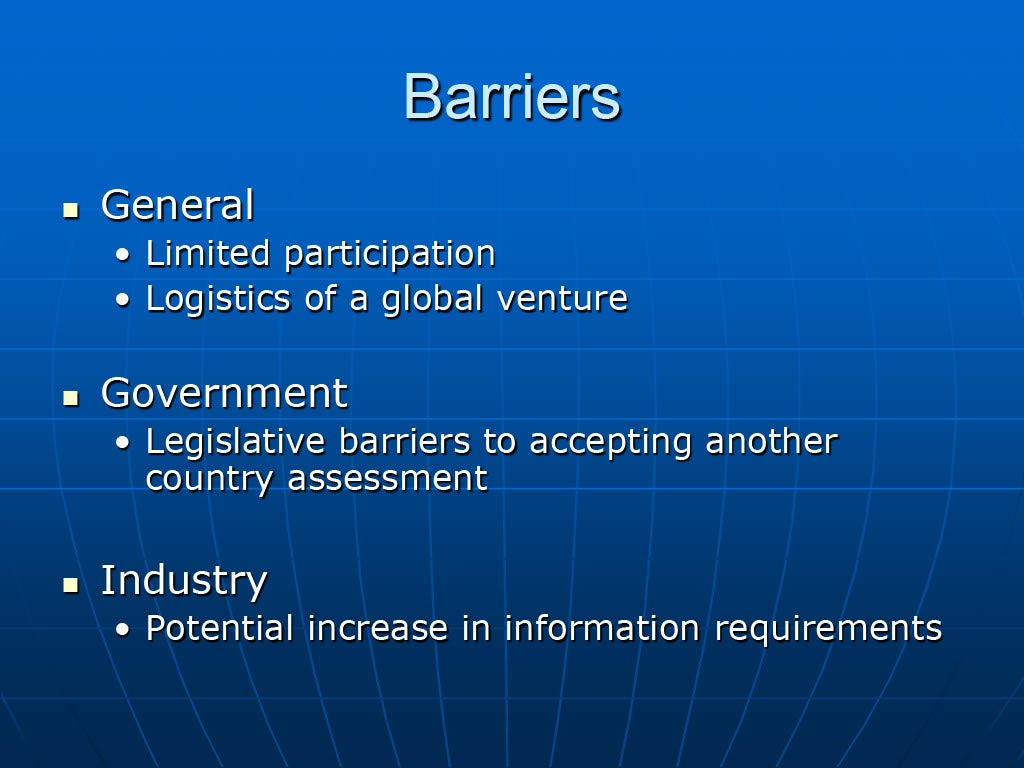
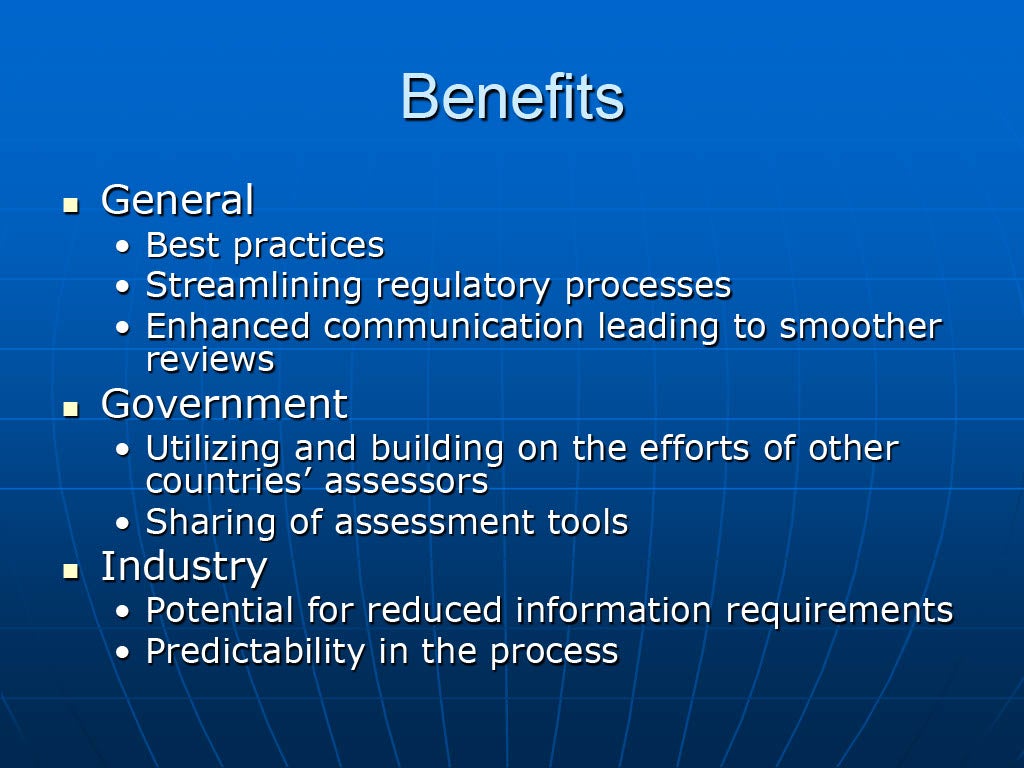
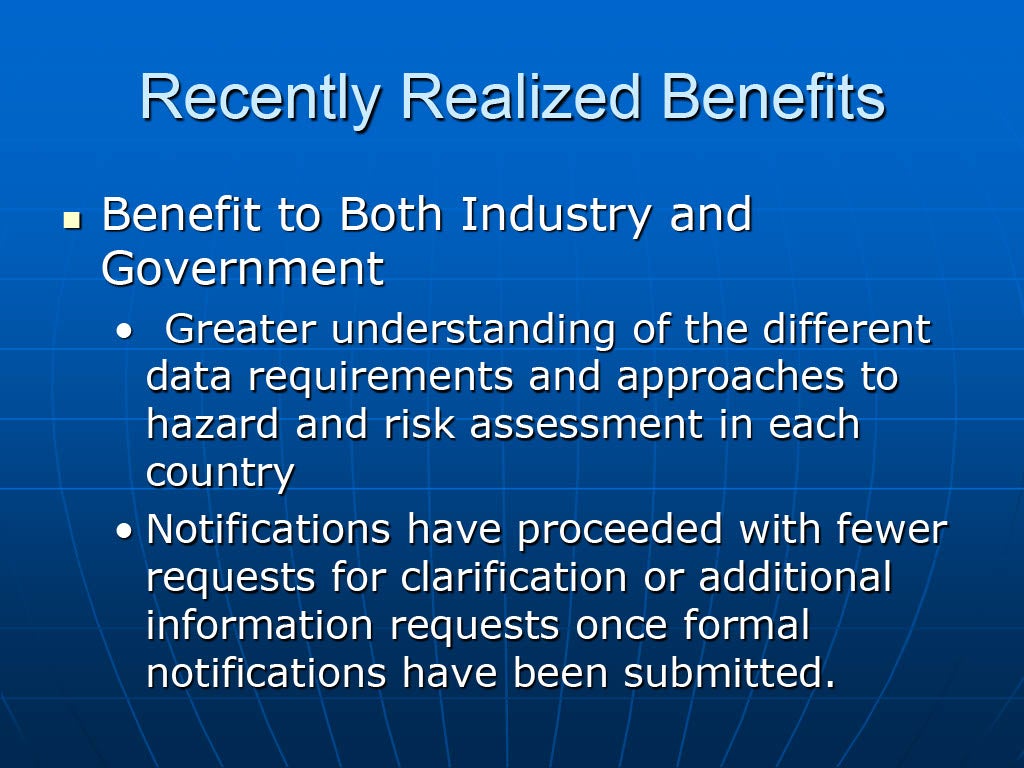
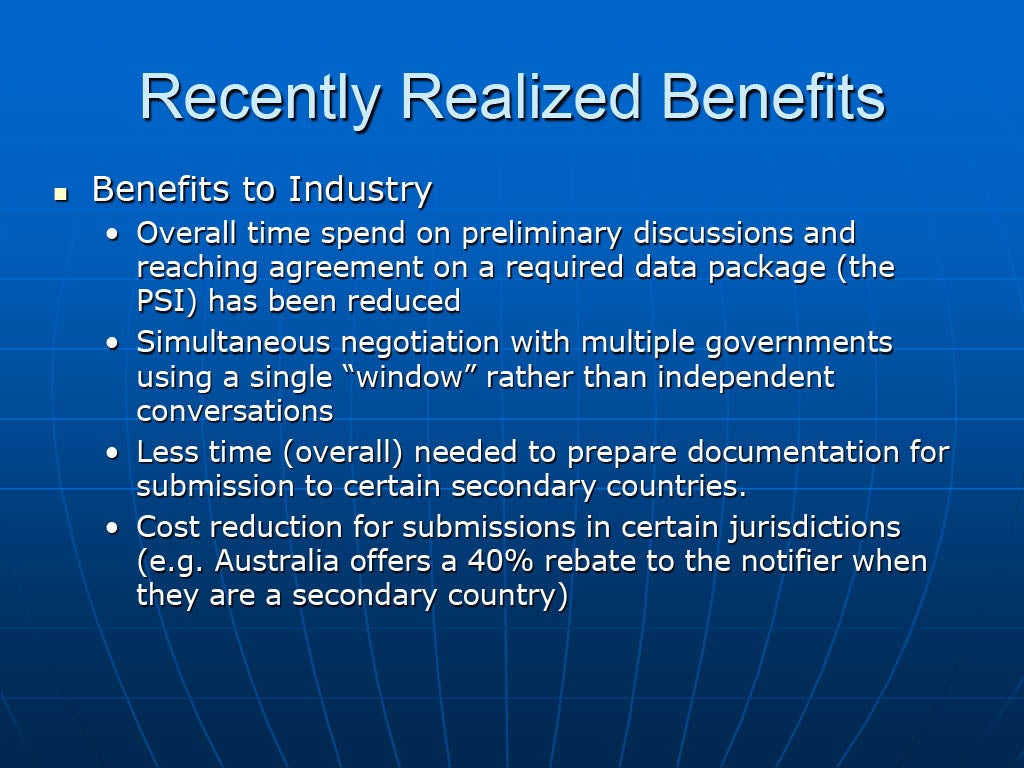
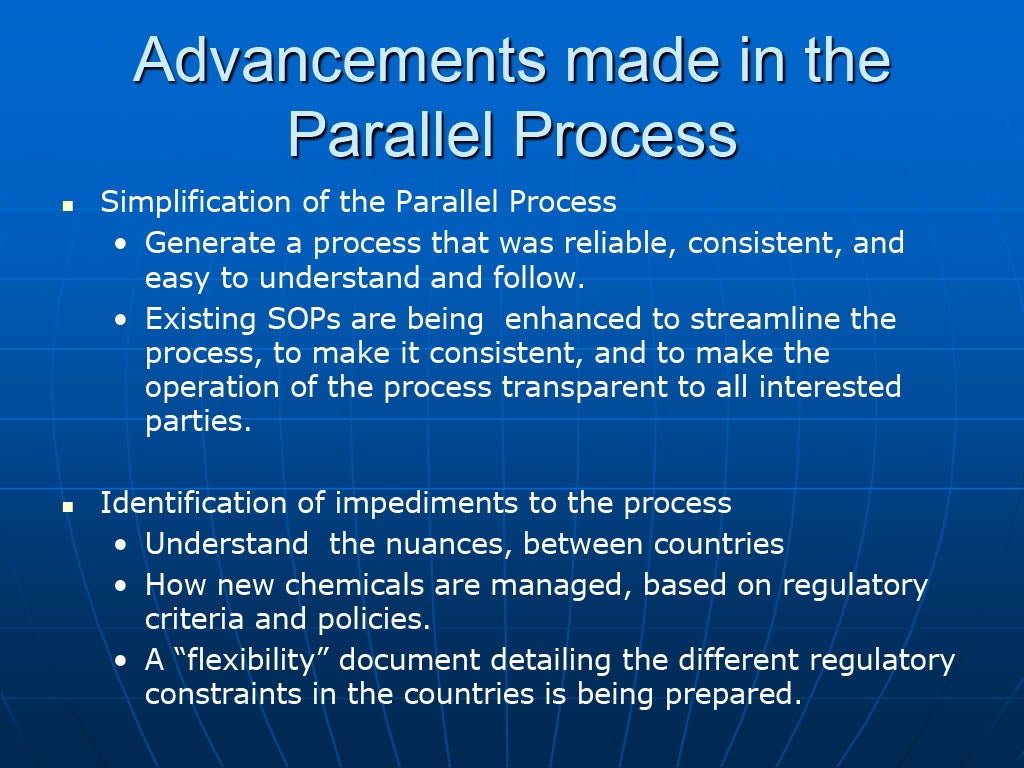
This issue of mutual acceptance of country-specific approvals has come up before. Countries in the Organization for Economic Cooperation and Development (OECD) previously considered whether countries should mutually accept an approved chemical across OECD member countries.
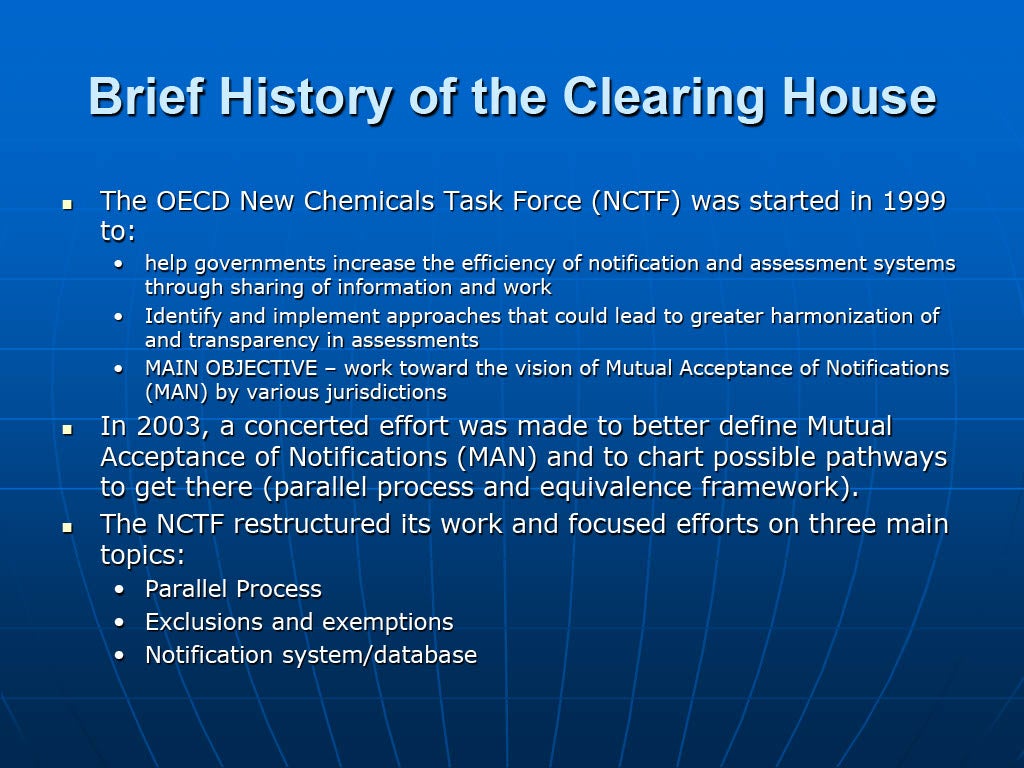
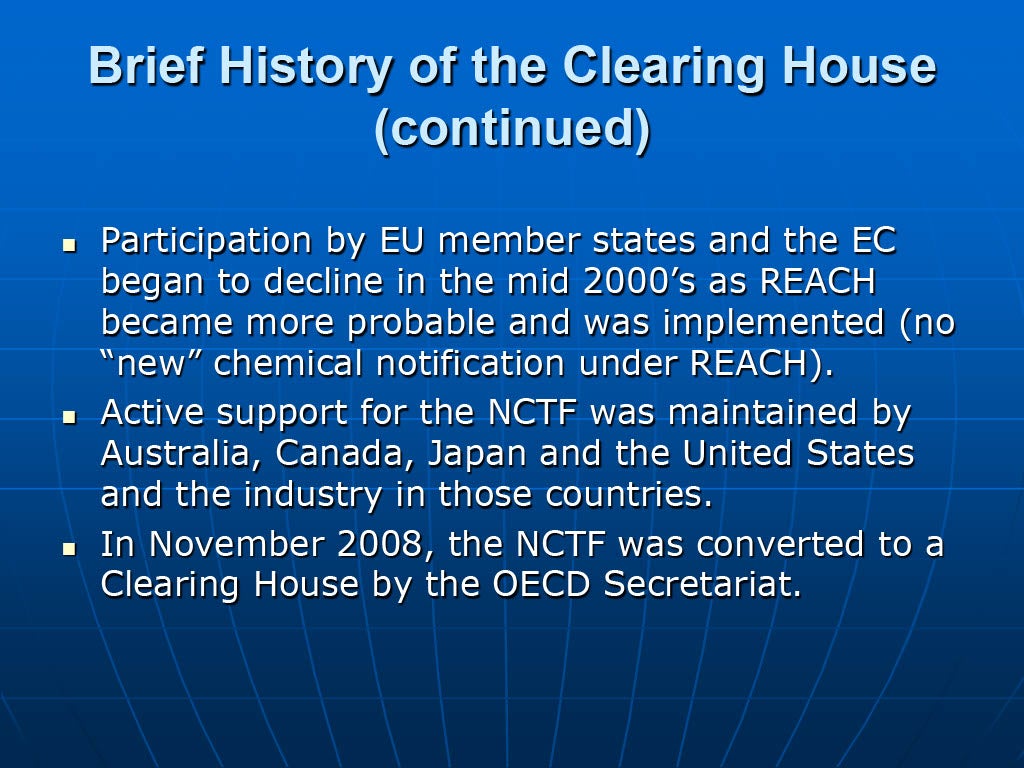
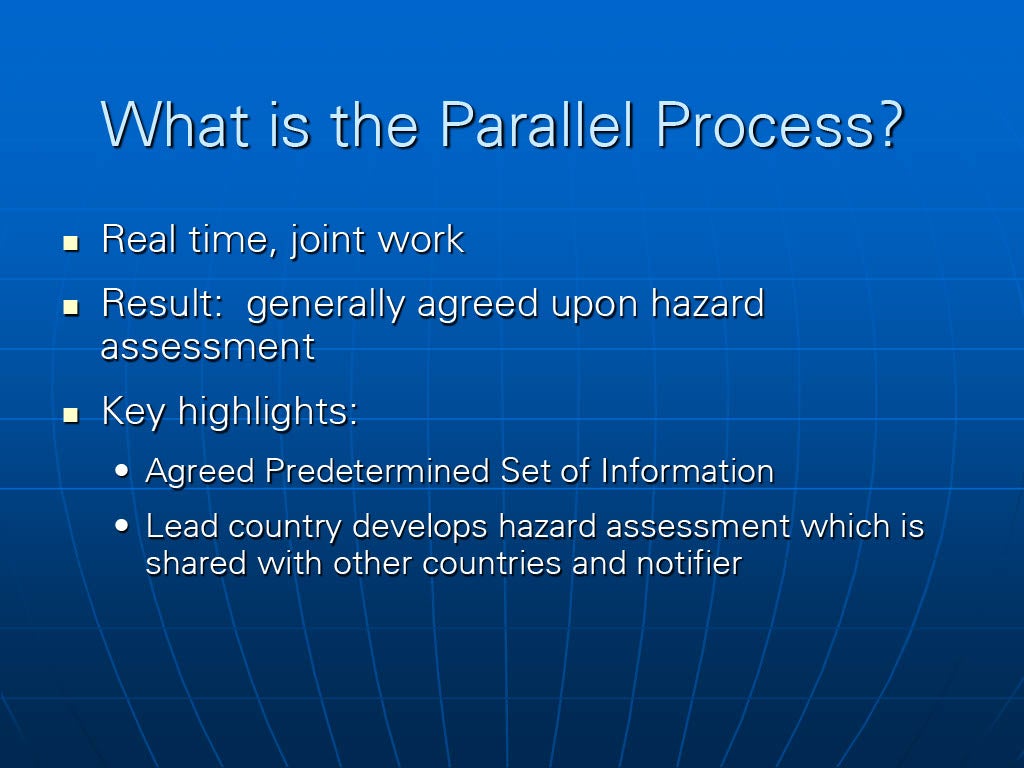
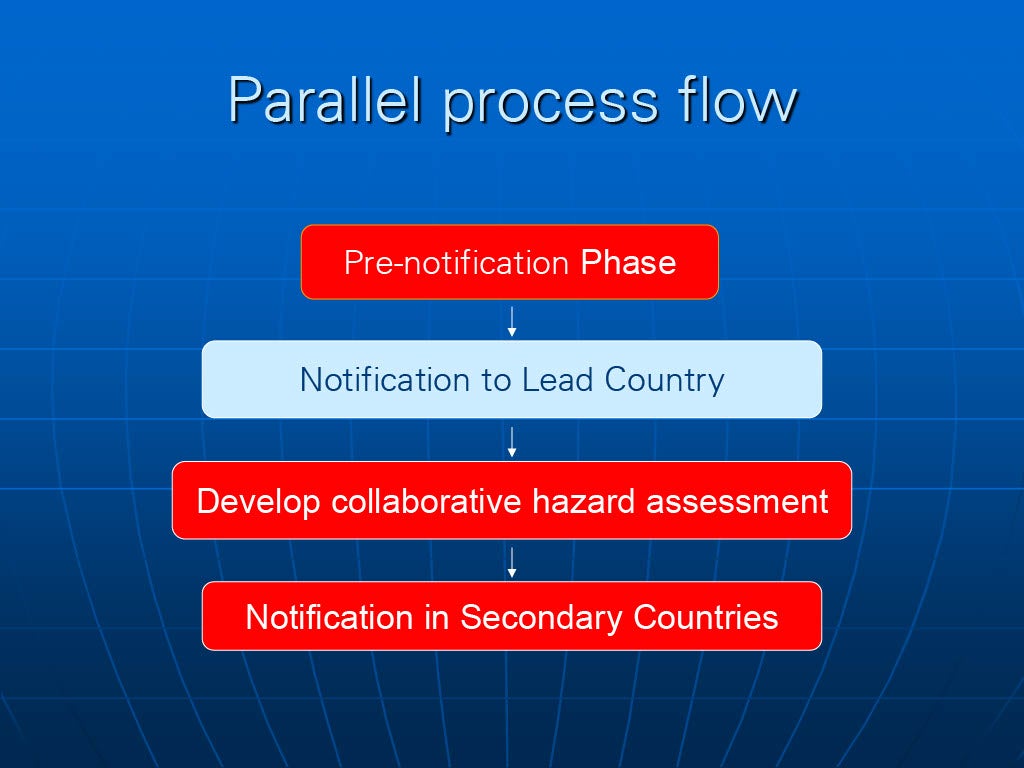
The OECD created the New Chemicals Task Force more than 25 years ago to consider this issue as well as to help the member countries increase the efficiency of notification and assessment systems through sharing of information and work. Countries in the European Union were initially part of the Task Force but decided to stop participating once the European Union’s chemical management program REACH was established because REACH does not include a separate new chemical-specific notification.
The other remaining OECD countries with new chemical notification systems — including Australia, Canada, Japan and the United States — continued to evaluate whether and how new chemical risk-based decisions in one country could automatically be adopted in other countries.
The OECD group identified fundamental challenges to one country automatically adopting another country’s risk-based new chemical decision because countries have different laws, regulations and safety standards that translate into different data requirements, review processes and risk management decisions. Further, new chemical decisions are risk-based decisions which are dependent on both the hazard of the chemical and our exposure to the chemical.
In the end, the OECD walked away from the idea of the mutual acceptance of new chemical risk-based regulatory decisions. The concept may sound efficient in theory, but OECD participants concluded that new chemical risk-based decisions are too dependent on country-specific conditions to be automatically adopted by another jurisdiction.
Our exposure to a chemical is a function of how much of the chemical we are exposed to, the frequency of the exposure and the way we are exposed. For instance, will the chemical be released into the air we breathe, our drinking water, or in products used in our homes? This will depend on how and where the new chemical is produced and used, whether workers handle it directly, whether consumers use products containing it and the extent to which it may be released into the environment.
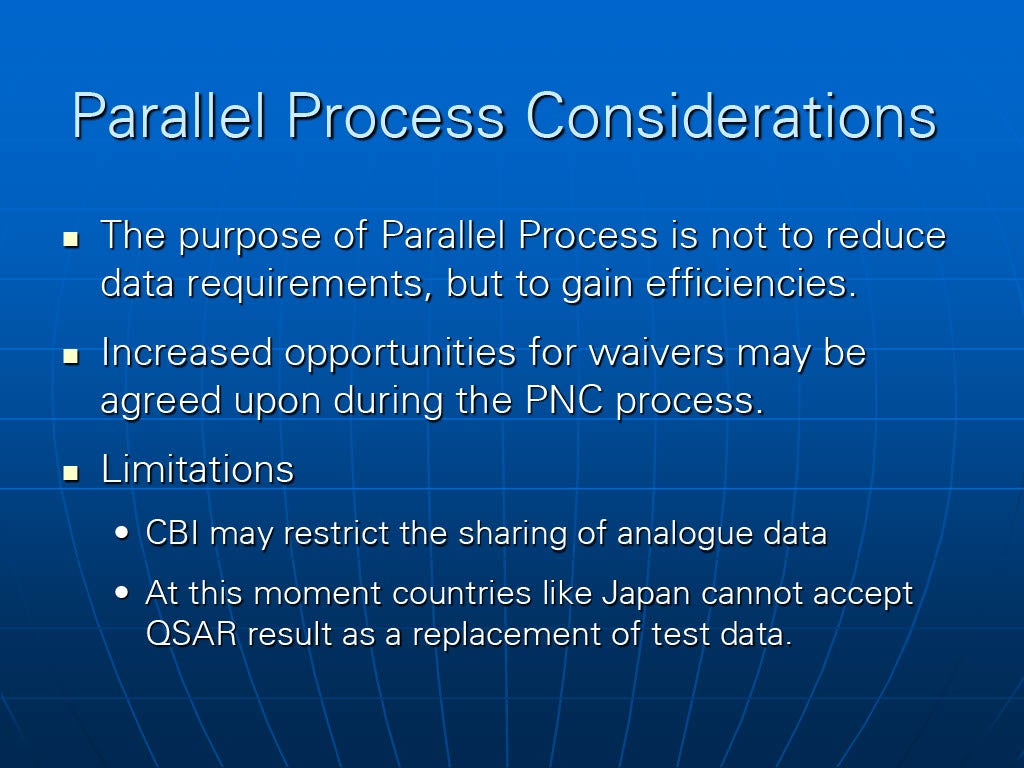
Different countries have different requirements for the types of data and information that can be used to support assessment of new chemicals. There are also limits on what data can be shared among countries, given the confidential business information that may be part of the data used to assess a new chemical.
In the end, the OECD walked away from the idea of the mutual acceptance of new chemical risk-based regulatory decisions. The concept may sound efficient in theory, but OECD participants concluded that new chemical risk-based decisions are too dependent on country-specific conditions to be automatically adopted by another jurisdiction.
Not only are there different laws and requirements in different countries, importantly the risks of the use of a chemical in one country can be more significant than the risks in another country because of different production, use and consumer and environmental exposures.
So, who would benefit from the automatic approval of a new chemical under the Toxic Substances Control Act based largely on another country’s decision? Not the public — and especially not workers, fenceline communities, consumers or children, who bear the brunt of the risks the heavily industry-influenced proposal would ignore. Instead, the proposal would shift responsibility away from evaluating how Americans may actually be exposed to a chemical, toward assuming that another country’s review is sufficient.
Go deeper: Dive into our analysis of the House Republicans’ proposal to gut the Toxic Substances Control Act, and read more about a similarly harmful proposal from Senate Republicans. ICYMI, our other pieces in this series are here:
Keeping workers safe under the Toxic Substances Control Act
Why “feasibility” is a dangerous, slippery slope for chemical reviews

The Toxic Substances Control Act is the primary safety law protecting Americans from harmful chemicals in everyday products. Bipartisan updates in 2016 strengthened the law by giving EPA the authority and responsibility to evaluate new chemicals more effectively, and to protect vulnerable populations, including children, pregnant women and those who work at or live by facilities that produce these chemicals. Under the updated Toxic Substances Control Act, a critical baseline was established: the process of manufacturing a new chemical cannot begin until the EPA has assessed its risks and given its approval through an evidence-based chemical safety review process.
Yet some industry players continue to put on a full-court press for changes that would weaken and undermine these public health protections. Contrary to industry narrative, the record shows that companies have continued to develop and introduce new products despite these safety requirements.
Let’s take a closer look at what is actually happening.
According to EPA, since the Toxic Substances Control Act was strengthened in 2016, EPA has evaluated the safety of nearly 2500 new chemicals. Of these chemicals, EPA has approved nearly 80% for sale and use in products, either with or without restrictions. Many of the remaining cases were withdrawn by the company, with only 1% not allowed to be commercialized either due to EPA needing additional critical information or being prohibited for safety reasons.
Additionally, EPA has granted 80% of exemptions — more than 2200 requests in total — from the full review process for chemicals with low environmental releases and human exposures. These chemicals can be commercialized, if approved, after a generally shorter review.
Of these thousands of chemicals approved since 2016, EPA has approved hundreds of chemicals that are currently used in innovative products. These chemicals, often highly toxic ,are approved with restrictions so that their use does not present an unreasonable risk. For example, EPA has approved hundreds of chemicals used to make microchips, in lithium-ion batteries for electric vehicles, and heat transfer fluids for use at data centers. These chemicals include persistent bioaccumulative toxic (PBT) chemicals, mixed metal oxides, and the “forever chemicals” PFAS.
These chemicals are often highly toxic, which reinforces EPA’s review process that allows approvals— only with restrictions that ensure they do not present an unreasonable risk.
With the Toxics Substances Control Act protections, it doesn’t have to.
These highly toxic chemicals are often approved under restrictions which can look like requiring workers to wear gloves when handling certain chemicals, prohibiting the use of chemicals in a consumer product if they can cause allergic reactions or harm development, or not allowing PBT chemicals to be released into lakes, streams or contaminate groundwater because they can build up over time, increasing the potential for exposure.
These are limitations that most would consider to be eminently reasonable. 90% of Americans are concerned about chemical exposure in everyday products. Workers deserve to be protected. And Americans do not want PBTs in our environment.
Through the updated Toxics Substances Control Act, chemical innovation and environmental health protections are already advancing together.
The primary purpose of the Toxic Substances Control Act is “to assure that such innovation and commerce in such chemical substances and mixtures do not present an unreasonable risk of injury to health or the environment.”
[Public Law 94–469; Approved October 11, 1976]
The Toxics Substances Control Act tasks EPA with ensuring that new chemicals, including chemicals used in innovative technologies are manufactured, used and disposed of in a way that does not present an unreasonable risk to human health and the environment.
While the Toxics Substances Control Act states that authority over chemicals should not “impede unduly…technological innovation,” it further states this should be done while fulfilling the primary purpose of the Toxic Substances Control Act “to assure that such innovation and commerce in such chemical substances and mixtures do not present an unreasonable risk of injury to health or the environment.” To support continued innovation while protecting people and the environment, Congress must preserve the health protections provided by the Toxics Substances Control Act’s current chemical review process. Maintaining these safeguards is critical to keeping harmful new chemicals out of our homes, workplaces and communities while supporting the development and manufacturing of safer products and technologies.
Near-constant exposure to chemicals in food is taking a toll on Americans’ health at all stages of development. Where is the FDA?
What’s new: From the first cup of coffee to the last late-night snack, Americans are exposed to hundreds or even thousands of chemicals in their food every day. These chemicals enter our diet as ingredients, additives and colors or from leaching from processing equipment and packaging. Some are harmless, but many are toxic, linked to serious health problems, including cancer. In a new joint report by experts at EDF and Consumer Reports, we look at how the cumulative effects of chemicals in food harm our health over time and explain why the FDA already has the legal authority — and responsibility — to protect us.
Why it matters: While we tend to think about the risks of one chemical at a time — BPA in our water bottles, PFAS in our cookware, methylene chloride in our decaf coffee — the realities of our modern, industrialized food system demand that we broaden our focus. With the average American facing hundreds of food-related chemical exposures a day, several of these chemicals can affect the same organs or bodily systems. Although the effect of each exposure might be small, the collective impact of many — whether over the short- or long-term — wages a war of attrition against our health.
Go Deeper: Read our full deep-dive article here.
In case you missed it, an out-of-touch, industry-first proposal from Republicans in the U.S. House of Representatives threatens to significantly weaken the Toxic Substances Control Act, a popular chemical safety law that helps keep dangerous chemicals out of our homes, workplaces and schools. A similar proposal from the U.S. Senate would also roll back these essential public health protections.
Why does this matter? The Toxic Substances Control Act gives the EPA the authority and responsibility to review chemicals more effectively, before and after they enter the market. The law underwent a critical reform 10 years ago because it was not sufficiently protecting millions of Americans. Now, the Toxic Substances Control Act is working, and it keeps the most dangerous chemicals out of our lives.
Here are some ways our bedrock chemical safety law is working to protect us, and what’s at stake if it’s weakened. Over the next few weeks, we’ll dive deeper into how industry-first Republican proposals in Congress would put profits over health, and how the Toxic Substances Control Act keeps us safe – and is worth fighting for.
Note: This is the sixth in a series about how the House Republicans’ proposal would undermine the EPA’s ability to protect public health and the environment from toxic chemicals.
The Toxic Substances Control Act’s 2016 reforms shield communities from toxic chemicals
Thanks to the 2016 improvements to the Toxic Substances Control Act, many harmful chemicals have been kept out of our communities, homes and everyday products. The Toxic Substances Control Act now requires the EPA to make an affirmative determination about the safety of any new chemical; the process of manufacturing a new chemical cannot commence until the EPA has made its determination through an evidence-based chemical safety review process under the Toxic Substances Control Act. The 2016 revision of the law prevents the approval of new chemicals without an assessment of its risks.
Unknown or Variable Composition, Complex Reaction Products and Biological Materials (UVCBs) form a significant portion of the chemical substances subject to the Toxic Substances Control Act. Unlike many chemicals, which have well-defined molecular structures, UVCBs are complex mixtures with varied compositions, the specifics of which are generally unknown, earning them their name. Many are also poorly characterized, so they are often described not by what they are but by how they were made and what they were made from. The inherent variability and lack of specific information on UVBCs’ exact make-up complicate the characterization of their toxicity and the risks they pose. And given their inherent non-specificity, inherently different UVCBs may have similar sounding names.
The Republican draft prioritizes industry profits over public health, leaving families, workers and fenceline communities at risk
Tucked inside the Republican discussion draft is new language that sounds procedural and abstract — including provisions about “UVCB chemical substances” and “equivalency” — but within the framework of the Toxic Substances Control Act, these terms carry significant weight and consequences.
If passed, this would allow a new UVCB that is claimed to be like one already on the market to bypass the EPA’s new chemical safety review process and automatically enter the market. This would introduce an even greater uncertainty and ignore significant differences by treating different unknown and variable mixtures as equivalent to a known chemical.
While there may be many similarities between two different UVCBs, the differences can lead to substantial variations in their toxicity profiles. Let’s use cakes as an example. The provision suggests treating a lemon pound cake and a chocolate cake – both complex mixtures – as essentially equivalent because both contain flour, eggs, and sugar and are baked at 350 degrees F. Yes, there are similarities but also significant differences, such as the varying additional ingredients and different calorie counts. A taste test will immediately show that they’re not equivalent.
While the difference between types of cakes may not affect more than our preferences in desserts, the difference between two different UVCBs can have serious implications. For complex substances like UVCBs, a chemical’s exact make-up directly affects its properties such as composition, toxicity, how long it lasts in the environment and its ability to accumulate in the body — factors that are central to a meaningful risk assessment. The Republican draft ignores the reality that two UVCBs that appear somewhat similar on paper may differ significantly in their toxicity and the presence of harmful contaminants.
In practice, this would open a back door to allow the toxic, harmful substances generated through the burning of waste plastic – so-called “chemical” or “advanced recycling” – onto the market. For example, burning waste plastics or tires could be characterized as producing substances “equivalent” to petroleum naphtha — already on the inventory — despite containing flame retardants, phthalates, heavy metals, dioxins and many other harmful chemicals not found in conventional naphtha. Treating these substances as equivalent to petroleum naphtha would allow other extremely hazardous substances to enter the market without any chemical review or assessment, creating public health risks that often fall disproportionately on already overburdened communities.
Go deeper: Dive into our analysis of the House Republicans’ proposal to gut the Toxic Substances Control Act, and read more about a similarly harmful proposal from Senate Republicans. ICYMI, our other pieces in this series are here:
Keeping workers safe under the Toxic Substances Control Act
Why “feasibility” is a dangerous, slippery slope for chemical reviews
In case you missed it, an out-of-touch, industry-first proposal from Republicans in the U.S. House of Representatives threatens to significantly weaken the Toxic Substances Control Act, a popular chemical safety law that helps keep dangerous chemicals out of our homes, workplaces and schools. A similar proposal from the U.S. Senate would also roll back these essential public health protections.
Why does this matter? The Toxic Substances Control Act gives EPA the authority and responsibility to review chemicals more effectively – before and after they enter the market. The law underwent a critical reform 10 years ago because it was not sufficiently protecting millions of Americans. Now, the Toxic Substances Control Act is working, and it’s keeping the most dangerous chemicals out of our lives.
Here are some ways our bedrock chemical safety law is working to protect us, and what’s at stake if Republicans in Congress weaken it. Over the next few weeks, we’ll dive deeper on how industry-first Republican proposals in Congress would put profits over health, and how the Toxic Substances Control Act keeps us safe – and is worth fighting for.
Note: this is the fifth in a series about how the House Republicans’ proposal would undermine EPA’s ability to protect public health and the environment from toxic chemicals.
Evaluating risks with health and safety in mind
The Toxic Substances Control Act requires EPA to evaluate chemicals based on the risks they pose to people and the environment – without weighing other factors like cost, or how feasible the industry considers controls on the chemical, such as limiting its use in a consumer product. Factors other than risk are considered when EPA determines how to eliminate the unreasonable risk. This approach puts public health at the center of EPA’s decision-making, rather than industry interests.
And under the current law, once EPA identifies an unreasonable risk from a chemical, the agency has clear authority to act to mitigate these risks. Before the Toxic Substances Control Act was reformed a decade ago, the agency lacked this authority. Now, the law gives EPA the tools and authority to prevent these unreasonable risks from harming the public or environment.
“Reasonably feasible” for whom?
But the proposal from House Republicans undermines this public health approach, instead requiring EPA to base its evaluation of the risks on cost-effectiveness and feasibility. When making decisions about how to control the unreasonable risks for a chemical already on the market, EPA would be required to choose measures that would “minimize, to the extent reasonably feasible, such risk of injury to health or the environment.”
By centering concerns about industry’s feasibility from the outset during the risk evaluation process, the proposal ensures that industry’s economic preferences shape the outcome before protective options are even considered. This approach will likely create a dangerous disconnect between what industry deems feasible and what protections are needed to keep people safe.
Here’s what this could look like in practice. A chemical company may tell EPA that it’s only “reasonably feasible” to control a chemical’s risk by a small amount – say, 5% of what EPA considers health-protective. Under this proposal, EPA would have no choice but to take this industry claim at face value, leaving people at risk. With the “reasonably feasible” excuse, EPA would not be able to ban or meaningfully restrict the most toxic chemicals.
For decades, the industry has argued that meaningful protections – like swapping in a safer alternative or installing controls that limit exposure – aren’t economically feasible for them, regardless of how severely workers and people living nearby could be harmed by exposure. Embedding feasibility for the industry as a constraint in risk management virtually guarantees that the most protective options will be systematically underweighted.
Blocking state action
Restricting EPA’s protections to only what the industry deems feasible will inevitably lead to weaker protections at the federal level. But the proposal takes a dangerous step beyond this and blocks states from enacting stronger standards that fill the gap in federal protections.
Under this proposal, when EPA takes action on a chemical already on the market, states would be preempted from requiring stronger restrictions – no matter how weak and unprotective the EPA regulation. The Republican proposal would lock in federal regulations that are feasible for the chemical industry but leave families at risk. Under this weakened version of the law, the states will not be able to do anything to protect their citizens.
Incentivizing EPA to propose weaker protections
If EPA proposes a restriction that industry argues is not technically or economically feasible, the restriction – even if it is only labeling – would be considered to “substantially prevent the specific” use, effectively banning that use. This creates a Catch-22 for the agency: knowing that stronger proposed protections would trigger long, drawn-out battles with the industry over what’s feasible, EPA will be incentivized to propose weaker controls on a chemical, even in instances when the science clearly calls for something stronger.
Instead of framing the question as what’s needed to keep workers and families safe from chemical exposure, the agency would be encouraged to consider how much of a struggle it’ll be to require a company to control a chemical’s risk. Allowing feasibility concerns into the risk evaluation process opens the door to the chemical industry overriding risk-based protections at the expense of people’s health.
Go deeper: Dive into our analysis of the House Republicans’ proposal to gut the Toxic Substances Control Act, and read more about a similarly harmful proposal from Senate Republicans. ICYMI, our other pieces in this series are here:
Keeping workers safe under the Toxic Substances Control Act
What’s new: New research from EDF offers an approach for identifying potential cumulative risks and existing health vulnerabilities in communities on the frontlines of toxic air pollution. The paper, “Identification of Potential Cumulative Chemical Exposures in Overburdened Communities for Chemical Policy Applications,” published in the journal Environmental Justice, adds to a growing body of research underscoring the importance of considering environmental injustice and climate vulnerability when making regulatory and policy decisions.
The research finds that some volatile organic compounds, like benzene and naphthalene, and some metals, like nickel, chromium and arsenic, are often released together from facilities – as often as 72% of the time. These chemicals all cause neurological effects, and many of them cause the same kind of cancers and developmental harms.
Researchers also find that facilities that release more than one chemical pollute more overall – on average, they pollute 285,000 pounds, according to EDF analysis of emissions over a six-year period. This means that communities near these facilities are at risk not just from exposure to multiple chemicals, but from greater exposures overall.
Why it matters: Regulators, researchers and policymakers are faced with many decisions when determining how to prioritize toxic chemicals for assessment and regulation. This research makes the case for decisionmakers to go beyond typical considerations for prioritization and to look at the bigger picture of how people are at risk from exposure to multiple toxic chemicals.
Our new research offers a playbook for how regulators could consider two essential factors: cumulative risk – exposure to multiple chemicals that cause the same health effects – and overall community vulnerability, based on its baseline health vulnerabilities and other risk factors.
This approach can aid state and federal agencies in their chemical risk assessments based on a chemical’s potential for driving cumulative risks. It offers guidance on scoping for cumulative risk assessments and identifying opportunities for co-benefits to the most at-risk communities.
Our take: People aren’t exposed to one chemical at a time, and communities facing multiple exposures to chemicals that cause the same harms are at the greatest risk. Regulators and policymakers should consider this reality so that our chemical safety laws are truly health-protective – especially for the most vulnerable.
Read the paper here.