







A Columnist Wonders: Can Congress Do Its Job?
Written By

Share
Jack Pratt is Chemicals Campaign Director
“It’s not that members of Congress don’t work hard…yet they regularly manage to avoid accomplishing anything even on those matters on which they overwhelmingly agree,” observed Melinda Hennebergert this morning in Bloomberg Politics.
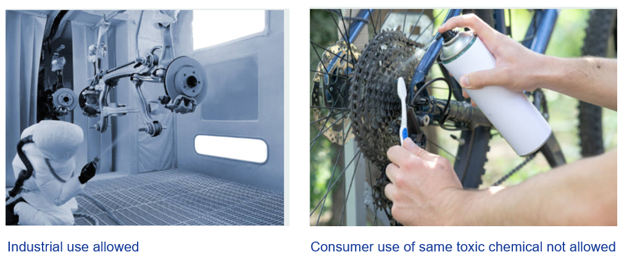
She was talking, in part, about the new bill to reform America’s broken chemical safety law. Everyone agrees the current system is a national disgrace, preventing the EPA from banning even known carcinogens like asbestos. Yet there’s fierce opposition to the only legislative vehicle that could successfully change things.
Hennebergert notes that some opponents to the bill, which has co-sponsors across the ideological and partisan spectrum, object to the fact that it is a compromise necessary to pass Congress. She calls it the “half-a-loaf or none conundrum” and says that “in the increasingly rare cases of bipartisan agreement, paralyzing pushback” now seems inevitable.
Her frustration is clear, especially since “it has already been 26 years since any environmental bill of this magnitude (1990’s Clean Air Act) has passed.”
She notes that some opponents of the bill favor alternative legislation – a bill without bipartisan sponsors or the compromises necessary to gain traction. It’s an all or nothing approach and, with it, “nothing is just what citizens may get.”
The question is, can Congress prove her wrong and get something big done to protect public health and the environment?