








ICYMI: EDF Cumulative Risk Assessment Framework Webinar
Posted: in
Health policy
Written By

Share
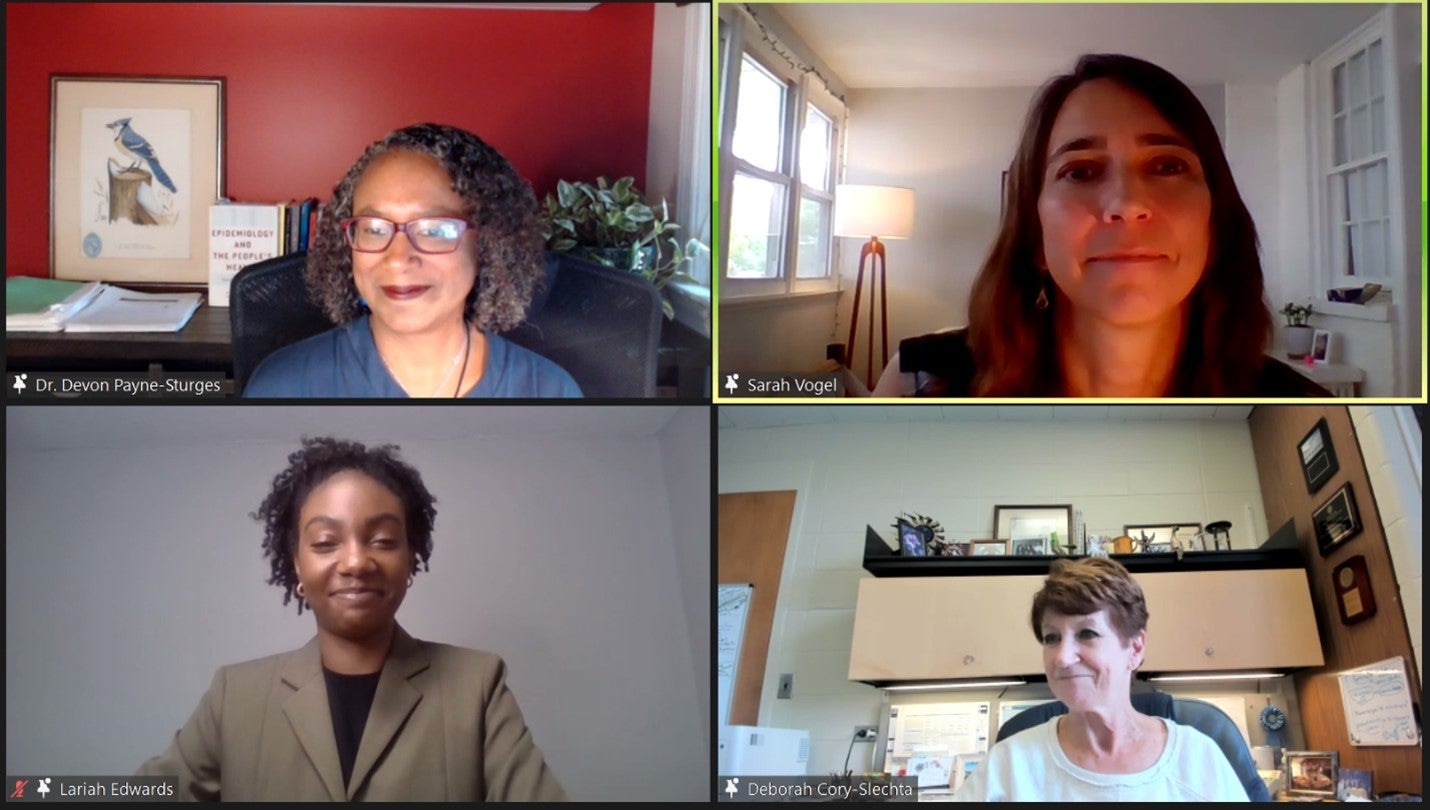
On Wednesday, September 7, 2022, Sarah Vogel, EDF’s Senior Vice President for Health, welcomed over 150 attendees to a webinar on EDF’s new Cumulative Risk Assessment Framework (CRAF). The event featured presentations by:
- Lariah Edwards, PhD, EDF post-doctoral fellow and Associate Research Scientist, Department of Environmental Health Sciences, Mailman School of Public Health, Columbia University.
- Devon Payne-Sturges, DrPh, Associate Professor, Maryland Institute for Applied Environmental Health, School of Public Health, University of Maryland.
- Deborah Cory-Slechta, PhD, Professor of Environmental Medicine, Pediatrics, Public Health Sciences, and Neurosciences, University of Rochester Medical Center.
EDF staff developed this new tool to provide a practical pathway for applying comprehensive, cumulative chemical risk evaluations within the framework of the Toxic Substances Control Act (TSCA).
The tool is designed to support EPA’s mandate under TSCA to provide: 1) A holistic consideration of chemical risks, and 2) Special consideration of those who may be at greater risk because they are more susceptible to a chemical’s effects or more highly exposed.
The framework begins with the evaluation of a single chemical and moves toward an approach that takes into account multiple chemical exposures, as well as other, non-chemical stressors—like racism, poverty, and lack of access to health care. In combination, these factors lead to higher risks of disease and disability from cancers and heart disease to poor birth outcomes and childhood asthma.
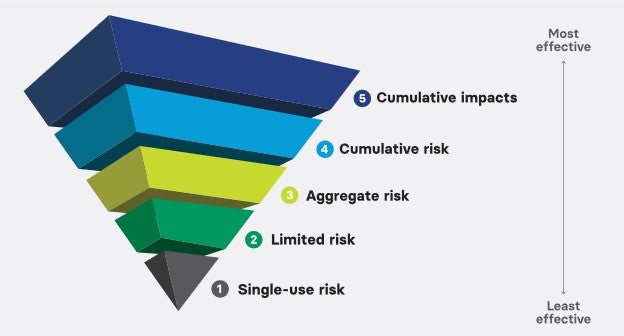
For more information on the Framework, visit our new CRAF webpage, where you can download the in-depth report on the development of the framework and watch a recording of the webinar.