Daily Archives: April 16, 2020

The next infrastructure stimulus bill is the right place for lead pipe replacement funding – to create jobs, save money and provide safer water for all

Joanna Slaney, Legislative Director and Tom Neltner, J.D., Chemicals Policy Director.

Note to readers: As we all grapple with the grave global health challenge from COVID-19, we want to acknowledge the essential service that the public health professionals at water utilities provide in delivering safe water not only for drinking but for washing our hands and our surroundings.

During the past few weeks, Congress has taken extraordinary measures to provide much-needed emergency relief to people as we collectively struggle with the COVID-19 crises. Over the coming months, lawmakers have said they will turn their attention to providing funding to stimulate the economy with a focus on water infrastructure as a priority. Lead pipe replacement should be an essential part of that effort.

To guide the Congressional effort, EDF and hundreds of others signed onto U.S. Water Alliance’s COVID-19 Relief and Recovery: Guiding Principles to Secure Our Water Future. The four principles are:

  1. Ensure water is reliable and affordable to all
  2. Strengthen water utilities of all sizes
  3. Close the water access gap
  4. Fuel economic recovery by investing in water systems

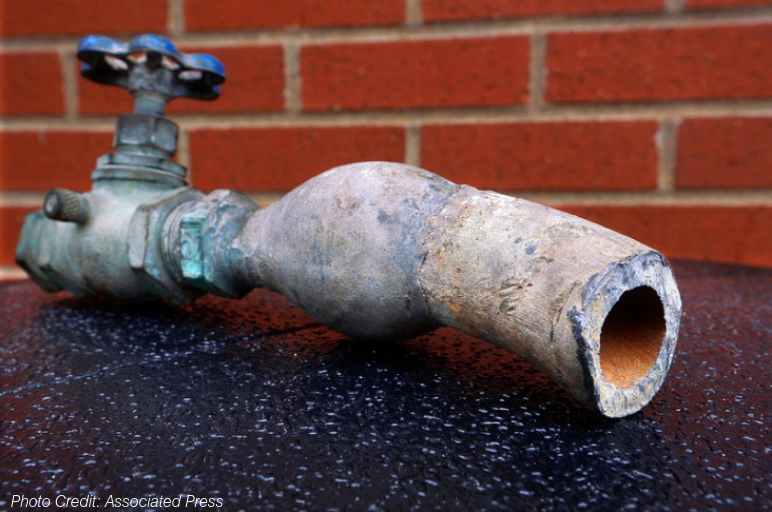
In line with of our support for these principles, EDF is advocating that Congress provide $45 billion for water utilities to fully replace lead service lines (LSL) – the lead pipes connecting a home to the water main under the street. Today, there are more than nine million homes still serviced by LSLs in the country, exposing millions of children and adults to the myriad of harms associated with lead. For children, these harms include undermining brain development. In adults, lead has been shown to cause heart disease, cancer, and impact the neurological, reproductive, and immune systems. While there is broad consensus that LSLs must be fully removed to protect public health, funding challenges have stymied progress.

Read More »

Posted in Drinking water, Lead / Tagged , , , , | Comments are closed

Latest Wisconsin data on water service lines provides important insights, reveals over 150,000 lead pipes

Tom Neltner, J.D. is the Chemicals Policy Director

Note to readers: As we all grapple with the grave global health challenge from COVID-19, we want to acknowledge the essential service that the public health professionals at water utilities provide in delivering safe water not only for drinking but for washing our hands and our surroundings. In the meantime, we are continuing to work towards improved health and environmental protections – including reducing lead in drinking water. We’ll plan to keep sharing developments regarding lead in drinking water that may be useful to you. In the meantime, please stay safe and healthy.

With the comment period now closed on the Environmental Protection Agency’s proposed revisions to its Lead and Copper Rule (LCR), agency staff are busy reviewing the 687 distinct comments submitted to the docket with a goal of finalizing the rule by the end of the year. To help water professionals plan ahead, the cover article in the March edition of Journal AWWA walks readers through the proposal and its implications. It ends with six suggestions to water systems that include developing a service line material inventory and identifying funding strategies to accelerate full lead service line (LSL) replacement.

With this suggestion in mind, we are continuing our work evaluating state efforts to develop LSL inventories by taking a closer look at reporting by Wisconsin municipal and private water utilities[1] to the state Public Service Commission (PSC) for calendar year 2018.[2] Of the other states with mandatory inventory reporting, we have previously covered Illinois in detail and will evaluate Michigan’s newly released reports soon. The only other state with mandatory reporting is California, but it has limited value because it only covers the portion of the service line owned by the utility and excludes the portion on private property.

Read More »

Posted in Drinking water, Lead / Tagged , , , | Comments are closed