Climate change solutions
We deliver game-changing environmental solutions that have a real impact for people around the globe.

Building resilient land and water systems that allow people and nature to prosper in a changing climate.
It’s been a good winter for drought-stricken California. Record-breaking precipitation in January has raised reservoir levels and added to the essential Sierra Nevada snowpack.
According to the National Weather Service, some parts of the state received over 200 percent average precipitation for January, and current snowpack levels are at 173 percent of average. This is important, because snowpack stores vast amounts of water that is slowly released as temperatures rise in the spring and summer.
Heavy rainfall also provides the opportunity for on-farm recharge, a method of deliberately flooding farm fields to help replenish groundwater aquifers.
There is certainly cause for optimism, but it’s going to take more than a few rainy months to solve California’s water woes.
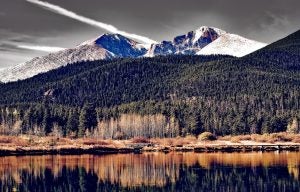 As populations in Colorado and the West continue to grow, water is moving from farms to cities. The current practice of “buy and dry” in Colorado – buying farmland only for its water – is bad for farmers, bad for rural communities and bad for critical ecosystems across the state.
That’s why EDF and WestWater Research have been studying alternative methods for managing water in Colorado. In a new report released this past week, we analyzed Alternative Transfer Methods (ATMs) and developed recommendations that will allow for their implementation on a broader scale. (more…)
 In early December, I flew out to Amsterdam to attend the Global Impact Investor Network (GIIN) Forum with 600 other delegates ranging from managers of pension funds and banks to individual investors from at least 30 countries.
Along with the growing interest in impact investing so evident at this well-attended forum, a key takeaway for me was that food and agriculture are poised to benefit. According to a 2016 survey conducted by the GIIN, more impact investors – a third of all respondents – plan to boost investment in food and agriculture than in any other sector.
As a research fellow working on market mechanisms to reward farmers who practice conservation, the survey was music to my ears. (more…)
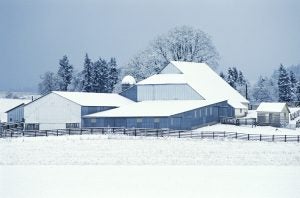 The corn and soybean fields that stretch for miles across the Midwest are quiet this time of year, mostly frozen surfaces waiting for the spring planting season.
Although many farmers are not in the field dawn to dusk during the winter, they are still plenty busy. Between planning for the next season, taking care of animals and attending countless meetings, farmers are seldom idle even if their crop fields are.
But lucky for us, winter does afford more time to talk.
One friend from Iowa who works hard to use fertilizer efficiently to avoid runoff and optimize plant uptake of nutrients said he worries that food companies don’t always recognize the sustainability efforts of mainstream farmers. Too often, he said, it seems food companies look for simple labels like organic.
A soybean grower I know from Ohio who has invested a lot of time learning farming practices that will help restore nearby Lake Erie told me it is a constant struggle to balance making a living with repairing decades of agricultural nutrient runoff that have imperiled the health of the lake. (more…)
California landowners have a number of important reasons to value riparian forests. They offer shade to cattle, provide critical erosion and flood control, sequester carbon and support abundant wildlife.
Yet many landowners, especially those already stretched to manage their farms and ranches, often overlook these benefits in their day-to-day work.
Unfortunately, California’s riparian forests are dwindling, covering only 5 percent of their historic range. That’s why Environmental Defense Fund (EDF) is working with leading researchers in the state to measure the wildlife and carbon benefits of riparian restoration, with the objective of bringing new funding sources to stewards of private lands.
Meet John Anderson
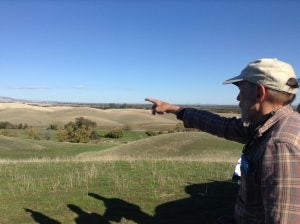
One landowner who is working actively to create riparian forests on his ranch is John Anderson, owner of Yanci Ranch in Yolo County. An experienced steward of his land, John has gone the extra mile restore the remnant riparian forest on his property. (more…)
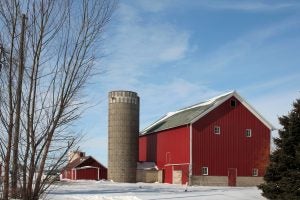
By this time next year, I believe we’ll reflect back on 2017 as the year that the private sector stepped up to protect our land, water and wildlife for future generations.
I believe this because major retailers, food companies, agricultural businesses and farmers laid the groundwork in 2016, making sizeable commitments to reduce greenhouse gas emissions (GHGs), improve water quality and conserve habitat for imperiled wildlife.
President-elect Trump has made political theater by threatening to kill the regulations that protect our nation’s air and water. But in the real world, the private sector is going the other direction.
Forward-thinking businesses are rolling up their sleeves and finding ways to make those regulations work better by accelerating the uptake of practices that are good for the planet and the bottom line.
These are three areas to watch in 2017.

Just as some people travel great distances to spend the holiday season with family and friends, monarch butterflies, too, make a long journey to spend the winter gathered together in the oyamel fir forests of Mexico.
The eastern population passes through Oklahoma and Texas on its annual migration south, stopping periodically to fuel up on nectar, ultimately reaching their destination in the mountains of central Mexico.
Unfortunately, the monarch’s winter home is under stress, which has contributed to a 90-percent decline in the species’ population over the last two decades. (more…)
California’s Central Valley, which stretches 450 miles from Redding in the north to Bakersfield in the south, is the nation’s richest agricultural region, producing 40 percent of our fruit, vegetables and nuts on nearly 9 million acres of irrigated farmland. The Valley is also ground zero for California’s water problems.
As California endures its fifth year of drought, cities, farms, and communities across the state are experiencing severe water stress. Rivers, lakes and reservoirs are drying up, so residents are turning to groundwater pumping to quench their thirst. As a result, many of the state’s groundwater aquifers are being depleted, causing wells to run dry or become contaminated.
The most critically overdrawn aquifers are in and around small, rural communities in the Central Valley. Here, thousands of people—many of them low-income farm workers—live without safe drinking water.
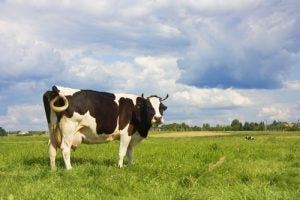
Americans’ fondness for milk, yogurt, cheese and juicy burgers requires a huge livestock industry, with nearly 90 million head of cattle in the U.S. in any one year. All those cows mean significant methane emissions.
With estimates from the United Nations that methane accounts for 44 percent of all greenhouse gas emissions from livestock production, and new determination – including legislation in California – to reduce methane emissions from farms, we need to figure out how to quantify and then reduce those emissions.
Yet measuring methane emissions has been an elusive science. Methane is a colorless, odorless gas that packs a powerful punch: Methane has 84 times the global warming potential of carbon dioxide in the short term. (more…)
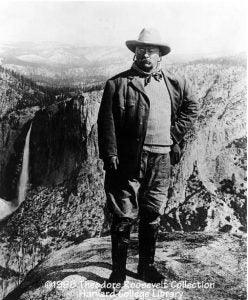
Let’s face it. Over the last 30 years, when a democrat is elected president, the environmental community tends to let out a sigh of relief and cheer the appointment of a conservation-minded Secretary of the Interior. Aggies and industry, meanwhile, prepare to hunker down and fight against more endangered species listings and greater restrictions on public lands.
When a republican is elected president, enviros dust off their armor and prepare for battle against the likes of James Watt and Manuel Lujan – two former Interior secretaries known for their anti-environmental, anti-ESA agendas – while farmers and energy industry staff anxiously await the promised freedom of relaxed regulatory burdens.
Appointees on both sides take office prepared to undo the so-called “overreach” of the previous administration. But the new appointees often overreach themselves, resulting in years of lawsuits and delays in achieving their ideological master plan.
Lawyers prosper, but it’s not clear that anyone else does. Meanwhile, the environment continues to suffer. (more…)