Climate change solutions
We deliver game-changing environmental solutions that have a real impact for people around the globe.

Building resilient land and water systems that allow people and nature to prosper in a changing climate.
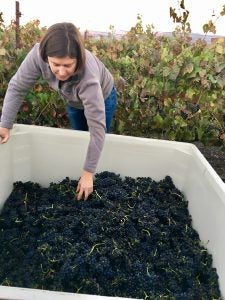
I’m spending time on this year’s National Ag Day thinking back gratefully to a recent meeting I had with farmers.
I was attending the annual farm exchange program offered through the California Agricultural Leadership Foundation, which facilitates learning opportunities on California farms. This year’s program brought together state environmental policy professionals and growers from the Central Coast, an epicenter for growing the nation’s specialty crops, such as lettuce, broccoli, and strawberries. My aim was “to see sustainability through the eyes of farmers.” We toured various agricultural operations, had thoughtful discussions, and stayed with host families in the local farm community.
My host was Erin Amaral, who manages 1,170 acres of vineyards near San Luis Obispo. Erin and I got along immediately – and our conversations kept coming back to one central tenet: farmers and environmentalists want the same things. (more…)
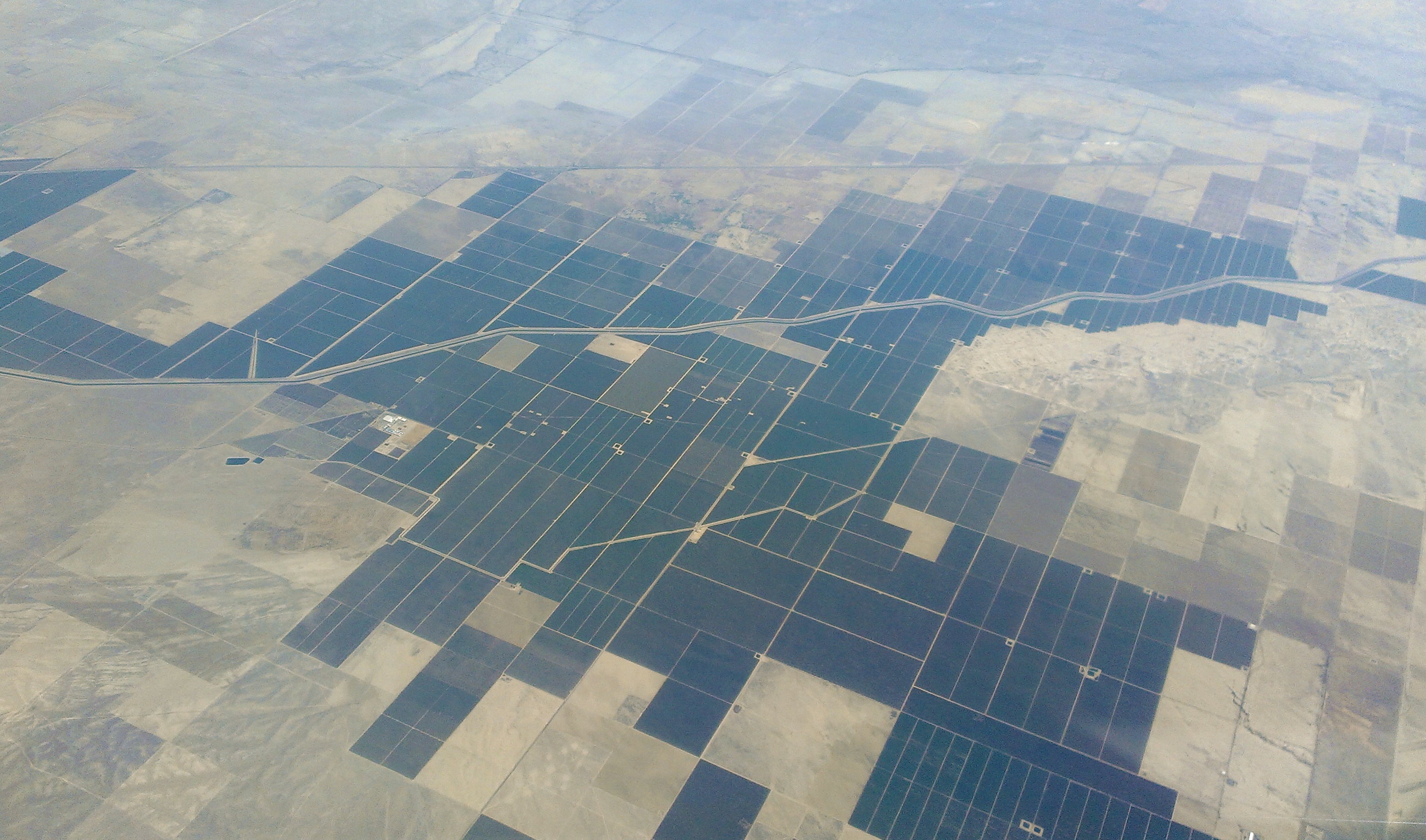
National Geographic’s new film, “Water & Power: A California Heist,” explores the impacts of California’s drought and the San Joaquin Valley’s groundwater crisis, and highlights issues surrounding the state’s water rights and the powerful interests that sometimes control them.
The film, which uses beautiful cinematography and testimonials from lawyers, water managers and residents, offers a stark contrast between those who have continued to profit during California’s drought and those who have struggled to meet even their most basic water needs.
The film places an emphasis on the “Monterey Amendments,” a back-room deal struck in 1994 that included the creation of the Kern Water Bank, and opened the door to the bank’s eventual privatization. At the time, well-endowed businesses with large land holdings were given control of these groundwater reserves, which they used to shore up highly profitable agricultural businesses. Since then, groundwater levels have plummeted and become contaminated, impacting safe drinking water supplies for small communities.
 On paper, I appear to be the picture perfect stereotype of an east coast liberal: I’ve been working at environmental nonprofits for over 20 years, I’m an Ivy League grad, and I live in the “bluest” county in Virginia. When it comes to first impressions in the world of agriculture, I’ve been met countless times with skepticism and even contempt.
The reality is that I spend nearly every waking hour of my career collaborating with farmers – exploring ways to implement on-the-ground practices that help producers save money and protect yields while also reducing impacts to water and air. After years of building relationships, I’m proud of the diverse and unlikely partnerships I’ve formed. Many of my closest friends and allies would be labeled as “big ag.”
But I’m worried that today’s political divisions will roll back the decades of progress reducing nutrient runoff across the Corn Belt and beyond. I don’t want to see doors closed because of assumptions on either side of the political divide that now dominate the country. (more…)
 Applying the right amount of fertilizer to a grower’s field is tricky: too little fertilizer means lost yields; too much fertilizer means wasted costs and potential runoff that causes air and water pollution. Meanwhile, farmers cannot control the weather, which can wreak havoc on the best-laid plans.
One important tool used to answer the question of the right rate, timing, placement and source of nutrient application to croplands (the “4Rs”) is on-farm research trials. Farmers establish trials using their own fields and equipment, usually with guidance from a trusted advisor, university researcher or extension agent. Trials can inform many practices like nutrient management and seeding rate. Typically, they are conducted to determine practices’ effects on yield, nutrient use efficiency, soil health and profitability.
Using the data generated from these field trials, experts are now updating the Tri-State Fertility Guide for Corn, Soybean, Wheat and Alfalfa. This 22-year old document still serves as the main guidance on fertilizer applications for the Buckeye state as well as Michigan and Indiana.
Here’s how the update will benefit farmers. (more…)
The situation at Oroville Dam garnered national attention and brought into clear focus the limitations of our aging flood protection infrastructure – California’s complex system of dams, levees, and bypasses – as well as the need for greater investment in maintaining and upgrading this system.
It is appropriate, then, that Governor Brown recently unveiled a plan to bolster dam safety and flood protection. By requiring emergency action plans, beefing up our dam inspection program and increasing our investment in emergency response, Governor Brown is taking an important first-step in tackling this difficult problem.
This comes at an especially important time as infrastructure maintenance is at the forefront of state and national discussions, and we still have a few months to go before we are out of the rainy season.
Since the Senate Committee on Environment and Public Works held a hearing two weeks ago to discuss the “Modernization of the Endangered Species Act (ESA),” a new public debate over the act’s effectiveness has begun, even if the arguments on each side haven’t changed much.
On one hand, reform proponents point to the fact that only 47 of 1,652 species have been removed from the Endangered Species List since 1973. On the other, the act’s defenders note that nearly every species on the list has been saved from extinction.
Yet those may be the wrong metrics. Instead, we may want to ask why those species end up on the list in the first place, and whether we are taking common-sense approaches to wildlife conservation before they do. (more…)
At the first field hearing for the 2018 farm bill held in Kansas last week, producers had one clear message for the Senate Agriculture Committee: the stakes for farmers have never been higher. Commodity prices are the lowest they’ve been in over a decade, and farmers’ incomes are predicted to drop nearly 10 percent this year.
Members of Congress – and the new Secretary of Agriculture – will have their hands full in helping producers navigate the innate uncertainties of farming, balancing the myriad needs of farmers in different geographies, and ensuring that growers remain profitable.
There are two bright spots offering some low hanging fruit for agricultural legislators:
Here’s how to increase the impact of these already popular conservation programs. (more…)

Taking aim at government regulation is a favorite pastime in Washington, but the Trump Administration and the 115th Congress have upped the ante.
In the course of a few weeks, the House of Representatives voted down a measure to curb methane leaks from oil and gas rigs on public and tribal lands. It also voted to overturn a common-sense rule to prevent coal companies from polluting local streams. Meanwhile, the president signed an executive order requiring the arbitrary removal of two existing regulations for every new one created.
Next in their sights: gutting Environmental Protection Agency programs and possibly repealing the Endangered Species Act.
There’s no question we can improve how we go about implementing environmental laws to ensure they deliver the biggest bang for the buck for people and nature. But as an advocate for the environment and a former policy director at the U.S. Department of Commerce, I find the rhetoric-driven rush to rescind these protections short-sighted – even dangerous. (more…)
The crisis at Oroville Dam in Northern California has abated, but problems could return with more rain in the forecast for later this week.
If you haven’t heard, the reservoir behind the dam reached capacity last weekend, sending water over an emergency spillway for the first time since its construction in 1968. Authorities ordered more than 180,000 people downstream to evacuate their homes over concerns that the spillway could fail, sending an enormous uncontrolled rush of water down the Feather and Sacramento Rivers.
While the evacuation order has since been lifted, our thoughts still go out to those affected. We continue to monitor and try to make sense of the situation, and while many lessons will eventually be pulled from this experience, there is much to reflect on today.
 Data science in farm management is one of the biggest trends to hit both agriculture and Silicon Valley in recent years, with an explosion of technologies emerging to help farmers optimize everything from seeding to irrigation to fertilizer application.
As ag tech products grow more sophisticated, so too has the innovation trend evolved. What began as a slew of single-purpose tools has now evolved to include apps that integrate different types of information to give farmers a “dashboard” view of their land. And it includes new apps that can help multiple farmers pool their data to analyze a crop’s performance across a range of growing conditions, or to benchmark their input costs against one another.
The agriculture sector stands to gain insight from all this data. Farmers need metrics to help them figure out how to increase yields sustainably while improving soil health and protecting natural resources for future generations.
But they have valid concerns about sharing data. (more…)