Climate change solutions
We deliver game-changing environmental solutions that have a real impact for people around the globe.

Building resilient land and water systems that allow people and nature to prosper in a changing climate.
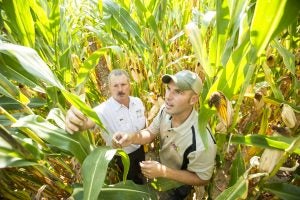
This year’s Gulf of Mexico dead zone is the largest ever recorded, affecting 8,776 square miles – similar in size to the state of New Jersey.
Agriculture – from fertilizers and livestock production – is a major source of the nutrients that cause these harmful algal blooms in our lakes and coastal areas. Fertilizers are required to grow food, but we know that making farming practices more efficient and creating natural buffers and filters around farms can reduce runoff.
Farming is already risky business, with unpredictable weather, tough global competition and fluctuating commodity prices.
Implementing conservation practices at scale without hurting growers’ productivity requires understanding the challenges of different sectors and bringing together their expertise and investment. It’s a collaborative effort, and we must recognize that we are all working around a common goal: a more sustainable food system.
This month, Environmental Defense Fund is launching a series of public events – in Bozeman, St. Louis, and Des Moines – to highlight, advance, and celebrate collaborations among private landowners, food and agriculture companies, policy makers, and the public.
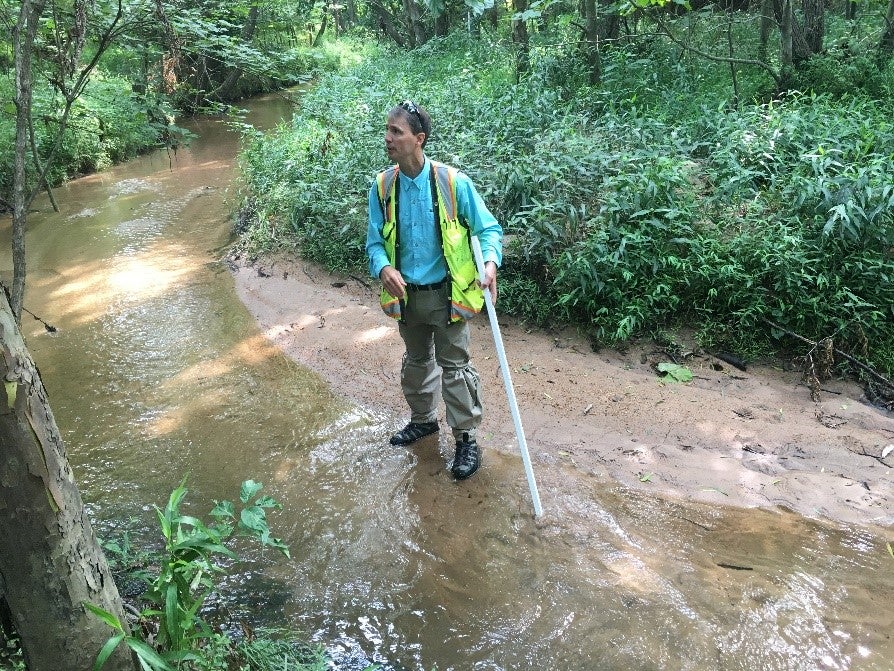
Streams are one of the most important sources of drinking water across the country. That’s why it is especially alarming that scientists have concerns about North Carolina’s streams and rivers, where I get much of my drinking water.
But streams aren’t just for drinking. These waterways provide countless other benefits to local communities, including recreational opportunities, flood control, improved fish and wildlife habitat, and irrigation for agriculture, to name a few. That’s why it’s vitally important that impacts to streams are offset with effective restoration.
Earlier this month, I visited the site of a successfully restored stream not far from my home with Will Harman, stream mitigation expert at Stream Mechanics and partner to our stream work at EDF.
Will has been working with streams for over 25 years – first launching the stream restoration program at North Carolina State University, and then starting his own private company for stream restoration and mitigation. His three-pronged approach involves conducting applied research, teaching and completing projects.
During our site visit, I had the opportunity to ask Will several questions about the site, the tools he uses to design stream restoration projects, and next steps for protecting streams in North Carolina and beyond.
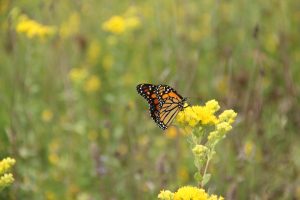
Once again, summer has brought the highly anticipated sightings of monarch butterflies across the country. An online tracker from Journey North shows the beloved orange and black butterflies fanning across the Northeast and Upper Midwest, where the eastern population is completing its northern migration. I spotted a monarch in Missouri just last week.
It’s a wonderful sight and an inspiring reminder of the monarch’s magical migration. But the opportunity to witness this natural miracle is dwindling. Over the last two decades, the monarch population has declined by 90 percent, bringing the butterfly dangerously close to extinction.
There are many factors contributing to this devastating loss, from climate change to deforestation. But a major contributor is the loss of milkweed habitat across the U.S., particularly in the Midwest where native prairies have largely been converted for agricultural use. Monarchs need milkweed to lay their eggs – eggs that turn into caterpillars that feed exclusively on the milky plants. So how do we restore this vital milkweed habitat where monarchs need it the most? (more…)
The fierce beauty and proud independence of this great bird aptly symbolizes the strength and freedom of America. But as latter-day citizens we shall fail our trust if we permit the eagle to disappear. — President John F. Kennedy
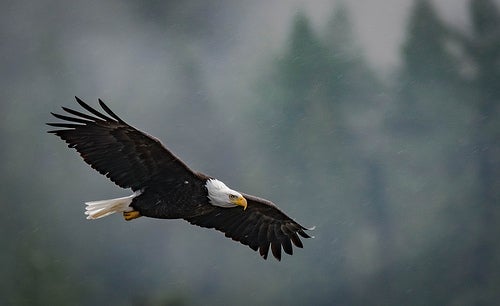
In 1782, the bald eagle was officially declared the national symbol of the United States. It became the icon that evoked patriotism – a feeling of strength and power, of independence and courage. At the time, the population was at an estimated 100,000 birds.
In the 20th century, the population of bald eagles fell to dangerously low levels, leading to fears of extinction. Fortunately, decades of recovery efforts brought the species back from the brink – a testament to the meaningful milestones that can be achieved through effective conservation.
How we almost lost the bald eagle
A combination of wanton killing, habitat degradation and use of the pesticide DDT decimated the bald eagle population. The decline likely began as early as the late 1800s, as both eagle prey and eagles were hunted for the feather trade. By 1960, there were only 400 nesting pairs left in the lower 48. (more…)
 My first impression of Len Corzine was that he isn’t the kind of guy who sits back and waits for people to bring him ideas on how to innovate or improve stewardship – he actively searches for them himself. He then shares these ideas with peers and colleagues.
When I visited Len’s farm in Assumption, Illinois, five years ago, I immediately saw that Len was an early adopter of tools and technologies to help him grow more with less. Like a kid with a brand new bike, Len could not wait to show me the computer software he was using for soil samples and variable rate application of nutrients, or the maps that helped guide his every decision.
To date, Len’s farm has reduced soil erosion, cut fertilizer use per bushel by half, and adopted satellite-guidance technology in its tractors to reduce fuel and chemical use. All while yield productivity has increased 80 percent. (more…)
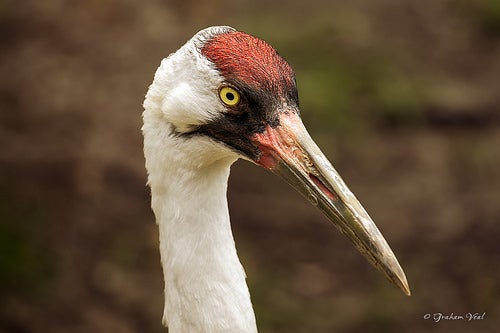
Every year for 15 years, a lone ultralight aircraft took to the skies, tailed by a flock of majestic white and red-capped birds. The young, captive-bred whooping cranes followed their surrogate parent on a migration journey from Wisconsin to Florida, where they spent the winter on the warm Gulf Coast.
This was a pioneering project that took place from 2001-2015, run by Operation Migration, an organization dedicated to recovering endangered whooping cranes. But that was just one of many innovative and collaborative conservation efforts that have helped recover whooping cranes since the species’ numbers fell to only 15 birds in the 1940s. Shortly thereafter the North American conservation movement was born. (more…)
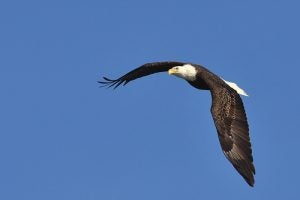
The Endangered Species Act (ESA) is one of our nation’s bedrock environmental laws, preventing the extinction and helping the recovery of many American icons, including our national symbol – the bald eagle.
The act had the unanimous support of the Senate and a near-unanimous vote in the House when it was signed into law by President Richard Nixon in 1973. Today, 90 percent of American voters still support the law and want to see it maintained.
The ESA’s ongoing bipartisan history and continued support from the American public sends a clear message to Congress: Protect the integrity of the ESA. (more…)

Few people know more about wildlife conservation in America than Michael Bean. A renowned expert in wildlife policy and programs, Michael is hailed as an innovative thinker who has consistently found effective ways to protect our nation’s endangered species, pioneering techniques like Safe Harbor agreements and Habitat Conservation Plans that have helped many animals at risk of extinction.
Michael started working at EDF in 1977 where he directed our wildlife conservation policy initiatives for several decades, during which I came on board and had the honor of working closely with him. In 2009, Michael went on to join the U.S. Department of the Interior as counselor to the Assistant Secretary for Fish, Wildlife and Parks, and later as the Principal Deputy Assistant Secretary.
Today, we are fortunate to have Michael back as an advisor to EDF, and to have him share his insights on the current state of our country’s wildlife programs and policies. (more…)
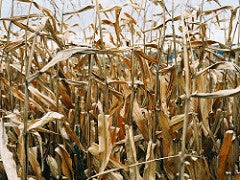
Here’s a statement that everyone can agree on, regardless of politics: Farmers benefit from making their croplands more resilient to the effects of extreme weather.
Report after report, including a study this week in the journal Nature Geoscience, has shown that shifting climatic conditions will hit agriculture hard, threatening food supplies and farmers’ incomes. This week’s report found that in years when the Arctic was warmer than normal, the average decline in yields across the United States was as high as 4 percent – and in Texas, corn yields were as low as 20 percent of what they are in typical years.
Farmers can take steps to protect their operations from extreme weather – but they can’t do it alone.
The 2018 farm bill can and should play a powerful role in helping farmers adapt to changing climatic conditions by prioritizing and supporting public-private partnerships, innovation, and financial models that can accelerate deployment of conservation practices.
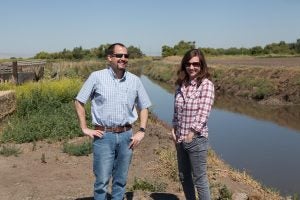
During times of water scarcity, like California’s recent drought, it’s tempting to take on a binary view of the world. This was definitely the case with agriculture, which appeared to be at odds with everyone: farms vs. fish, farm vs. cities, farms vs. regulators. As a dominant water user in the state, they were easy targets.
But when one digs deeper, it’s obvious that many in the agricultural community want to move beyond this debate and do things differently. Yes growing food and fiber takes water, but there are plenty of farmers laser-focused on improving efficiency, maximizing multi-benefit solutions and striking a balance between growing crops and preserving the environment.
I recently visited with Cannon Michael, president of Bowles Farming Company, which oversees an 11,000-acre farm near Los Banos in California’s San Joaquin Valley. He is the great, great, great grandson of Henry Miller, “the Cattle King of California,” so farming is in his blood. He has senior water rights, and while he still had to make difficult management decisions during the drought, he ended up with more water than many of his neighbors and found ways to share it, a tremendous display of collaboration in the farming community. (more…)