Climate change solutions
We deliver game-changing environmental solutions that have a real impact for people around the globe.

Building resilient land and water systems that allow people and nature to prosper in a changing climate.
This blog post is co-authored with colleagues from National Audubon Society, the National Wildlife Federation, The Nature Conservancy and Ocean Conservancy.
On April 20, 2010, the BP Deepwater Horizon oil rig exploded, killing 11 men and spewing an estimated 134 million gallons of oil into the Gulf of Mexico over the following 87 days. It was the largest oil spill in U.S. history, and it wreaked incredible harm on the ecosystem, wildlife and communities of the Gulf. (more…)
This blog is authored by Bethany Baratta, senior writer at Iowa Soybean Association. It originally posted on the Iowa Soybean Association Newsroom.
While many farmers add cover crops with the goal to improve soil health, some participants in an Iowa Soybean Association (ISA) study are turning cover crops into new business opportunities. Capturing profit opportunities could result in expanded cover crop use in the state, the study showed.
Twenty Iowa farmers were chosen for the study during the 2018 crop year to take a closer look at the relationship between conservation adoption and farm production and profitability. Study participants were chosen based on their use of conservation practices such as cover crops and conservation tillage. Combined, participants raised 27,535 acres of corn and soybeans, and were geographically dispersed throughout the state. (more…)
Congress is currently focused on passing a series of stimulus relief bills to support medical professionals, hospitals, individuals and small businesses in an attempt to mitigate the worst effects of the global coronavirus pandemic.
Policymakers must prioritize human health and safety. But the hope is that, sooner than later, the spread of the virus will slow and Congress will be able to turn its attention to kickstarting the economy.
An infrastructure bill represents a significant bipartisan opportunity to spur job growth and economic activity, while also building resilience for communities at risk from flooding and extreme weather. (more…)
Despite the much-needed April showers we saw this week, our normally wet January and February were bone dry in most of California. So it came as little surprise when the annual April 1 snowpack measurement in the Sierras came in low, at about 53% of average statewide. It’s another important reminder of how California’s weather, and consequently our water supplies, are swinging to greater extremes.
The low snowpack and extreme weather makes it more imperative than ever to carefully manage another part of our water system: underground water supplies.
We need to measure groundwater as actively as we measure snowpack and double down on efforts to successfully implement the Sustainable Groundwater Management Act (SGMA). Here are three ways to help ensure more sustainable groundwater supplies for generations to come. (more…)
Hurricane season is just around the corner, but experts are already predicting an above-average season.
Researchers at Colorado State University and meteorologists at Accuweather each released predictions indicating that the 2020 Atlantic hurricane season could be cause for concern with the potential for up to nine hurricanes and an “above-average probability for major hurricanes making landfall along the continental United States.”
Adding additional concern, water temperatures in the Gulf of Mexico are currently extremely warm, creating a recipe for intensifying storms. (more…)
By Keith Alverson, a sixth-generation grain farmer in Chester, South Dakota and an adviser to Environmental Defense Fund.
It goes without saying that 2019 was an extremely difficult year for farmers like me. Unprecedented amounts of snow and rain led to 3.9 million acres in our state that couldn’t be planted.
Lake County, South Dakota, were I live, received 32% more rainfall than in a normal year. For most farmers in the area, this record-setting wet spring meant that they could only plant about 50% of planned corn acres and 80% of planned soybean acres. (more…)
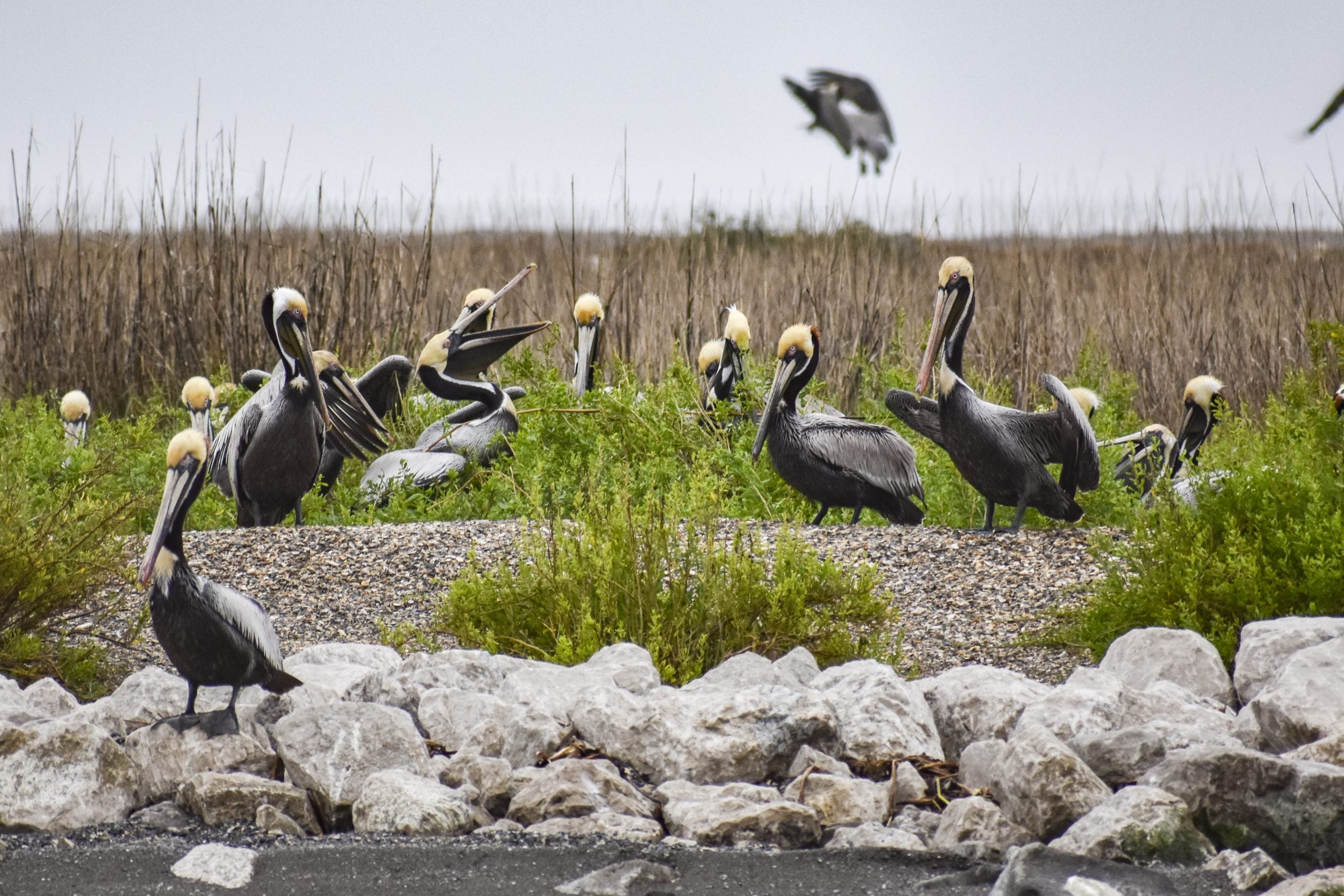
With spring underway, thousands of brown pelicans are returning to nest on Queen Bess Island — a bird rookery island south of New Orleans in Louisiana’s Barataria Bay. What may seem like an ordinary annual event is actually quite remarkable, and a promising sign of recovery and resilience for Louisiana’s state bird.
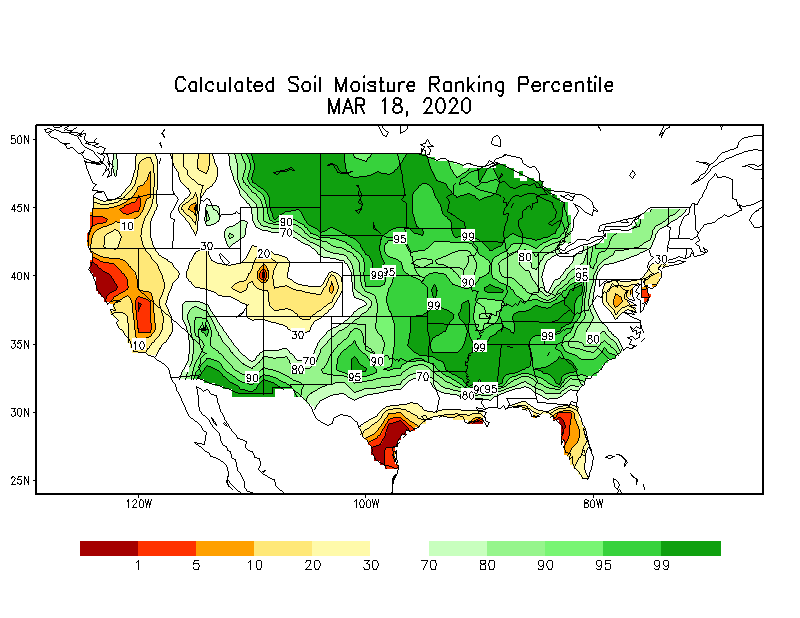
Farmers have already been dealing with tough economic conditions exacerbated by a trade war, extreme weather and now the coronavirus. Unfortunately, the latest 2020 spring flood outlook shows that farmers in the Midwest could be facing yet another wet year.
Making American farmland resilient to growing weather shocks like flooding requires greater adoption of conservation practices such as no-till and cover cropping practices that improve water infiltration and reduce erosion and field runoff. Despite the financial benefits of these practices, adoption remains low across the country. In 2017, only 3.9% of U.S. farmland adopted cover crops.
How can we scale conservation practice adoption to reduce risk and boost resilience of the agricultural sector? (more…)
Last week, scientists released results from the latest count of the eastern monarch butterfly population — the main population that migrates east of the Rockies and overwinters in Mexico. The 53% drop from just last year was an unexpected and staggering outcome that left conservationists like me downcast, but ready to act.
While many of us were expecting to see some small decline, this significant drop is especially alarming because it indicates that the monarch population is below the threshold at which scientists predict the migration could collapse. (more…)
I wasn’t expecting to see egrets, herons and pelicans on my first trip to the San Joaquin Valley — a region in the southern part of California’s Central Valley known for its impressive agricultural production and scorching summer heat. I didn’t find these birds at one of the valley’s few wildlife refuges, but at a groundwater recharge facility designed to spread and infiltrate surface water into the ground below.
Recharge basins are becoming increasingly popular in overdrafted regions in California, where water managers are seeking solutions to balance groundwater supply and demand to comply with the state’s Sustainable Groundwater Management Act (SGMA). (more…)