Climate change solutions
We deliver game-changing environmental solutions that have a real impact for people around the globe.

Building resilient land and water systems that allow people and nature to prosper in a changing climate.
As extreme weather takes a greater toll, states are creating a new government position to confront climate challenges and keep residents safe. Nearly one dozen states have hired Chief Resilience Officers (CROs) in various areas of government, including the governor’s office, state departments of environment or state departments of public safety.
These officers are charged with improving collaboration internally across government and externally with the public — and to have a coordinated approach to securing and spending federal disaster resources.
CROs are often working urgently to respond to previous disasters while also shaping forward-looking strategies to build a more resilient future for their state. With such a high-stress, high-stakes job, it’s essential that these leaders collaborate and learn from one another.
Farmers across the country may not see profitable conditions for some time as the effects of COVID-19 suppress already meager profit margins.
Projections from the University of Illinois and the University of Missouri show that farm profits could fall significantly in 2021, and economists are recommending farmers examine fertilizer application and tillage passes for the potential to provide highly needed cost savings. (more…)
This blog is authored by Bethany Baratta, senior writer at Iowa Soybean Association. It originally posted on the Iowa Soybean Association Newsroom.
Wayne Fredericks and his wife Ruth began farming in northern Iowa in the early 1970s. For the first 19 years of their farming careers, their farm was managed conventionally: corn stalks were plowed and soybean stubble was tilled before planting.
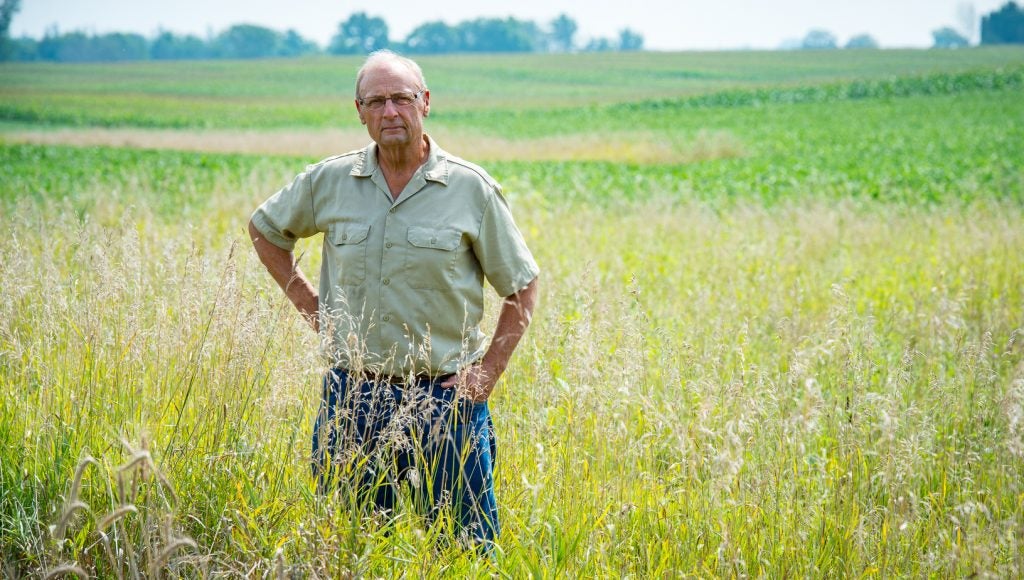
It was a change in the weather that altered their conventional farming practices — for the better. (more…)
Imagine going to bed thinking your home is safe only to wake up and discover that you’re living in the middle of a vulnerable flood zone.
That’s essentially what happened to millions of Americans recently when the research and technology nonprofit First Street Foundation released a report showing how much damage climate-induced flooding could inflict on homes and businesses in the next 30 years. (more…)
Recharging groundwater with rain and snowmelt is one strategy water managers are embracing to help balance groundwater supply and demand and comply with the California Sustainable Groundwater Management Act.
Depending on the location, recharge can also deliver other valuable benefits, such as additional habitat for wildlife and a more resilient water supply for people. (more…)
Congressional leaders across both parties are taking action to build climate resilience, and for good reason.
Natural disasters and extreme weather know no political affiliations or geographic boundaries, and are impacting all Americans with greater severity. Our country desperately needs investments in infrastructure that can withstand these disasters, while also increasing public safety, lowering the cost of disaster recovery, and spurring job and economic growth. (more…)
The world is a different place now than it was when I grew up in Houston in the 1980s. I have vivid memories of steamy summer thunderstorms consistently interrupting my afternoons at the neighborhood pool. My sister and I would head home and swap our swimsuits for raincoats, then stomp around muddy ditches and dig up crawdads while thick warm raindrops drenched our faces.
My sons will have very different memories growing up in Texas. Their memories will be marked by extremes — football games either played in dust bowls or canceled because the field had become a lake.
As my children grow up in this era defined by persistent drought, periodic floods, and now the COVID-19 pandemic, I’m concerned about their future as nature will continue to test the state’s best-laid plans.
Update, July 1, 2020: North Carolina’s Senate and House unanimously passed HB 1087. We thank Rep. Bell, Rep. McGrady and Sen. Newton for their leadership in advancing this important piece of legislation. Gov. Cooper signed HB 1087 on July 1, 2020. EDF staff will be working with Division of Mitigation Services staff and stakeholders to develop the program. Read our statement in response here.
Earlier this month, North Carolina released its first Climate Risk Assessment and Resilience Plan to prepare for more intense rain events and flooding. In particular, the plan emphasizes natural infrastructure as a means to reduce flooding and provide other benefits.
On the heels of the plan’s release, North Carolina’s General Assembly is expected to pass a bill that contains a measure to create a faster, more efficient path for investing in projects that reduce flooding, protecting downstream communities while also empowering the private sector to employ more North Carolinians.
Once passed, HB 1087 will go to Gov. Roy Cooper for his signature. If signed, the bill would not only help North Carolina implement natural infrastructure projects with greater urgency, but it would also create the nation’s first market for natural infrastructure projects to address flooding.
By Brent Bible, a first-generation farmer in Lafayette, Indiana.
Farmers like me can make our businesses more economically resilient while also contributing to climate solutions, and we’re ready to roll up our sleeves and get to work.
That’s the message I’ll be sharing when I testify before the Senate Agriculture Committee today at a hearing about the Growing Climate Solutions Act — a recent bipartisan bill that would boost the agricultural economy and help make climate-smart agriculture the norm. (more…)
Last fall, two farms in California’s Sacramento Valley planted a wildflower cover crop mix as part of a commitment to restore habitat within 325 acres of pecan orchards. The farms, Pacific Gold Agriculture and Bypass Farms, are participating in a project called “Orchards Alive” in hopes that wildflowers will attract pollinators and naturally reduce pest pressure.
Orchards Alive came about thanks to a $3 million monarch and pollinator recovery bill (AB 2421) designed to establish habitat restoration projects for important pollinator species facing steep population losses. (more…)