









How nature can protect farmers against droughts and floods
Posted: in Agriculture
Written By

Share
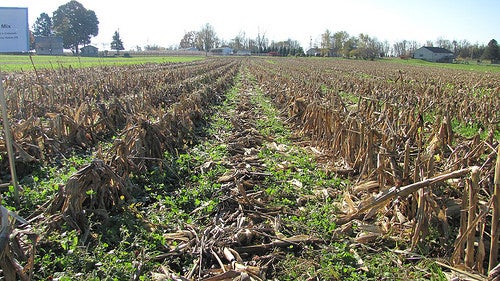 Wacky weather isn’t just a fluke. According to the National Climate Assessment (NCA), extreme weather events are becoming more common and are likely to increase in the future, which poses challenges for farmers and communities.
Traditional ways of responding to weather crises, such as building higher flood walls and digging deeper wells are expensive and often fail.
The good news is that farmers are increasingly turning to more natural solutions and practices, often referred to as “green infrastructure,” that use nature to reduce the impacts of both floods and droughts.
Green infrastructure is also needed to reduce fertilizer pollution and restore the Gulf of Mexico dead zone to safe levels, as a new study published today in the Journal of the American Water Resources Association (JAWRA) reports.
Benefits of green infrastructure
Green infrastructure helps keep water on the landscape, both preventing it from rushing downstream to create a flood and keeping it available on the farm (or in underground reservoirs known as aquifers) to support agricultural production and downstream drinking water supplies in case of drought.
Practices at the field-level include:
- Conservation tillage, which prevents soil erosion and helps keep water on the farm to reduce floods and cope with drought. Estimates are that reduced tillage increases water infiltration by 30-45% – a huge saving for farmers with irrigated cropland.
- Cover crops, whose deep root systems help expand the soil’s capacity to store water, and their leaves help move water from the soil to the atmosphere, so they can reduce the impacts of floods and droughts.
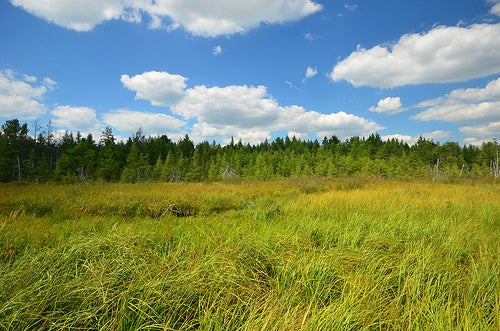 Storage wetlands
At the landscape scale, structural practices improve water management not only for individual farmers but also for downstream communities. These practices include wetlands and stream channel restoration, drainage ditch enhancements, and floodplain reconnection.
- Wetlands are especially important as they both recharge groundwater supplies and store excess rainfall. In Indiana, a team of researchers has quantified the value of storage wetlands, and found that creating wetlands on 1.5% of the landscape can reduce flood peaks by 29%.
Economic incentives
There is also increasing interest in paying farmers to invest in these kinds of practices. For example, the government of Alberta province in Canada has established a Watershed Resiliency and Restoration Program to pay farmers to implement green infrastructure practices.
Wacky weather isn’t going away, but by embracing natural solutions, farmers can protect themselves against a changing climate.