Global Clean Air

Better data is critical to address health disparities in air pollution’s impacts

Ananya Roy, Senior Health Scientist, and Maria Harris, Environmental Epidemiologist 

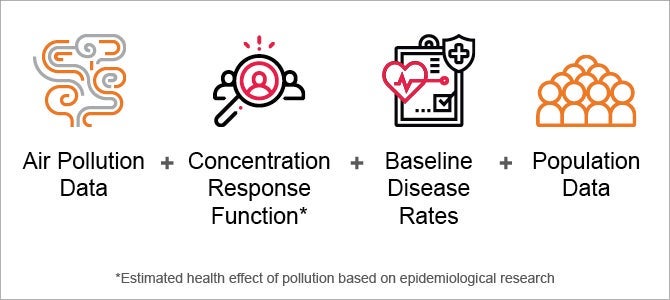
The last several months have seen a wave of momentum in policies seeking toward advance environmental justice and equity through better data collection and mapping. In his first week in office, President Biden signed an executive order to initiate the development of a screening and mapping tool to identify disadvantaged communities with the goal of informing equitable decision making. And legislation introduced in the House of Representatives and Senate would launch a similar effort. This focus on data and mapping is critical.  

Read More »

Posted in Environmental Justice, Government Official/Policymaker, Health, Homepage, Oakland, Partners, Public Health/Environmental Official, Science / Comments are closed

London’s major roads are noisy, polluted and outdated. It’s time to make the Red Routes healthier and more equitable.

Oliver Lord, Head of Policy and Campaigns

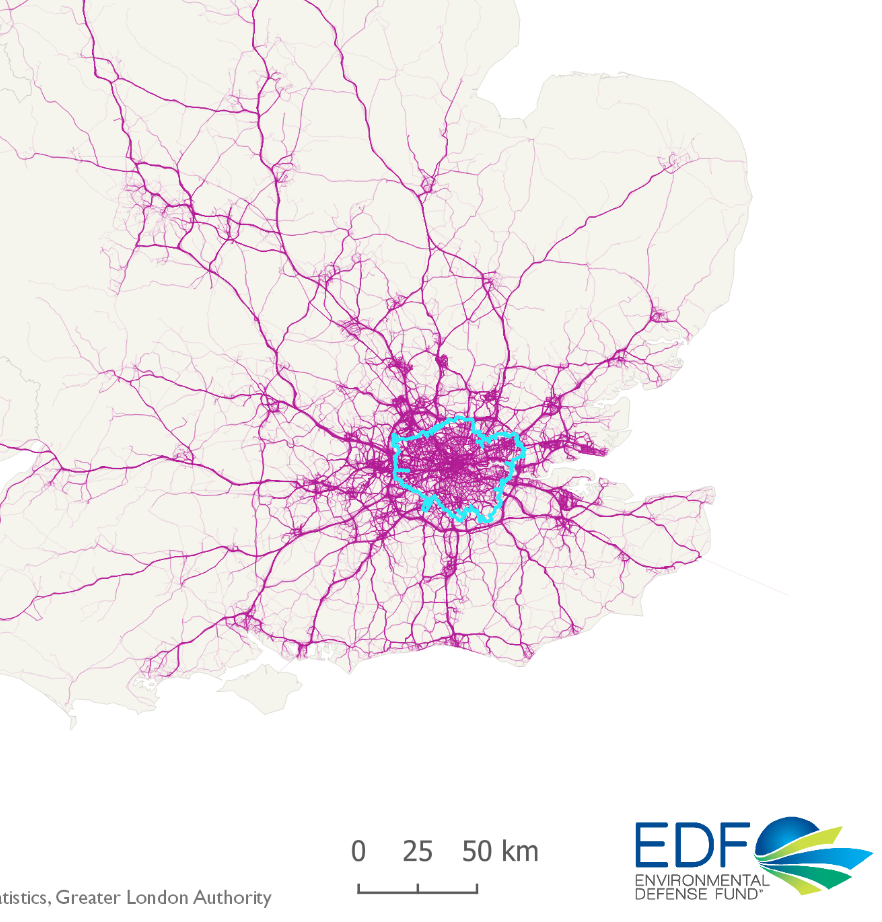
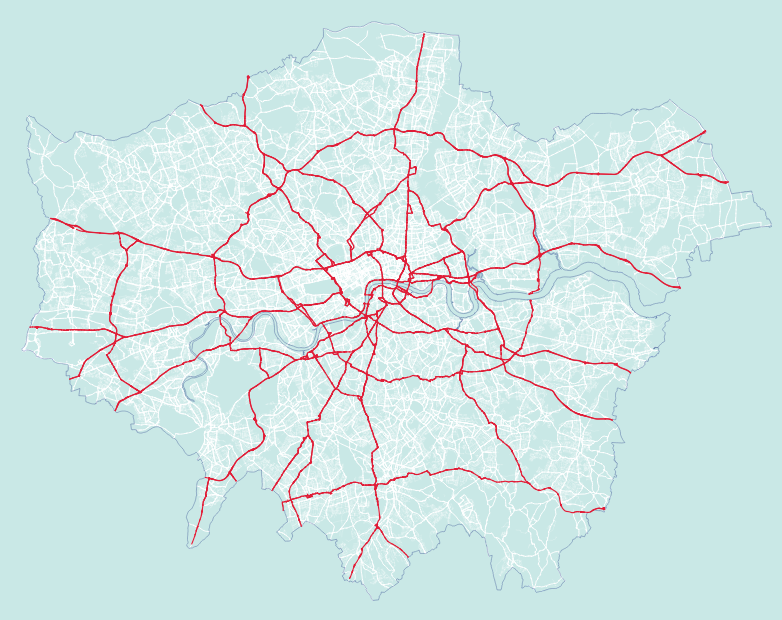
London’s major roads – the Red Routes – cut across the capital and carry up to a third of traffic on a typical day. Like in many global cities, these busy, outdated roads create air pollution and environmental stressors that harm people’s health in different ways.

A new discussion paper from Environmental Defense Fund Europe and Centric Lab examines health inequities along the Red Routes and highlights why now is the time for a new, healthier vision for London’s major roads.

Prioritising motor traffic

A swathe of regulations and investment, or lack there of, over a long period of time have prioritised motor traffic in London. In the 1990s, the Government introduced its ‘Red Routes’ policy to designate ’clearways’ in the capital on which through traffic movements would gain greater priority over local journeys. The Red Routes – also known as the Transport for London road network (TLRN) – cut across the capital and carry up to a third of traffic on a typical day.

The prioritisation of motor traffic significantly impacts London’s environment and creates health inequities in the city. Motor vehicle dependency remains high amongst residents and the number of miles driven by commercial vans has risen exponentially in recent years. Moreover, the Red Routes network was established in a time mostly unrecognisable today – when diesel did not have a prominent use, estimates of how the city would grow were more conservative and e-commerce deliveries were unheard of.

Air pollution and health

Pollution Zone sign by Choked Up

Londoners living, working, visiting and going to school near to a busy road are exposed to far greater levels of air pollution than elsewhere in the capital. This is a particular case for the Red Routes. According to new modelled data by Cambridge Environmental Research Consultants as part of the Breathe London pilot project, in comparison to an average road in London levels of nitrogen dioxide (NO2) pollution are 57% higher and levels of fine particulate matter (PM2.5) are 35% higher on these roads. The Red Routes will also likely be some of the last areas in the UK to meet air quality thresholds as recommended by the World Health Organization.

Ruth Fitzharris, a London mother of a young son, has felt these dangerous impacts first-hand. In the past few years her son had 12 asthma attacks, two of them life-threatening. Ruth says she was informed by the head of a severe asthmatic clinic that air pollution was a significant contributory factor to her son’s condition. Additionally, her consultant pediatrician with specialism in respiratory medicine advised her to avoid main roads when possible.

Health assessment on Red Routes

Data analysis is needed to better understand the health impacts of the Red Routes and to identify who is at greatest risk. Centric Lab undertook a health assessment of the Red Routes network – the findings are presented in the discussion paper, alongside a data matrix available for download.

The health impacts of transport-related air pollution are multifactorial and systemic. To understand the full extent of how air pollution impacts a person’s life, Centric Lab considered proximity to pollution sources alongside other pollution types (e.g., noise and light), as well as intervening social and behavioural stressors. Examples of these stressors include feeling physiologically safe, legibility and socio-economic differences.

The health assessment brings to light people’s lived experience along the Red Routes. For example, it identified how the A12 between Poplar and Bromley By Bow is a particular concern for the neurodiverse community (e.g., people on the autism spectrum or with dyslexia), as air pollution impacts are compounded by complex, disorganised and noisy environments. Similarly, the A13 between Whitechapel and Limehouse can be overbearing for children owing to environmental stressors and high levels of air pollution affecting their early stages of development. The assessment concluded all parts of the Red Routes are a priority for intervention and action should be taken to make them significantly healthier and safer.

Time for change

As the capital strives for cleaner air and considers a firm action plan to decarbonise the city, data suggests the Red Routes policy is ripe for a review. Red Routes continue to be designated primarily areas for motor movement, conflicting with the growing number of people who live and conduct daily activities by these roads.

London is also at risk of being left behind in a global movement to transform polluted arterial roads in cities. Examples include transformation projects in Seoul, Barcelona and Paris, where major thoroughfares have either been repurposed or demolished to reduce the dominance of motor vehicles. Policymakers must come together to assess whether the Red Routes are still fit for purpose, so London can become a healthier and more equitable city.

You can read the full discussion paper here. You can watch a relevant discussion here, which took place at a Centre for London webinar with health and transport experts. 

Posted in Environmental Justice, Health, London / Authors: / Comments are closed

Vital global initiative will accelerate clean air solutions in cities

Everybody deserves the right to breathe clean air. Yet air pollution is choking cities and communities around the world – a staggering 9 in 10 people breathe unhealthy air. 

City leaders need to urgently identify and accelerate solutions across the world. That’s why the U.S. Agency for International Development (USAID) is launching a bold initiative – called Clean Air Catalyst – to help cities around the world reduce air pollution by advancing solutions that protect health, promote equitable prosperity and tackle the climate crisis.  Through a global consortium of organizations led by the World Resources Institute (WRI) and Environmental Defense Fund (EDF), Clean Air Catalyst will begin in two pilot cities: Indore, India, and Jakarta, Indonesia. In Jakarta, WRI Indonesia is the implementing organization.

To mark the initiative’s official launch, hundreds of people from around the world attended a virtual conversation on clean air, health and climate solutions with U.S. Senator Bob Menendez and USAID’s Karl Fickenscher, as well as representatives from partners and the pilot cities. Here’s what you need to know. 

Read More »

Posted in Climate, Concerned Citizen, Energy, Environmental Justice, Government Official/Policymaker, Health, Homepage, Partners / Comments are closed

Deprived and BAME schoolchildren in London experience greater air pollution burden

By: Greg Slater, data analyst

Air pollution varies dramatically across London, which means not all schoolchildren have the same start in life.

Using a powerful new dataset, we found that pollution is significantly higher at primary schools with more students from deprived areas, as well as at schools with a higher proportion of students of Black, Asian and Minority Ethnic (BAME) background. With vehicles a major contributor, pollution is also unsurprisingly elevated closest to the cities’ main roads.

Damaging health

Nitrogen oxides (NOx) pollution is a toxic chemical cocktail that includes nitrogen dioxide (NO2). Road transport – especially diesel vehicles – is a major source of NOx, which can inflame airways and aggravate existing heart and lung conditions.

In fact, recent research shows living near busy roads in London, where NOx pollution is high, may stunt lung growth in children by 12.5%.

Stark inequity

New modelled data produced by Cambridge Environmental Research Consultants as part of the the Breathe London pilot project has allowed us to look at the estimated level of NOx pollution at every London state primary school in 2019.

Our analysis reveals that air pollution does not affect all schoolchildren equally, with children from deprived neighbourhoods exposed to more pollution. When examining the deprivation level (a measure that incorporates a broad range of living conditions, including income, health and access to resources), we found that average NOx levels at schools with pupils attending from the most deprived areas were 27% higher than those at schools with pupils attending from the least deprived areas.

We also found that white students are exposed to less pollution at school. Using the modelled pollution data and census data to estimate the proportion of students of BAME background at each school, the results show that schools with the highest percentage of non-white pupils have average NOx levels that are 28% higher than schools with the lowest proportion of BAME students.


Pollution from road transport

By looking at the rise and fall of schools’ NOx levels over the course of a day, we see that pollution peaks around 7-9 am. The chart below also depicts how much is coming from distinct sources, revealing that about 50% of the pollution comes from vehicles during these morning hours. This is when children are typically traveling to school and more likely to be exposed to pollution.


We also found that pollution is on average 25% higher at schools within 100 metres of London’s ‘Red Routes’ – with the bulk of local pollution again coming from road transport. Red Routes are the city’s major roads, managed by Transport for London on behalf of the Mayor of London.


The number of children studying near these roads varies significantly across London. For example, 20% of primary schools in Wandsworth are near a Red Route compared to 8% for an average London borough.

It’s clear that not all children currently have an equal chance at a healthy future – with deprived and BAME children breathing in significantly more pollution at their primary school. Measures that cut pollution from vehicles and reduce exposure, especially along the Red Routes, are essential to address this inequity and protect young lungs.

Cambridge Environmental Research Consultants produced the NOx pollution dataset as part of the Breathe London pilot project.

EDF Europe provided a data analysis on air pollution at London primary schools to the London Assembly for its February 2021 report.

Posted in Health, Homepage / Comments are closed

The Breathe London Blueprint is here to guide your city’s monitoring project and inspire clean air action.

A key question for any city considering using lower-cost sensors or mobile monitoring to measure air pollution is, “Can they provide reliable data and insights?”

The short answer is yes and more, as we describe in our Breathe London Blueprint. The Blueprint is a guide that provides essential lessons for cities interested in using hyperlocal monitoring to turn data into clean air action.

The pilot project

For two years we managed the Breathe London pilot project, an ambitious, collaborative effort to map and measure air pollution across the city.

With more than 100 lower-cost sensor pods and specially-equipped Google Street View cars, the pilot complemented and expanded upon London’s existing monitoring networks. The city’s existing regulatory network also provided an excellent opportunity to study the performance of lower-cost sensors and mobile monitoring to determine their reliability and accuracy.

Replicating best practices

Not all cities will have the resources that were available to us in London. That’s why we created the Blueprint guide to share key lessons and help cities replicate best practices, regardless of their starting place or resource level.

We provide guidance to help you get started, including understanding your city’s unique air quality landscape and building your team.

Once you’ve got a better idea of the existing landscape – and you see where data gaps exist – you can set clear goals and design a plan to achieve them.

Achieving your goals

The Breathe London pilot used hyperlocal monitoring to:

  1. Identify pollution hotspots,
  2. Measure the impact of an air quality intervention and
  3. Raise public awareness.

The Blueprint guide explains the approach we took on these three goals and what we found in the process.

Based on what we learned in Breathe London, we include tips for how you can get started on each goal – even if you don’t have as many monitors as we did.

Digging deeper

The Blueprint guide is complemented by the comprehensive technical report, which was written by the entire project consortium and provides a behind-the-scenes look at the practical details and methodology we used.

For anyone interested in digging deeper on the project specifics or the scientific learnings, the technical report is full of detailed scientific information. Topics include quality assurance and control, as well as how the consortium used a novel network-based calibration method.

Looking ahead

We hope the guide provides valuable lessons learned from Breathe London and serves as a blueprint for how to do something similar in your city, regardless of your starting point. Our London insights are already helping our Global Clean Air efforts, such as the work we’re undertaking with Mexico City to scope and shape a hyperlocal monitoring network.

By keeping a spotlight on the threat of air pollution to our health and well-being, data from hyperlocal monitoring is increasingly becoming a viable option to inform better, higher-impact clean air solutions.

To receive news and updates like this, please sign up for our Global Clean Air newsletter.

Image by ZDRAVKO BATALIC.


Posted in Health, London / Comments are closed

Global Clean Air Blog: How increasing data transparency can help reduce pollution

By Millie Chu Baird, Associate Vice President, Office of the Chief Scientist

Harnessing data for good has been at the heart of EDF science for decades. Whether we’re identifying gas leaks underground or methane leaks from the air, we want to use the data we collect and analyze to help the planet and the people who inhabit it. Sometimes, that means turning it over to another organization that can do even more with it.

OpenAQ now features both reference-grade and low-cost sensor data.

One of the keys to fighting air pollution inequity is data transparency—ensuring that as wide a range of people as possible have access to as much of it as possible.

When EDF embarked on our air pollution work several years ago, we partnered with Google, whose Street View Cars drove 23,000 kilometers in Oakland, CA, collecting 3 million unique measurements of black carbon (BC) particles, nitric oxide (NO) and nitrogen dioxide (NO2). This was an astounding dataset at the time, and it took careful analysis and thoughtful work with critical community partners, who helped us better understand the hot spots the data revealed.

Those research partners—the West Oakland Environmental Indicators Project—showed us just how critical getting data into the hands of a robust, engaged community is to turning insights into the kind of action that will improve air pollution, which kills an estimated 6.5 million people every year. They provided essential local insights to help our scientists interpret the data and draw relevant conclusions. This collaboration, built on long-term engagement and trust and a recognition of their role in community organizing in data analysis, was critical to informing policy action. 

Taking advantage of multiple types of pollution and health data and a new legal mandate from the state legislature, the West Oakland Environmental Indicators Project worked with community members and the Bay Area Air Quality Management District to co-create the West Oakland Community Emissions Reduction Plan, turning air pollution data in action.

Merging our data with a robust, community platform

That’s why I’m excited that OpenAQ will be using the datasets we’ve collected and analyzed over the last 5 years. They’ve invested in and continue to build and maintain a robust platform for sharing data from a variety of sources, including government monitors, PurpleAir, HabitatMap and Carnegie Mellon University.

Through workshops in various countries around the world—currently held online—they’ve developed and nurtured a community of researchers and dedicated activists who can access air pollution information in one central location. After all, this air quality sensor revolution is only a revolution if people can see the data. It’s foundational to the ability to take action–whether in West Oakland, California or on the other side of the world.  

This data they present isn’t just for air quality scientists. Their dashboards are accessible enough for those with even a casual interest in air pollution to read and understand. For more technical users, OpenAQ provides an API to pull data for analysis.

As momentum grows to tackle the global air pollution crisis, groups like OpenAQ will be instrumental in helping EDF drive clean air action by shining a light on air quality at a scale and scope never seen before. We hope you’ll spend some time on their platforms, explore the data, and share it with your community. 

Posted in Community Organizer, Oakland, Partners / Comments are closed

Global Clean Air Blog: Houston students thriving during lockdown by learning about air quality

By Shannon Thomas, Project Manager, EDF Environmental Youth Council Program

2019 photo: Houston Environmental Youth Council

Ask parents and educators about the spring 2020 semester, and they’ll likely tell you similar versions of the same story: students were just hitting their strides with various projects and the end of the academic year was in sight. Then it all came to a screeching halt.

The same was true for the students I work with in EDF’s Environmental Youth Council, an educational program for high-school-age youth from communities in Houston that are most affected by high levels of air pollution.

Pasadena Memorial High School teens had learned about the harmful impacts of engine idling as a part of the program. So when a few of our students noticed their classmates leaving their cars running while watching videos on their phones or doing their makeup in the mornings, they were rightfully concerned. They prepared a proposal, went to their principal, and convinced him to adopt a no idling policy in the student parking lot. The students purchased signage and began developing a marketing campaign to support the new policy just as everything shut down.

The signs went into a closet, and I wondered what would become of our program and its 30 students. One of the hallmarks of this program, which started in 2019, has been the creative ways we engage our students. What would happen without the trips to Washington, DC, the hands-on experiments, bus rides to the top of a 200-foot pile of garbage and engaging guest speakers?

Light has a funny way of pushing through darkness, and teenagers can still surprise me.

Growing while meeting virtually

Despite going fully virtual this academic year, we didn’t just keep our Council going; we nearly doubled its size, to 55 students. Teens from Pasadena Memorial, Pasadena High School, and Raul Yzaguirre School for Success in the East End meet online to learn not only about environmental health and science, but also civic leadership, thanks to grant funding from the Gulf Research Program of the National Academy of Sciences, Engineering and Medicine.

By going fully virtual, we’ve actually been able to engage more students. And while the teaching strategies have changed, we’re still able to educate them about the science of air quality and the physical impacts of pollution on the body. 

We’re also hopefully inspiring them to become environmental leaders in their communities, which, due to their proximity to oil and gas refineries, chemical facilities and other industrial sites, are disproportionately impacted by pollution. 

Developing new environmental leaders

One graduate of the program who recently moved away told me she didn’t realize that the odor she smelled every day wasn’t normal. By teaching these students about what’s going on around them and the levers of power that can change it, I hope they’ll develop into leaders who will fight for cleaner air in their communities. 

Houston ship channel

Houston ship channel

So while we haven’t been able to do our boat tour down the Houston Ship Channel this year and won’t be able to visit local Congressional representatives at the U.S. Capitol, I’m excited that such an engaged group of students will emerge from this pandemic with a deeper understanding of the air they breathe and the change they can make. 


Read other Global Clean Air blogs here


Posted in Academic, Health, Houston / Authors: / Comments are closed

Global Clean Air Blog: How we make pollution more visible

By Sarah Vogel, Ph.D., VP Health

When we’re outside, either walking or driving, we’re instinctively looking out for traffic. “Look both ways when you cross the street,” is advice drummed into most children.

But even so, we all have blind spots, and we’re not aware of the present danger polluting cars and trucks bring into our daily lives.

Our new video shows that although air pollution from vehicle exhaust is invisible, its damage to our health is visible and deadly.


EDF’s Global Clean Air Initiative has spent years researching air pollution in cities around the world. Our pioneering work with Google Earth Outreach, academic, community and government partners in Oakland, Houston and London shows that levels of air pollution vary much more widely than was previously known. In Oakland, we now know that levels of air pollution can vary by up to eight times within one city block. We’ve been working to visualize local pollution and its impacts in order to support targeted policies for cleaner air especially in those communities hardest hit by pollution. But we also recognized the need to make the experience of pollution more visible and more personal to each one of us as we walk down a city street.

Animated Reality Video based on EDF data

We developed a new animated reality video showing the path that pollution takes from tailpipe into the body. Our video was shot in a location in Houston, Texas, in a residential community that lies adjacent to a major freeway where EDF measured high levels of particulates and nitrogen dioxide (NO2) in our 2017-2018 hyperlocal air quality monitoring study, and where the residents experience elevated rates of adult asthma, chronic obstructive pulmonary disease, heart disease, and stroke compared to other neighborhoods in the city.

The video begins with a drone video shot gliding over a busy highway, where the pollution coming from cars and trucks is shown as a half-pipe expanding in 3D. The camera then focuses on a mother and her daughter (both actors) walking down a street–we follow them as they pass trucks and are engulfed in animated pollution particles from exhaust emissions.

Millions of pollution particles in each breath

Pollution is animated as yellow waves of pollution simulating swirling gases, and small, black and yellow animated dots to represent microscopic particles of pollution. According to Adam Nieman of Real World Visuals who worked on this project, a single breath at East Loop South in Houston may contain 18 million particles.1

“The number of particles per breath varies by location and the proximity to different sources of air pollution,” Ramon Alvarez, EDF’s associate chief scientist notes. Regardless of the precise location in an urban area, most people are unaware they can be breathing in millions of pollution particles with each breath.”

Health risks of pollution from transportation

In the video, the animated pollutants travel from tailpipe to trachea, and deep into the young girl’s lungs. EDF epidemiologist Maria Harris shared, “Even short-term exposure to diesel exhaust can cause health impacts, including headaches, dizziness, and eye, nose and throat irritation. Regular exposure to diesel exhaust over time can cause lung cancer, as well as heart disease and other respiratory diseases. Children, whose lungs are still developing, are especially at risk for the respiratory impacts of diesel exposure. Seniors or others with chronic health issues are also at higher risk for respiratory and cardiovascular effects.”

To reduce diesel exposure, Harris suggests trying to limit time walking, biking, or driving on roads with heavy diesel truck or bus traffic, and avoiding areas where diesel trucks or buses idle.

But if we are to build healthy and resilient communities, we need to dramatically cut the emissions from the burning of oil and gas used in transportation, especially cars and trucks.

Benefits for health and climate

In addition to producing harmful air pollution, cars and light trucks account for about 45 percent of all U.S. oil consumption and more than 20 percent of all U.S. greenhouse gas emissions.

Globally, climate emissions from large vehicles are on pace to double in the next 30 years. To reverse this trend and transform large vehicles into a critical part of a 100% clean economy, the global fleet must complete a near-total transition to zero-emission trucks and buses.

Electric trucks can help protect driver’s health

Every day, trucks and buses carry the goods, packages and people that keep our economy running. Usually powered by diesel engines, they are among the dirtiest vehicles on the road.

In the video, the actor portraying a delivery driver is exposed to the invisible pollution. Truck drivers often have high occupational exposure to diesel exhaust, which may put them at elevated risk of lung cancer and cardiovascular and respiratory disease. Cabin air filtration systems can help reduce diesel exposure for truck drivers. But ultimately, the best approach for protecting drivers and the communities they drive through is to shift to electric trucks and buses.

With electric vehicles, a zero-emission future that benefits the environment, people and economy is possible.

Take Action for Healthier Solutions

Now that you’ve seen how dangerous air pollution is to our health, we invite you to join the virtual community assembled at GlobalCleanAir.org and help us bring cleaner air to communities around the world. Also, we hope you join the global conversation about public health and clean air on Twitter @EDFCleanAir.

On the site you’ll learn about the health impacts of different air pollutants, case studies on innovative air quality monitoring across the world, tools to implement community-wide strategies where you live, and tips we can all take to clean the air we breathe. We encourage you to visit, and sign up for our monthly newsletter and advocacy action alerts.

Video Script and Sources

Below are facts cited in the video script, listed with links to their sources.
What if invisible pollution became visible?

1. Around the world, nine out of 10 people breathe unhealthy air. (Source: World Health Organization)
2. FACTOID: Exhaust from [diesel and gasoline] cars and trucks contains pollutants like nitrogen dioxide and particulate matter that can cause heart and lung disease. (Source: US EPA)
3. FACTOID: With every breath, a person on this street will inhale harmful gases and millions of tiny particles. (Source: EDF)
4. FACTOID: Particulates can penetrate deep into the lungs and even enter the bloodstream. Nitrogen dioxide can inflame airways and cause asthma attacks. (Source: American Lung Association)
5. FACTOID: About 4 million children worldwide develop asthma each year from breathing nitrogen dioxide. (Source: George Washington University)
6. Air pollution can cross the placenta and may harm babies’ brain development. (Source: Project TENDR)

Air pollution is invisible, but it damages our health and is sometimes deadly.

Healthier solutions are here.

1.The pollution particle count in the EDF Houston data (near the East Loop South highway) was 36,000 particles per cubic centimeter. The average ‘tidal volume’ of an adult breath is 0.5 litres, which means that a single breath at East Loop South would contain about 18 million pollution particles.

Posted in Climate, Energy, Health, Monitoring / Authors: / Comments are closed

Pollution data sharing norms are shifting

Sharing code in the tech community hasn’t always been considered a virtue. But GitHub, with its easy interface and mammoth user base, has shown how allowing developers to build on one another’s software code can accelerate innovation of new projects and solve bugs with existing applications, all in a transparent, open-source code hosting platform. The air quality data space is ripe for this kind of move.

Opening access to air quality data

Today, in an effort to address this critical need, Environmental Defense Fund (EDF) is unlocking our new Air Quality Data Commons (AQDC), an open-access data platform where people can share and use data from low-and medium-cost air quality sensors. With the introduction of the AQDC, researchers now have access to more than the 60 million plus data points from EDF and our partners’ air pollution studies in Oakland, Houston and London.

Until recently, few outside of government could afford the expensive, specialized equipment needed to measure air pollution other than well-funded scientists, whose data was typically private until after the publication of a peer-reviewed paper. Even then, when they wanted to share their data with others in the field, they could do so only on an ad-hoc basis with limited infrastructure in place to support such collaboration.

Now, as scientists, cities and residents are taking advantage of new low-cost, high-quality sensors, and the amount of air quality data is growing rapidly, as is the need to store and share it. To unlock the benefits of the data for both scientists and society, it must be open and easily accessible.

The Fourth Wave of Environmental Innovation

Transparency drives innovation

Many of our academic partners have long expressed the desire to share their data — once they’ve had the opportunity to analyze it. However, they’ve lacked a platform that would allow them to do so. Similarly, donors are increasingly demanding that the data gleaned from the projects they’ve funded be available for others to use and explore. By building this community, we hope people will see a benefit to not only accessing available data but sharing their own — they can ask questions of fellow air quality scientists about trends they are seeing and learn from others who may have new was of analyzing existing data.

Our partner Karin Tuxen-Bettman, Program Manager for Google Earth Outreach sees value for cities and Google as well. “By adding to the Air Quality Data Commons, cities can feel confident their investments in air monitoring — whether through a fixed stationary network or city-owned vehicle fleets equipped with sensors — are creating enormous value,” she says. “Validated data shared on the AQDC will contribute to the larger database that Google’s Environmental Insights Explorer will pull from, enabling us to build hyperlocal air quality maps for more cities. By making this data available through a transparent process, the AQDC can accelerate action required to improve air quality.”

We look forward to growing this group of data scientists, companies and cities sharing and analyzing data into a robust community who will contribute to the scientific knowledge base, so we can better understand air pollution problems around the world.

The revolution of smaller, cheaper air pollution sensors has brought us here, but the full potential of this revolution will only be realized when a larger community of scientists, cities, residents and activists use the data we collect to take action and improve local air quality. Join us by downloading our data from the AQDC, or upload your own. We look forward to sharing and learning with you.

We are entering a new era of environmental innovation that is driving better alignment between technology and environmental goals — and results. #FourthWave

This was originally posted on Medium.

Posted in Academic, Monitoring, Partners, Science / Authors: / Comments are closed

Breathe London Data Reveals Big Drops In NO2 Pollution During Commuting Hours

London businesses are starting to reopen and some nonessential workers, who have been working from home, are considering going back into their offices. But what impact might this have on air quality?

During the lockdown, air quality data from Breathe London shows that harmful nitrogen dioxide (NO2) pollution went down significantly during commute times – 25% in the morning and 34% in the evening.

To help maintain these lower levels of pollution as shops and offices begin to reopen, businesses should allow more flexible ways of working. A new survey confirms it’s what people want.

BL weekday covid

Less pollution during commute times

Before the lockdown, many people across the city followed similar schedules on weekdays. As a result, the Breathe London network of air pollution sensors often saw daily dips and peaks of NO2 – a gas produced by fossil-fuel combustion that is associated with heart and lung-related health impacts.

In the pre-lockdown patterns, the lowest levels of this pollution measured was in the wee hours of the morning (around 3-4 am), when most people are sleeping. After they wake up and start moving to school and work, many in their fossil-fuel powered vehicles, the monitors saw a pronounced pollution increase. This falls midday, but pollution rises again in the evening to a second spike as folks return to their homes.

After confinement measures went into place, Breathe London data shows that air pollution significantly decreased across the city, including in residential areas, indicating there have been benefits to Londoners’ health even away from busy roads.

To get a better sense of how lockdown and many people working from home was impacting air quality, we then zoomed in on weekday commuting hours. Across Greater London, NO2 pollution decreased around 25% during the morning commute (8-11am) and 34% in the evening (5-8pm). These pollution reductions were even greater in the city centre, where many businesses are located – 31% and 37% respectively in the Ultra Low Emission Zone.

More work flexibility and clean air action

As lockdown eases, people across the UK want more flexible working options and action to lower air pollution.

That’s the gist of a new survey, commissioned by charity Global Action Plan on behalf of Business Clean Air Taskforce, which finds that:

  • 87% of those currently working from home would like to continue to do so to some degree.
  • 72% of the public believe clean air is more important now because coronavirus can affect people’s lungs.
  • 74% want businesses to do more to improve air quality in the recovery.

Not everyone can work from home, so it’s important businesses provide the option for those who can – leaving the roads and public transport available for essential workers to travel safely.

Build back better

Data helps us understand how pollution changes across the city, and Breathe London data shows the confinement measures have helped lessen the pollution peaks typically associated with commuting.

To protect public health and prevent the return of higher pre-lockdown pollution levels, UK employers should build back better and give people what they want by offering more flexible work options.

For more information on how pollution levels changed since confinement measures went into place, please see the full Breathe London analysis.

This was originally posted to EDF Europe.

Posted in London, Monitoring, UK / Authors: / Comments are closed