







EDF joins global organizations calling on UNFCCC to strengthen action on short-lived climate pollutants to achieve climate goals
Posted: in
Climate, Government Official/Policymaker, Health, Homepage, Partners, Public Health/Environmental Official, Science
Written By

Share
This blog is co-authored by Sergio Sanchez, Global Clean Air Policy Director and Julia Gohlke, Lead Senior Scientist, Climate & Health
Environmental Defense Fund supports the World Health Organization (WHO), The World Bank Group, the United Nations Environment Programme and the Climate and Clean Air Coalition, which have appealed to the United Nation Framework Convention on Climate Change (UNFCCC) Parties to expand the scope of pollutants under consideration and the methodology for Short-Lived Climate Pollutant (SLCP) assessment, and to strengthen the focus on sector approaches to climate action.”
WHO issued an October 31, 2022 policy brief about SLCPs (black carbon, methane,. tropospheric ozone, and hydrofluorocarbons), along with a group of other major international development organizations. The policy brief urges UNFCCC delegates gathering at COP 27 (November 6-18) to strengthen ambition, improve data reporting and encourage integrated health assessments of air pollution in each country’s nationally determined contribution (NDC). Furthermore, it calls for the full incorporation of SLCPs as an explicit agenda item under the UNFCCC.
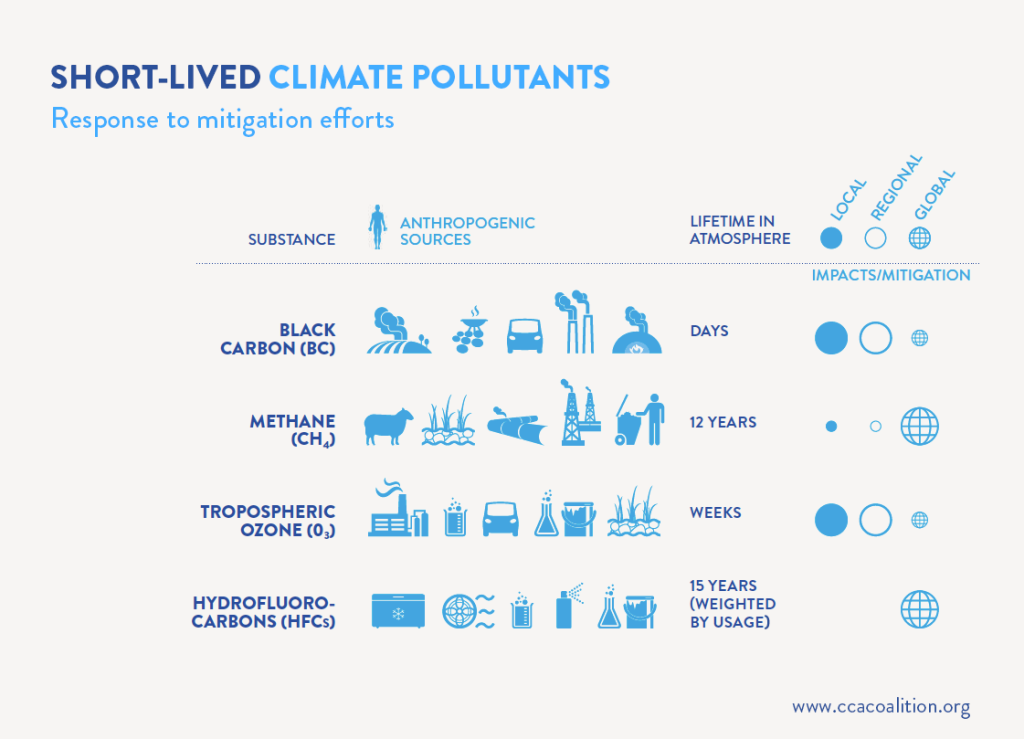
Fast action to reduce SLCPs will result in quick benefits for climate change and for human health. SLCPs have historically not been comprehensively included in country emissions inventories and NDC mitigation pledges. Some countries, such as Mexico, have included SLCPs in their NDC, pledging to reduce black carbon by 51% by 2030. Through recognition of the immediate health gains realized with SLCP reductions, climate action ambitions can be strengthened at COP27.