









Getting a Better Handle on Lost and Unaccounted for Gas
Posted: in Natural Gas
Written By

Share
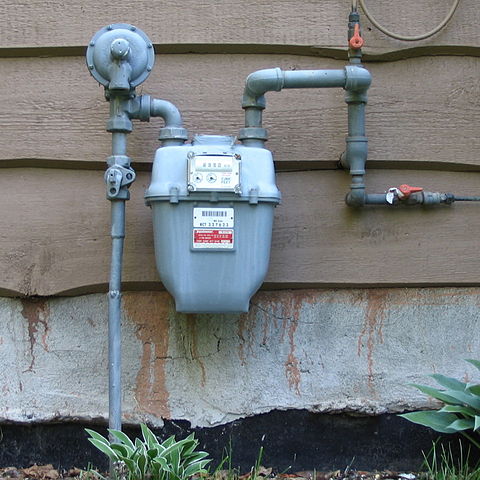 Natural gas is a major source of electricity in the United States. Roughly one-third of the 33 trillion cubic feet of gas produced each year is used to power our homes and businesses. And it’s the gas delivery and transmission industry that ensures these services are delivered nationwide.
Most of us don’t think about this industry often, or the gas for that matter, unless it’s unavailable when we need it, or it costs more than usual. But it’s important to pay attention. That’s because not all of the gas flowing through our pipelines actually reaches its intended destination – a problem that is further complicated by a poorly defined and complex method for tracking this paid-for but unused gas.
An indicator of gas system efficiency, accounting for lost gas (known by insiders as “lost and unaccounted for gas”, “unaccounted for gas”, LAUF or its many other acronyms) is how distribution companies manage the overall flow and supply of gas through their systems. Essentially, it is a ratemaking tool for calculating the difference between the volume of gas purchased by operators and the volume of gas delivered to customers that includes leakage, venting, theft, meter errors, temperature and pressure changes and other factors.
Complicated, to say the least, the reporting and accounting of this lost gas gets even more complex with the countless, disparate methodologies industry uses to calculate it. Without a common metric, there’s no way to compare performance across operators and improve the efficiency of the nation’s gas delivery system.
Need for Transparent Accounting
Last week, however, EDF and other stakeholders came together to address this issue. Together we approached the North American Energy Standards Board (NAESB) – a leading non-profit organization that develops standards for the gas and electric industries – to develop a uniform way to calculate LAUF. Better accounting of the gas passing through our pipeline system can help identify solutions to reduce unnecessary leakage and stabilize inefficiencies in the system.
Industry observers have also pointed out the benefits. A uniform calculation method will allow ratepayer advocates and public utilities commissions to compare results across utilities, track trends over time, assess the leakage component of LAUF relative to other categories, and analyze options for addressing the key drivers. In 2013, the Pennsylvania Public Utilities Commission became a leader in this area by adopting a definition and formula for LAUF to eliminate reporting inconsistencies and better understand losses from Pennsylvania’s pipelines. But Pennsylvania is an exception. That’s why a model standard developed through NAESB’s consensus based process would be a giant step forward.
Action at the Federal Level Will Catapult Change
The SAFE PIPES Act signed into law by President Obama in June requires the federal Pipeline and Hazardous Materials Safety Administration (PHMSA) to submit a report to Congress examining disparate LAUF standards nationwide, reasons for the discrepancies, and recommendations for harmonizing and improving the accuracy of reporting. This law says that if the PHMSA Administrator determines these recommendations would improve reporting, measurement, and safety, the agency is required to implement regulations within a year.
That makes this joint initiative to standardize LAUF calculation especially important and timely. If successful, the process will lead to a model standard that may be adopted by federal and state regulatory entities, and can be tailored to meet local or regional needs.
Jumpstarting an important process
By filing our request with NAESB, the stakeholder group, comprised of the California Public Utilities Commission, Tennessee Valley Authority, Citizens Utility Board Illinois, the Massachusetts Attorney General’s Office, and EDF, has helped initiate NAESB’s standards development process. If NAESB pushes ahead, internal agency deliberations on the matter will begin followed by an industry comment period.
Importantly, NAESB follows an open process, in which any interested party may participate and no single interest group can dominate. And while NAESB standards need the support of governmental entities to become binding, more than a thousand NAESB standards have been adopted by various regulators, reflecting its stature and credibility in the world of gas market design and standards development.
The SAFE PIPES Act has created the impetus to consider improvements in the tracking and reporting of lost and unused gas from our pipeline systems, and is a big step in the right direction. A model calculation method developed through the NAESB process will allow the gas industry to go even further.

One Comment
What about cities such as “Payson, Arizona” where they use {PIPED PROPANE} to all homes and business in the town?
I think leaking PROPANE would be worse than Natural gas as it is heavier than air and pools in any depression there for making an Explosion inevitable.