









Would Your Building Pass An Energy Efficiency Background Check?
Posted: in EDF Climate Corps
Written By

Share

By: Jian Huo, 2011 Climate Corps Public Sector Fellow in Mecklenburg County, NC; MEM candidate at the Nicholas School of the Environment, Duke University
This summer, my EDF partner, Adam Hart, and I are running energy efficiency “background checks” on buildings at Mecklenburg County Real Estate Services in North Carolina. Of the county’s 100 facilities, we identified 15 energy-intensive sites and arranged site tours of them for a closer look. In our energy assessments of the facilities, the red flags for energy waste were older machines with low energy efficiency, lighting, and HVAC systems.
Lighting – Metal Halides in Gyms and Pools
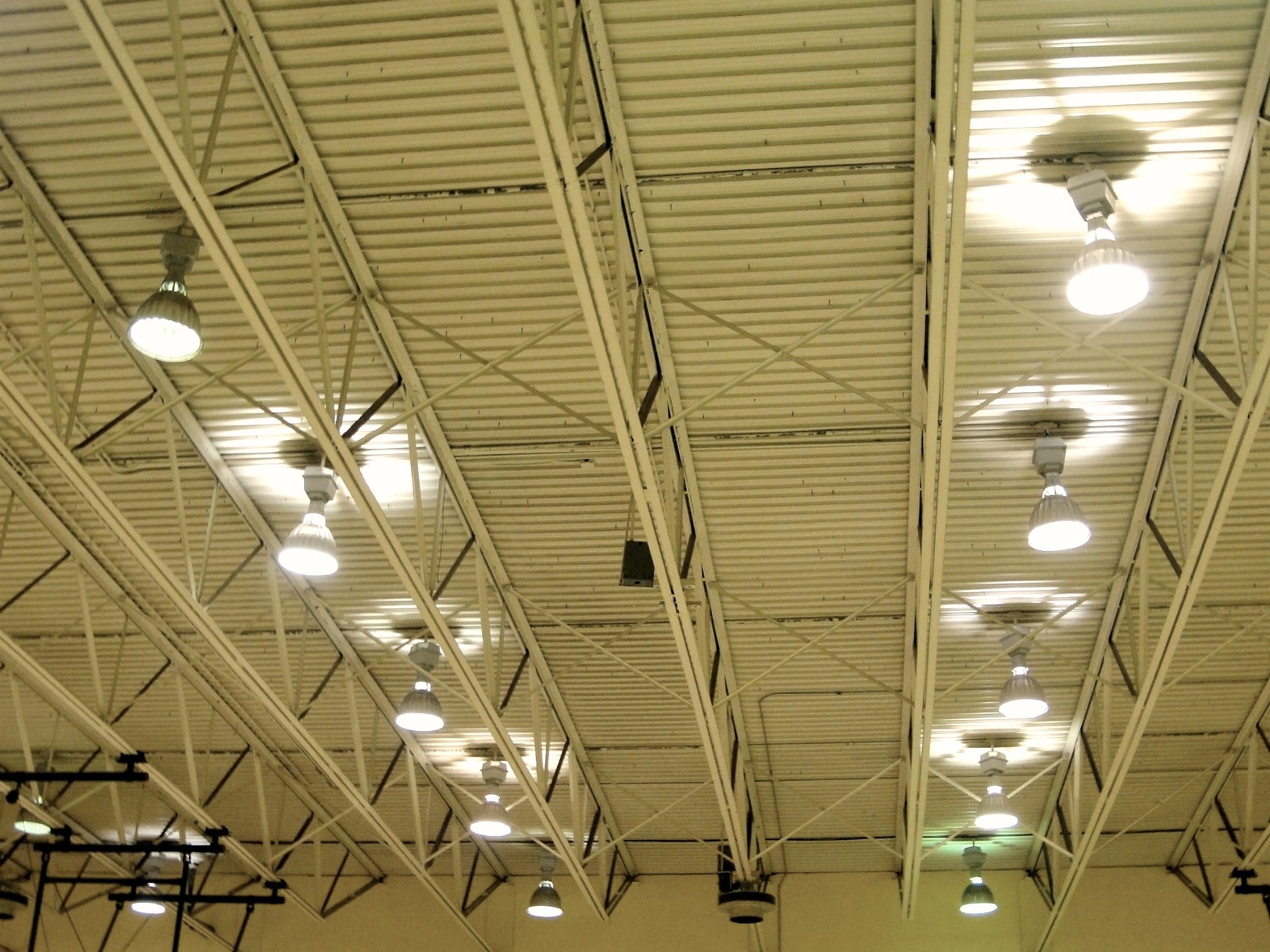
The county’s indoor gyms and pools are equipped with over 300 metal halides that are 400W and 1000W, which run more than 50 hours per week. Due to their long re-strike time, daylight sensors and occupancy sensors cannot be used to help save energy. However, switching to lower wattage LED lights can cut current energy use by 85% and allow for the installation of daylight sensors and occupancy sensors for further energy reduction. Changing lights in the high ceilings will
be a great challenge, especially in the pool areas. Although it seems time consuming and risky to change lighting above water, maintenance can put scissor lifts on the movable walkways to get to the metal halides and replace them.
HVAC – Heat Pumps Without Controls
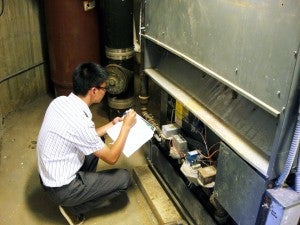
HVAC is the most complicated and intimidating part of the whole building system to a Climate Corps Public Sector fellow with little background in engineering. Even after Adam and I did background checks on all the sites, we had no direct solution for upgrading those giant and inefficient machines. So Adam and I started to conduct interviews with HVAC experts and facility managers, acquiring valuable information along the way. With newfound information, we tackled the County and Courts Office Building, which has heat pumps that are not connected to the central control system, but instead controlled with individual thermostats. Because the heat pumps may not work stably under high temperatures, the air conditioning controls are never set back when the facility is vacant. Energy savings will be easily achieved if the heat pumps are looped into the control system, allowing for the set back of air conditioning and heating controls during unoccupied hours.
Overall, our recommended changes to lighting and HVAC systems at facilities in Mecklenburg County Real Estate Services have great potential to cut energy usage and reduce greenhouse gas pollution. By doing background research of the buildings’ systems, touring sites, and talking to the right people, Adam and I were able to tackle the red flags of energy waste at the county’s facilities. After the retrofits are made, all of their buildings will pass our “background check.” Would yours?
EDF Climate Corps Public Sector (CCPS) trains graduate students to identify energy efficiency savings in colleges, universities, local governments and houses of worship. The program focuses on partnerships with minority serving institutions and diverse communities. Apply as a CCPS fellow, view our past projects and follow us on Twitter to get regular updates about this program.

2 Comments
sf, up
“tiao”, got what you are doing now
One thing to consider is replacing the metal Halide lights with T5HO fixtures. They tend to have a higher efficacy and can be controlled by occupancy sensor at a much lower price than LED. LEDs make more sense above the pool due to the difficulty in relamping.