







How Sustainable is your Supermarket’s Seafood Case?
Posted: in Seafood
Written By

Share
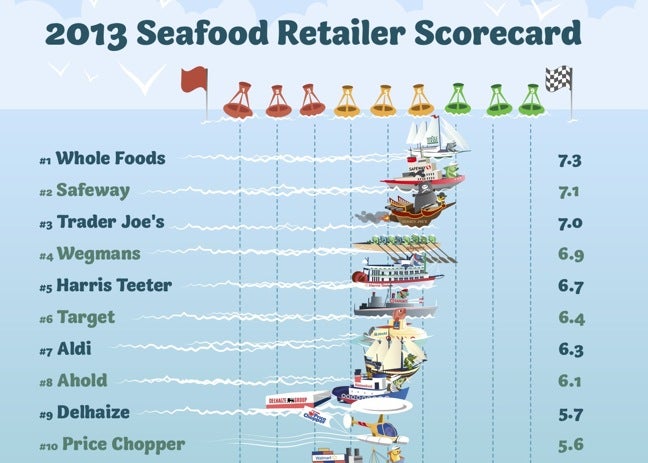
Last week, Greenpeace USA released the seventh edition of their popular Carting Away the Oceans report, which ranks the sustainable seafood performance of the nation’s 20 largest supermarket chains. Industry leaders like Wegmans (a former EDF partner on salmon and shrimp sourcing), Whole Foods and Safeway once again scored in the top five, while Winn Dixie, Publix and Supervalu perennially find themselves at the bottom of the rankings.
This year’s report places extra emphasis on the ways that these companies approach pressing conservation policy issues, such as the approval of genetically-modified salmon, the advancement of industry-wide seafood traceability, and catch methods for canned tuna.
Perhaps the report’s biggest surprise was the improvement shown by prepared foods leader Trader Joe’s, which rocketed up 12 spots (from 15th in 2012 to 3rd this year). This comes just weeks after public scrutiny of the company’s follow-through on its 2012 sustainable seafood promise. However, Greenpeace gave Trader Joe’s a major pat on the back for removing several unsustainable species from their inventory and switching to better sources of canned tuna.
Although we don’t always agree with our Greenpeace colleagues about the composition of their ‘red list’, we were happy to see them recognize the improving sustainability of Gulf of Mexico red snapper and grouper – fisheries that EDF has worked in for more than a decade. They even gave a nod to EDF partner H-E-B for their strong support of the GulfWild traceability program.
So until next year’s edition, try to use your seafood dollars to support companies that are on the right track. If you are uncertain about the right species to purchase, you can refer to our recently revamped “Seafood Selector.” Let’s hope that the good continue to get better and the not-so-good get serious about seafood sustainability.