









How to reduce community wildfire risk for a more resilient California
Posted: in News
Written By

Share
Summary
- Effective wildfire mitigation requires coordinated action across homes, communities, and landscapes, with community-scale action playing a leading role in reducing overall risk.
- Strategic, coordinated, and science-informed mitigation is needed for both effective risk reduction and cost efficiency.
- Long-term, predictable funding builds the planning, organizational, and market capacity to deliver mitigation at scale.
This post is part of a series examining ‘Enhancing California’s Resiliency to Natural Catastrophes’, a report prepared by the California Earthquake Authority in response to Senate Bill 254. The report presents policy options for addressing California’s interconnected wildfire, insurance, and electric utility challenges. In this blog, we consider how California can build a coordinated, long-term approach to reducing wildfire risk across homes, communities, and landscapes.
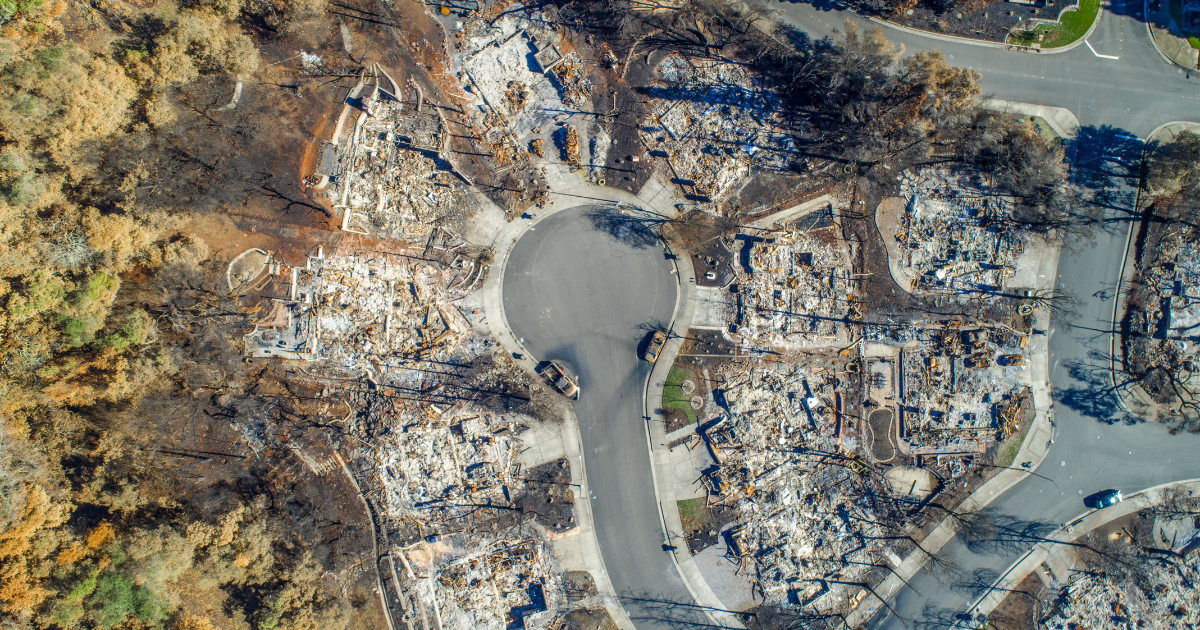
Wildfire risk in California is not confined to a few unlucky zip codes. Nearly a third of the state’s homes sit in the wildland-urban interface (WUI), where homes and other development intermingle with wildland vegetation. In the WUI, a single fire can quickly move from a forest into a neighborhood. Many wildfire-related structure losses have come from urban conflagrations ignited by a wildfire, when structure-to-structure fires spread like those experienced in the Palisades and Eaton Fires in January 2025.
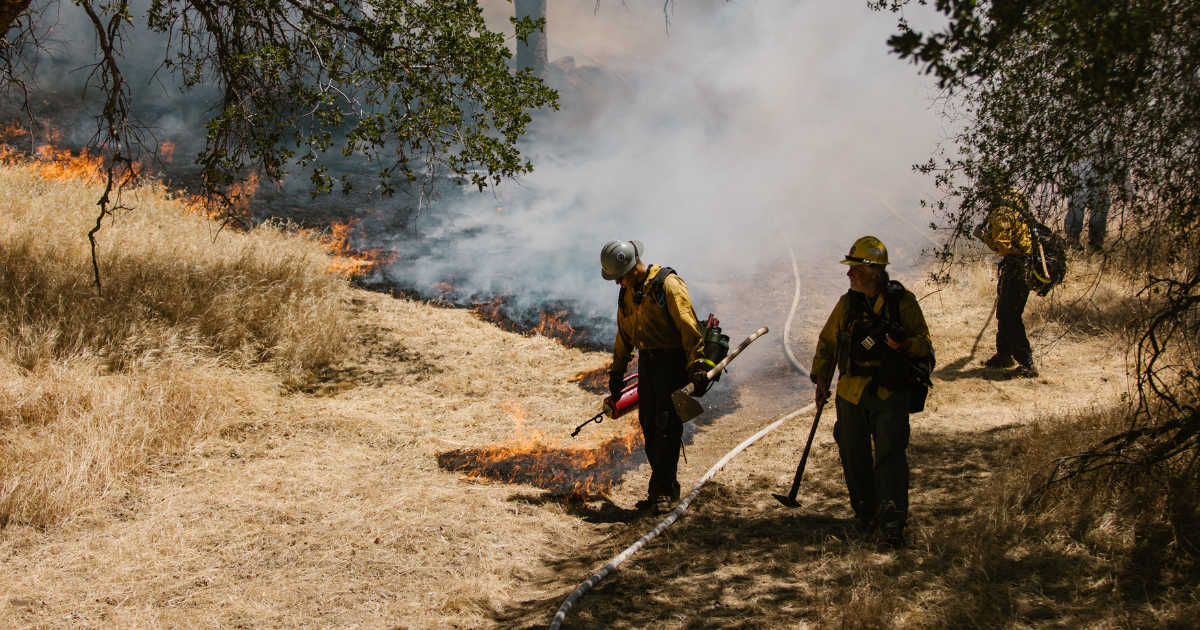
The SB 254 report describes the necessary response as “whole-of-society,” which means that no single agency, industry, or homeowner can reduce this risk alone. Wildfire mitigation must work at three interconnected scales at once. Individual property adaptation, like home hardening and cleared defensible space, is essential to limit a home’s exposure to embers and flames. Community-scale planning and mitigation, such as coordinated vegetation management and scaled home hardening, determine whether a dense neighborhood avoids ember- and structure-to-structure spread while improving the risk-reduction return on investment. Landscape treatments, such as prescribed fire and thinning, can alter a fire’s behavior before it reaches a community.
Taken together, work across these three scales reduces risk at each stage of a fire’s path, from the surrounding landscape, through the community, and to the individual home. Although all three are necessary, community-scale mitigation is relatively underfunded and plays an especially critical role.
More clarity is needed for property owners
Individual action is critical, and homeowners need clear guidance on what effective mitigation looks like. For example, keeping the first five feet around a structure clear of combustible material (i.e., ‘Zone Zero’) can address the most common point of ignition.
Yet homeowners have to navigate multiple standards and recommendations, such as those developed by the Insurance Institute for Business and Home Safety (IBHS), Firewise, and California’s own state standards, each with different requirements. As a result, it can be difficult to know which actions to take and when mitigation is “done.” While mitigation at the individual property level is necessary, it cannot fully protect a home from risks created beyond the property line. Uncertainty about how community standards differ, and what implementation requires, also makes it difficult to estimate the potential cost and impact of mitigation in priority areas statewide. This is an important point, because home retrofits can be expensive.
Protecting homes requires coordinated, community action
Fundamentally, community wildfire risk should be considered across a neighborhood, not individual homes. Even a home with hardened siding, ember-resistant vents, and cleared defensible space can remain exposed to considerable risk if nearby properties have taken no action and can contribute to structure-to-structure spread. This is particularly true in areas where structures are less than 25 feet apart.
Because wildfire risk is shared across neighboring properties, meaningful risk reduction requires coordinated action at the community scale. That is challenging to implement, as it means convincing – or compelling – a large number of property owners, parcel-by-parcel, to spend money on work whose benefit depends in part on their neighbors also taking action. High participation levels are often required to significantly reduce neighborhood wildfire risk, and voluntary participation can mean such levels are difficult to achieve. Targeted interventions that consider how fire spreads, not just individual property vulnerability, benefit whole neighborhoods and can improve efficacy of risk reduction investment. However, it is often unclear who is responsible for determining which actions are needed, who pays for them, what workforce is qualified and available to implement them, and whether they will improve insurance outcomes. These challenges make statewide coordination and streamlined administration especially important. The SB 254 report advances both ideas, which merit urgent attention from policymakers.
Strategic, coordinated, and science-informed mitigation is what increases effectiveness and lowers the cost of mitigation activities. This up-front coordination will pay off, not only for action within neighborhoods and communities, but across California. The SB 254 report models the potential savings: a concerted, statewide effort focused on the highest-risk neighborhoods would reduce the amount of catastrophe financing needed by the CA Wildfire Fund by approximately 33%, dropping the total from approximately $36 billion to under $24 billion.
But targeting at that level of precision requires better information about community-level risk. California’s hazard maps capture where a wildfire is likely to start or spread, but they do not fully capture how fire may behave once it enters a developed area. In particular, the maps may underestimate how far a fire travels once structures begin to burn and contribute to structure-to-structure spread. Identifying where mitigation reduces the most risk and tracking progress over time will require building on the existing data and analytical infrastructure across the state. We support action to address the SB 254 report’s proposal to build that statewide capacity.
Community protection includes the landscape
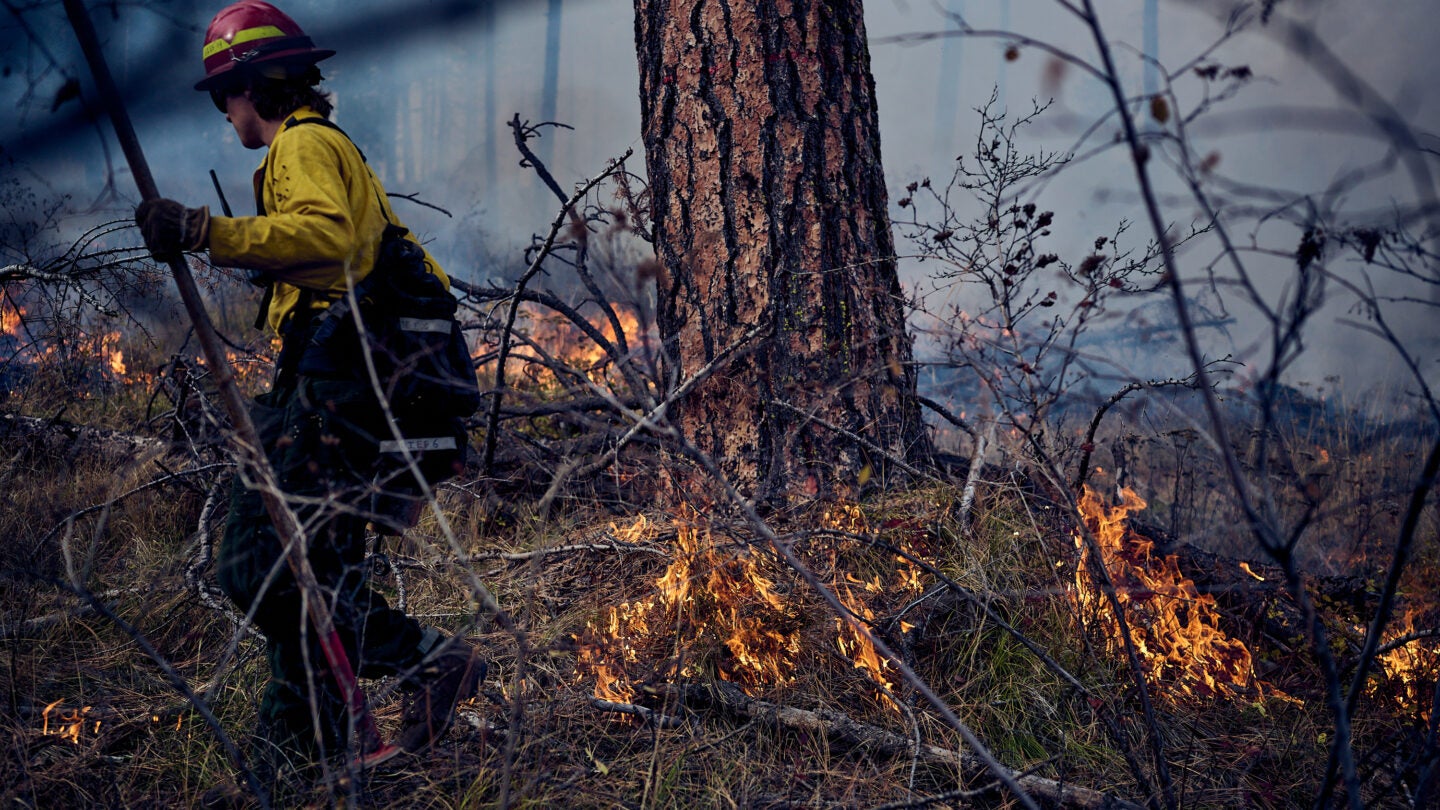
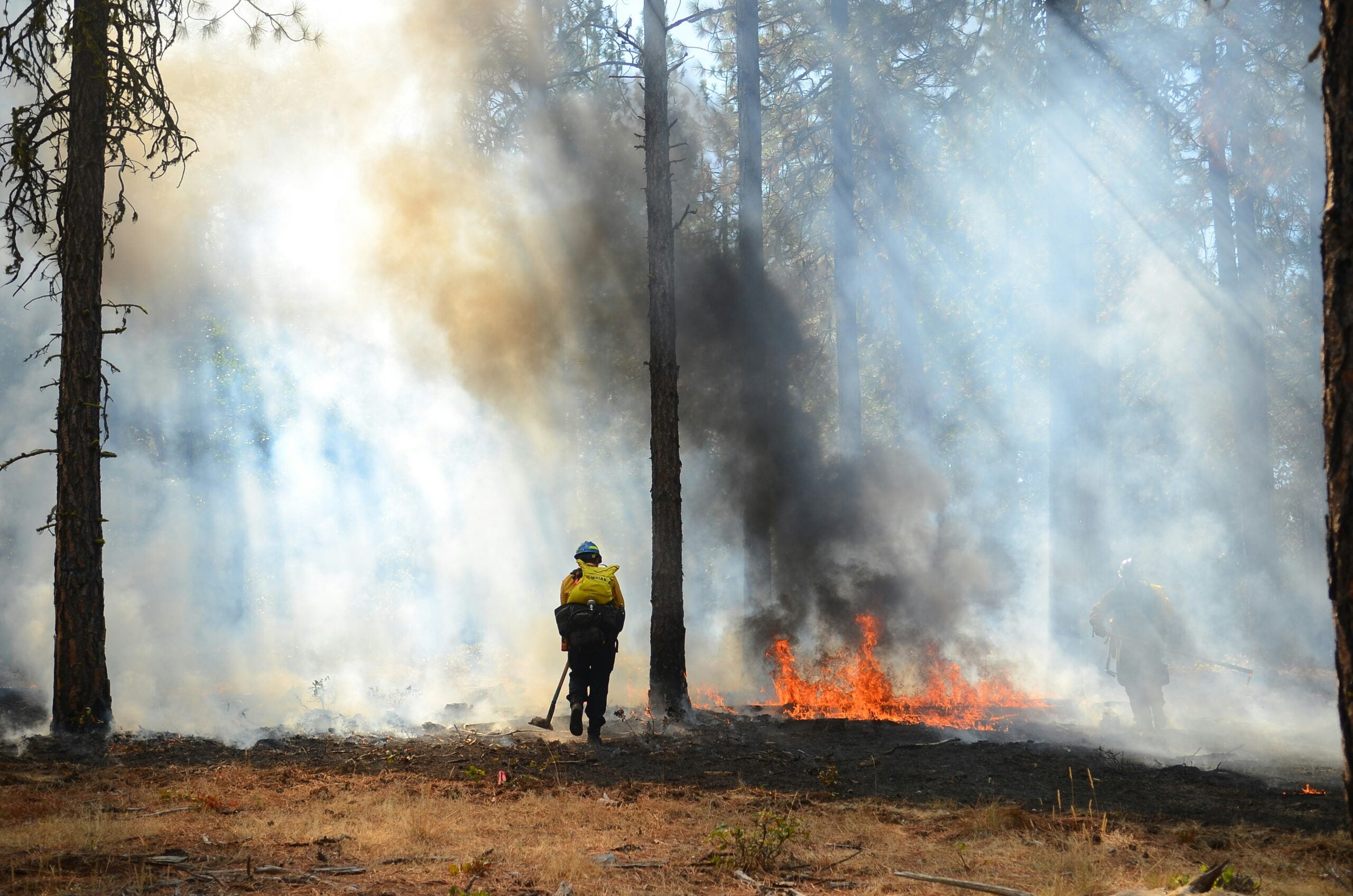
Landscape-scale treatments can reduce the intensity and spread of wildfire before it reaches developed areas. Practices such as prescribed fire, forest thinning, and fuel breaks can change fire behavior and create safer conditions for communities and firefighters. But landscape treatments cannot eliminate wildfire risk or substitute for mitigation within neighborhoods and around individual homes; the effectiveness of their implementation depends on where and how they are applied, how well they are maintained, and whether they are coordinated alongside community and property-level action. Landscape treatments need to be part of an integrated approach to reduce risk along the whole path a fire may travel.
Match mitigation to context
Coordination across scales should not mean applying the same intervention everywhere. A dense urban neighborhood faces different risks than a home at the edge of the wildland-urban interface. California’s diverse vegetation types create very different fire conditions across the state. Mitigation strategies must reflect those differences.
Shared data and science-informed standards should determine the right combination of home, community, and landscape action for each place. The SB 254 report advances the approach to have science-informed standards for directing resources where it reduces the most risk per dollar, and California should move quickly to put it into practice.
Implementation must also account for differences in local capacity. Standards or programs that assume local technical and administrative capacity will inevitably concentrate mitigation resources where that capacity already exists. The system must ensure that under-resourced communities are not left behind.
Fund community mitigation for the long haul
Mitigation funding in California is fragmented, competitive, and often tied to short budget and grant cycles typically ranging from 1-5 years. Local governments, organizations, and homeowners must navigate multiple programs, each with its own application process, while roles across the local, regional, and state levels remain unclear.
As a result, the current funding structure makes it difficult to build the capacity needed to deliver mitigation at scale. Local organizations cannot reliably plan beyond the next grant cycle, invest in developing a stable and skilled workforce, or establish efficient supply chains with associated cost efficiencies. They also cannot make the sustained investments needed to implement and maintain mitigation over time. Putting more money into the same system will not solve these problems on its own.
Predictable funding over a 10-year period, with clear coordination across planning, implementation, monitoring, and ongoing stewardship, would allow communities to scale their work and make each dollar go further.
The SB 254 report calls for stronger statewide coordination. This is important to get right, as effective mitigation touches the policies and expertise of many different parts of the State of California. Coordination and alignment between programs is important; however, that coordination should be designed carefully to avoid adding another layer of complexity or bureaucracy. In some cases, this may be better achieved by integrating programs under a clear co-management structure that includes relevant agencies. Existing pathways, like the California Joint Powers Authority, could be leveraged more to improve alignment. For example, the California Wildfire Mitigation Program was created through the Joint Powers Authority between the Office of Emergency Services (CAL OES) and CAL FIRE. Clearly defining the role of each state program involved in wildfire mitigation and resilience, assigning decision-making authority, and addressing gaps between these programs, will be important to coordinate funding effectively.
Once risk reduction is achieved within a community or landscape, ongoing stewardship is necessary to maintain vegetation and defensible space. Although the SB 254 report calls for durable, long-term funding for wildfire mitigation, it does not fully address how ongoing community and landscape stewardship should be financed after initial risk reduction is achieved. California should explore models that link community commitments to maintaining low risk conditions with durable funding sources, including local taxes or homeowner’s associated fees. This approach could strengthen community buy-in while helping communities capture a share of the long-term savings associated with reduced fire suppression, recover, and insurance costs.
Establishing a long-term statewide funding and financing strategy for community wildfire mitigation is among the SB 254 report strategies that we most want to see advanced. Funding should be durable enough that communities can plan against it, and it has to be fair, so communities least able to pay aren’t the ones left with the greatest risk.
Pay for measurable reductions in risk
We encourage the State to consider real innovations in funding that tie progress toward defined milestones to long-term funding commitments. Funding should also incorporate outcome-based incentives that reward measurable reductions in wildfire risk, rather than acres treated or completion of an activity checklist. This approach would encourage municipalities, contractors, and homeowners to take strategic action while giving local implementers flexibility to select the approaches best suited to local conditions. It would also reward verified reductions in community wildfire risk and make public investments more accountable to measurable results. Clear standards and guidance, along with technical support for planning, can help local communities draw the connection between mitigation actions and achieved risk reduction.
Science must remain central not only to targeting mitigation strategies, but also to evaluating and improving the effectiveness of funding and programs over time. California should fund ongoing monitoring to determine whether investments are reducing risk as intended and use those findings to adapt standards, priorities, and implementation approaches.
Sharing the costs of reducing wildfire risk
Mitigation costs are currently shared among individual property owners; local, state, and federal governments; utilities; and private companies. But California has no consistent framework for allocating those costs. Projects are instead negotiated and assembled one at a time based on available funding and political will, which makes long-term planning difficult.
That leaves the hardest question: who pays for wildfire mitigation?
The answer must involve sharing responsibility across public and private actors that benefit from reduced wildfire risk. California is already answering this question now by default. Today, the costs show up in homeowner insurance bills, electricity bills, taxes, disaster costs, and devastating losses borne by wildfire survivors.
We should be more deliberate in how these costs are shared and start by reducing risk before disaster strikes.
Expert contributors to this blog series include Katelyn Roedner Sutter, Talley Burley, Michael Colvin and Katie Roback from Environmental Defense Fund and Jeremy Sokulsky and Brynn O’Donnell from Environmental Incentives.