








Why dismantling the nation’s atmospheric research backbone would be a costly mistake
Posted: in News
Written By

Share
Coauthored by Zachary Decker
The Trump Administration has a record of disregard for programs that support human life, safety, and public health. Now, it is targeting a research center that everything from our military to the insurance industry to our electricity providers rely on to keep us safe and informed.
The National Center for Atmospheric Research, a federally-funded nerve center in Boulder, Colorado, is a textbook example of government serving the public interest. Office of Management and Budget Director Russ Vought has indicated the Trump administration’s intention to “break up” NCAR, calling it one of the main centers of “climate alarmism.” But environmental security without NCAR would be like trying to run a marathon blindfolded, without coordinating our feet.
The Trump Administration thinks it’s in the national interest to cut NCAR’s programs and scope and that its value to all Americans can be preserved if it’s broken up and scattered. This is why they’re wrong.
NCAR is in the national interest
In 2024 alone, the United States suffered 27 separate billion-dollar weather and climate disasters causing ~$182.7B in damage and at least 568 deaths; and since 1980, cumulative losses exceed $2.9T. Silencing the science doesn’t turn down the risk; it just blinds the people who must manage it.
These risks are highly interconnected, which is why NCAR is so valuable. NCAR is much more than a single laboratory: it is the backbone of U.S. environmental intelligence, an integrated hub of supercomputers, aircraft and open community models, where a research-to-forecast pathway converts science into action.
With an annual budget of $125 million, NCAR contributes to the science infrastructure that generates over $31B in benefits each year, while costing less than 0.1% of the U.S. weather and climate disaster losses in 2024. Included in its mandate:
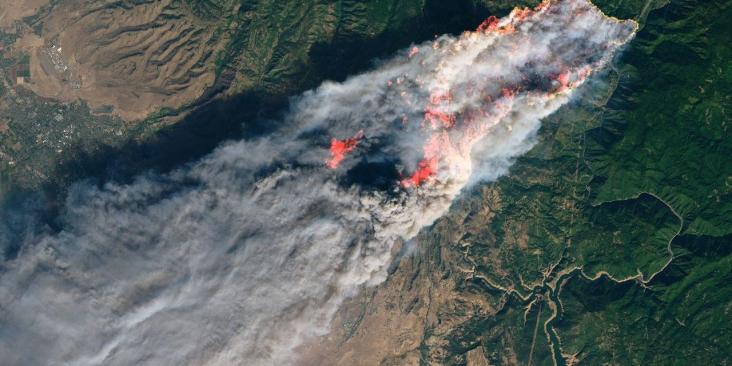
- Wildfire and smoke forecasting;
- Making air travel safer;
- Air quality, pollution, and health modeling (mercury, arsenic, ozone, smoke);
- Intelligence on deluges like atmospheric rivers and extreme rainfall;
- Street-level situational awareness for flash flood threats;
- Hurricane surge and coastal risk prediction;
- Space weather alerts for power grid and satellite operations (e.g. GPS); and
- Long-range climate scenarios.
When Americans check the weather, evacuate from wildfire smoke, harden military infrastructure, or watch a hurricane’s cone of uncertainty, they are leaning on NCAR’s work. NCAR serves actuaries and reinsurers, the aviation industry, emergency managers, utilities and power grid planners, as well as thousands of scientists in diverse fields. As damages from extreme weather like floods, hurricanes and wildfires increase year after year, it’s clear that threats from climate change will continue to threaten lives and livelihoods.
NCAR’s integration is the asset
Now to consider the second assumption — that NCAR could be dismantled, with “vital functions,” like weather prediction, simply reassigned elsewhere.
NCAR’s unique value is the exact opposite of modularity: its real strength is not any single instrument or program but the way it fuses them into a unified Earth system engine. Its community of modelers, field scientists, aircraft engineers, pilots, and supercomputing experts work collaboratively—with hundreds, if not thousands of external researchers and businesses — to turn raw data into lifesaving forecasts. Access to NCAR’s “community models” and data is free and accessible to all, and used by scientists, experts, public agencies, and the private sector to improve, enhance, or utilize to protect American lives.
Even across programs, NCAR’s systems are interconnected. The same framework that helps us understand hurricane intensity and coastal flooding also supports better simulation of atmospheric rivers and their rainfall, which is critical for water supply planning for over 50 million people in the American West. That framework also powers the model used to assess marine heatwaves, fisheries stressors and coastal resilience worldwide. At the same time, NCAR’s model used for severe storms, wildfire behavior, and smoke transport is tightly connected to its chemistry and air quality research; and its space weather models depend on coordinated observations and high-end computing. All these capabilities are sustained by shared aircraft, the NCAR Wyoming Supercomputing Center and expert teams working together.
This produces an integrated architecture that underpins flood and air quality alerts, informs insurance and reinsurance risk modeling, supports national security planning, and trains the workforce for federal government agencies, tribes, states, and private firms. Fragmenting NCAR would fracture those connections and deliver less.
A better path: Strengthen our shared science infrastructure
NCAR can and should keep evolving — to modernize, streamline and maximize its ability to adapt to a world of changing risks. But any good faith modernization should start from a recognition of its value and what makes it work. We should embrace and double down on NCAR’s mission of science in service to society, seeking to understand hazards and enabling tools to save lives and prevent costly losses. We should recognize the importance of integration, affirming NCAR’s unified mission and invest in what makes it uniquely valuable.
Today’s existing weather and future climate trajectory will expose Americans to severe risks. Dismantling NCAR will leave many sectors flying blind. NCAR is an essential part of our intelligence and ability to prepare and respond. It is also the product of decades of investment by scientists, state and local governments, the private sector, universities, and U.S. taxpayers. At its heart, it’s our center. Dismantling it would be a generational mistake.