






Food for Thought: How EDF is Accelerating Climate Action in Food Systems Post-COP30
Written By

Share
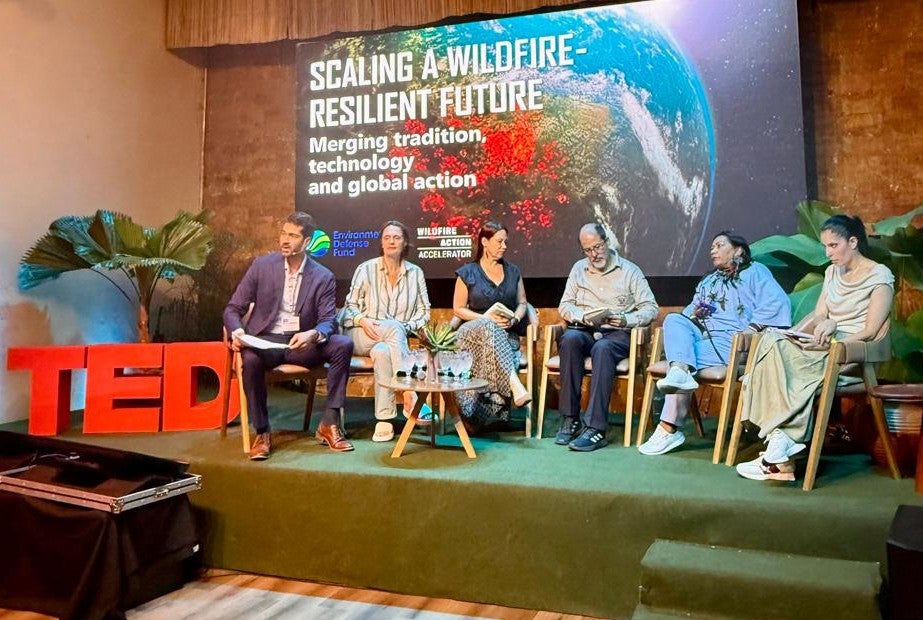
COP30 in Belém, Brazil revealed a striking paradox for food systems. Pavilions buzzed with urgency as indigenous communities, local leaders, farmers, and youth demanded immediate action on nature and food. Yet formal negotiations told a different story: the final COP text mentioned food only once – with no mention of food systems as a whole – despite clear scientific consensus that sustainable agri-food systems are vital to move the needle on climate.
So, without perfect COP outcome text, how can we convert this on-the-ground momentum into results? One way forward is through the COP30 Action Agenda – the delivery track that organizes governments, development banks, companies, and civil society around shared priorities and moves projects into implementation when formal text doesn’t go far enough.
The Action Agenda clusters work around six thematic axes – including food and agriculture – and uses activation groups of small, convened teams to set near-term milestones, build pipelines, and get finance moving.
Here’s how the Action Agenda can deliver on agri-food at the scale and speed this decade demands:
Where near-term delivery is possible
EDF has positioned itself at critical leverage points in the food systems transformation – showing how high-level commitments can translate to measurable impact. Our recent EDF Solutions Seminar: “COP30: From Ambition to Action” underscored that when governments, financiers, companies, and civil society coordinate around clear sector goals, delivery accelerates.
Within the Action Agenda, the focus on Transforming Agriculture and Food Systems (Axis 3) created space for bottom-up delivery. In that space, EDF is advancing two flagship initiatives that turn sector plans into real progress:
- Dairy Methane Action Alliance
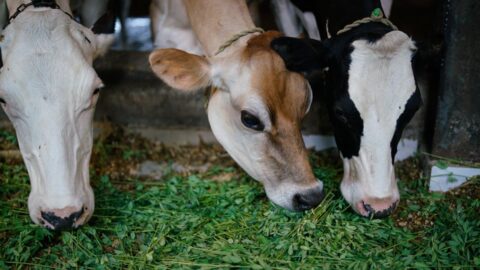
Within Activation Group 8 (Land Restoration and Sustainable Agriculture) the Dairy Methane Action Alliance (DMAA) tackles one of agriculture’s largest emission sources: dairy methane, which accounts for over 60% of on-farm emissions. Launched at COP28, DMAA already includes major global food and agriculture companies like Danone, Starbucks, and General Mills – representing over $100 billion in annual sales – and has secured the world’s first corporate Dairy Methane Action Plans with five companies having published their DMAPs. In addition to this, all but the recent DMAA signatories have published their dairy methane inventories. Beyond commitments, EDF has provided technical guidance on how to meet the milestones, that is available to any company that wants to chart this course. EDF also hosts bi-monthly sessions to help DMAA companies overcome barriers and collaborate, significantly raising the profile of methane action. - Aquatic Blue Food Coalition
Aligned with Activation Group 9 (More Resilient, Adaptive, and Sustainable Food Systems), the Aquatic Blue Food Coalition elevates the critical, yet overlooked, role of fish, shellfish and aquatic plants and algae in food security and climate resilience. With 65 members – including 16 governments – the coalition works together to elevate the importance of aquatic foods and mobilizing resources for integrating aquatic foods into national strategies. As a part of this mission, Coalition partners worked together and developed a report on integrating blue foods into national climate strategies. This guidance is already catalyzing action: in Mexico, EDF convened stakeholders to co-create a detailed roadmap to inform the inclusion of blue foods in Mexico’s national agendas and international climate commitments. Exactly one year later, the Mexican government updated its Nationally Determined Contribution (NDC) to include blue foods as an important component of its climate adaptation and mitigation strategy – a direct result of the targeted engagement a year earlier.
The financing bottleneck – and how to unlock it
The primary barrier to scaling climate solutions in dairy and aquatic food systems is finance, not technology.
For dairy, some proven methane-reduction methods require large upfront costs, hindering cash-strapped farmers. For aquatic systems, ocean solutions receive just 1–2% of climate funds, which often fail to reach local communities.
To address this, EDF is pioneering creative blended finance models that bridge the gap between available capital and on-the-ground needs to de-risk investments for the private sector while prioritizing affordability for producers:
- The Dairy Impact Fund structures low-cost loans by layering corporate offtake agreements, philanthropic grants, and impact capital.
- The Aquatic Blue Food Coalition advocates for major policy shifts to increase ocean-climate funding, and practical financial mechanisms – like community-led funds or sustainability-linked loans – that ensure climate resources directly reach fishers and coastal communities.
Food systems in this decisive decade
Looking toward COP31, three moves would meaningfully accelerate agri-food progress:
- Stronger political recognition of food systems in formal texts, with clear signals and milestones.
- Continuity in the Action Agenda to enable co-created implementation, keeping activation groups on a steady path.
- Increased focus on financing mechanisms that unlock capital for on-the-ground solutions
And because food systems sit at the intersection of climate, nature, and livelihoods, holistic progress on agri-food also means engaging with other UN processes outside of the COP – such as the UN Ocean Conference and the UN Convention on Biological Diversity.
At COP30, urgency on food systems came from outside the negotiating rooms – from farmers, Indigenous leaders, and communities. To turn that momentum into delivery, we need to continue driving on-the-ground implementation, pressure Parties to scale proven solutions and bridge the finance gap, and ensure local voices lead the way. That’s how high-level ambition becomes real change for people and nature.