








Forests Might Be the Big Winners in Copenhagen
Posted: in International
Written By

Share
Negotiators in Copenhagen are still nowhere near a final overall deal, but they are making significant progress on one very important issue — preserving the world’s forests.
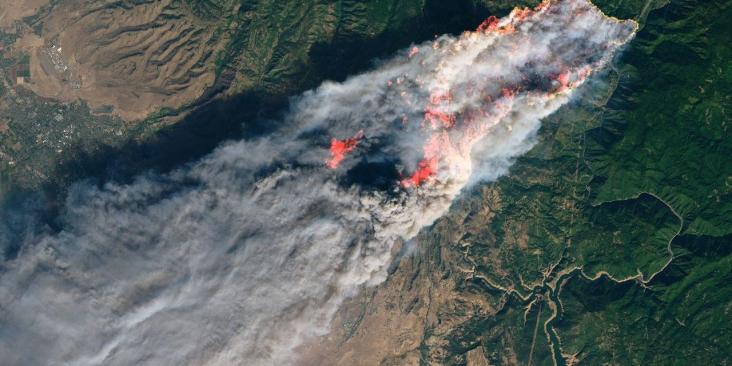
Trees absorb carbon dioxide; the destruction of the rain forests is responsible for about 17 percent of the world’s greenhouse gas emissions. That’s why Environmental Defense Fund supports the Reducing Emissions from Deforestation and Forest Degredation program, better known as REDD.
The 193 countries taking part in the Copenhagen climate summit have been working on a REDD agreement for the past two weeks, and are reportedly very close to a deal.
EDF’s president Fred Krupp told the New York Times:
It is likely to be the most concrete thing that comes out of Copenhagen — and it is a very big thing.
Deforestation is partly a result of poor countries needing the revenue generated from harvesting and selling wood. REDD would provide ways for those countries to make money by conserving their forests instead. Under the program, poor countries would get a new income stream and the world would get more forests. In the U.S., REDD could serve both a political and an economic purpose by helping win support for a clean energy bill with a declining carbon cap. According to the Times:
The agreement is also being closely watched in Congress … Under the cap-and-trade system preferred by Democratic leaders and the Obama administration, companies that cannot meet their greenhouse gas pollution limit could buy extra permits by investing in carbon-reduction programs abroad. Plans to preserve forests under REDD would presumably qualify.
In other good news for the world’s forests, the United States Department of Agriculture just announced that it would join Australia, France, Japan, Norway and the United Kingdom, to provide the initial public funding for a related program called REDD+ (pronounced “red plus”). The program provides funding for poor countries that are trying to plant more trees and expand their forest cover. Assuming the Copenhagen talks produce a deal on REDD+, the coalition will provide $3.5 billion over three years for the effort; the U.S. will put up $1 billion of that.

3 Comments
REDD, and REDD+ are such crucial agreements. We can all just hope that the Copenhagen summit comes to a solid positive outcome. After all, the need to preserve the world’s forests is as basic as, well, the air we breathe.
We all wait with baited breath.
We need to save all forests and cut back on paper use. Let’s abolish newspapers and print everything online. I read news online and don’t buy newspapers. We also need to stop Amazon deforestation and the only way to do this is to stop consuming meat, especially beef. More and more areas are deforested for cattle. It is hypocritical to call upon other nations to curb deforestation while our own country continues with its gluttony of forest and meat products. We have to start with ourselves and drastically cut back on our own consumption and reduce our carbon footprint.
ncie blog, i found it on google. great resources you share here. subscribed.