







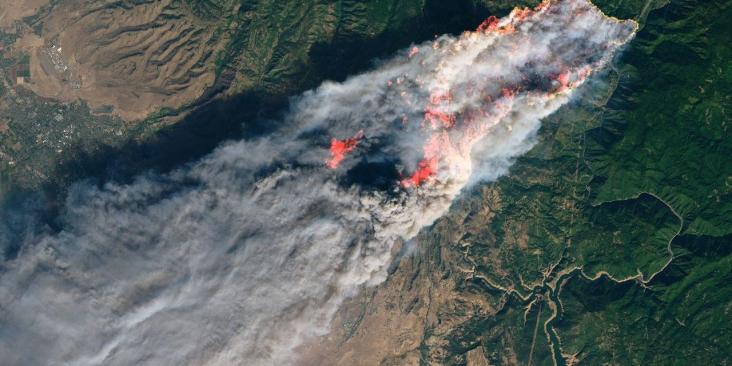


Global Warming from Soot
Posted: in Arctic & Antarctic
Written By

Share
The author of today’s post, Lisa Moore, is a scientist in the Climate and Air Program.
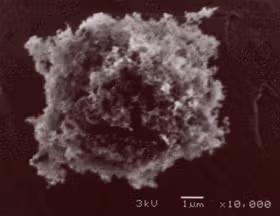
Most people don’t realize it, but “black carbon” or soot – the same stuff that dirties up chimney flues and car mufflers – is a significant contributor to global warming. Today’s best estimates place it next in line behind the greenhouse gases CO2 and methane (see Table 2.13 in the IPCC report).
Greenhouse gases and atmospheric soot heat the Earth in different ways:
Greenhouse Gases. The Sun radiates light in a wide spectrum of wavelengths, mostly visible, some not. Our atmosphere is transparent to visible light. Some visible light hits the Earth, is absorbed by land, oceans, and vegetation, transformed into heat, and re-radiated as infrared light. Our blanket of greenhouse gases prevents some of the infrared light from radiating back out to space – and it’s a good thing, or the planet would be too cold to support life. The problem of global warming arises when the blanket of greenhouse gases becomes too thick, as it is today.
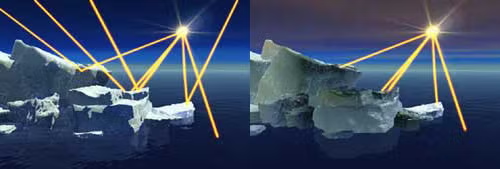
Atmospheric Soot. Not all the visible light that hits the Earth is absorbed. Some bounces off the Earth and is reflected back out to space. This happens especially at the poles, because snow and ice are highly reflective. Atmospheric soot absorbs visible light from the Sun that otherwise would be reflected back out to space. That is, it reduces the Earth’s reflectivity, or “albedo”. Atmospheric soot also contributes to global dimming, which cools the Earth by screening out the Sun, but its heat-retaining effect is stronger.
Like greenhouse gases, soot is a by-product of organic fuel combustion, and is belched out by automobiles, coal plants, agricultural burning, and the like. It only stays in the atmosphere for weeks (as opposed to greenhouse gases, which can remain in the atmosphere for hundreds of years), but constant emissions keep levels too high.
Global winds can carry the warming haze of atmospheric soot far from where it’s produced. A study published this past March estimates that 75 percent of high-altitude atmospheric soot over the U.S. West Coast in spring comes from Asia. The same study estimated that in the Pacific Ocean region, the amount of springtime warming caused by soot is 40 percent of that attributed to CO2 over the last century – a significant component. Since the Pacific Ocean drives much of the Earth’s climate, this has a global impact, as well.
Most soot ends up in the atmosphere and its impact is greatest there, but it also does measurable damage on the ground when it finds its way to the Arctic. Snowflakes pick up soot particles as they fall, dirtying polar snow and sea ice and reducing reflectivity.
Even worse, there’s an amplification effect. When polar snow and sea ice melt, warming is further accelerated because bare ground and ocean are less reflective. Mainly for this reason (and also for some lesser reasons), the Arctic is warming faster than the rest of the globe – a phenomenon called “polar amplification“.
The 2003 NASA Science Brief “As Pure As Snow” provides a good overview of the problem. NASA also offers an accessible summary of a 2005 research paper on Arctic soot. You can see a Shuttle photograph of soot-blackened snow in the Russian City of Troitsk, courtesy of NASA. And just today, another study was published that confirms the high impact of soot on the Arctic.
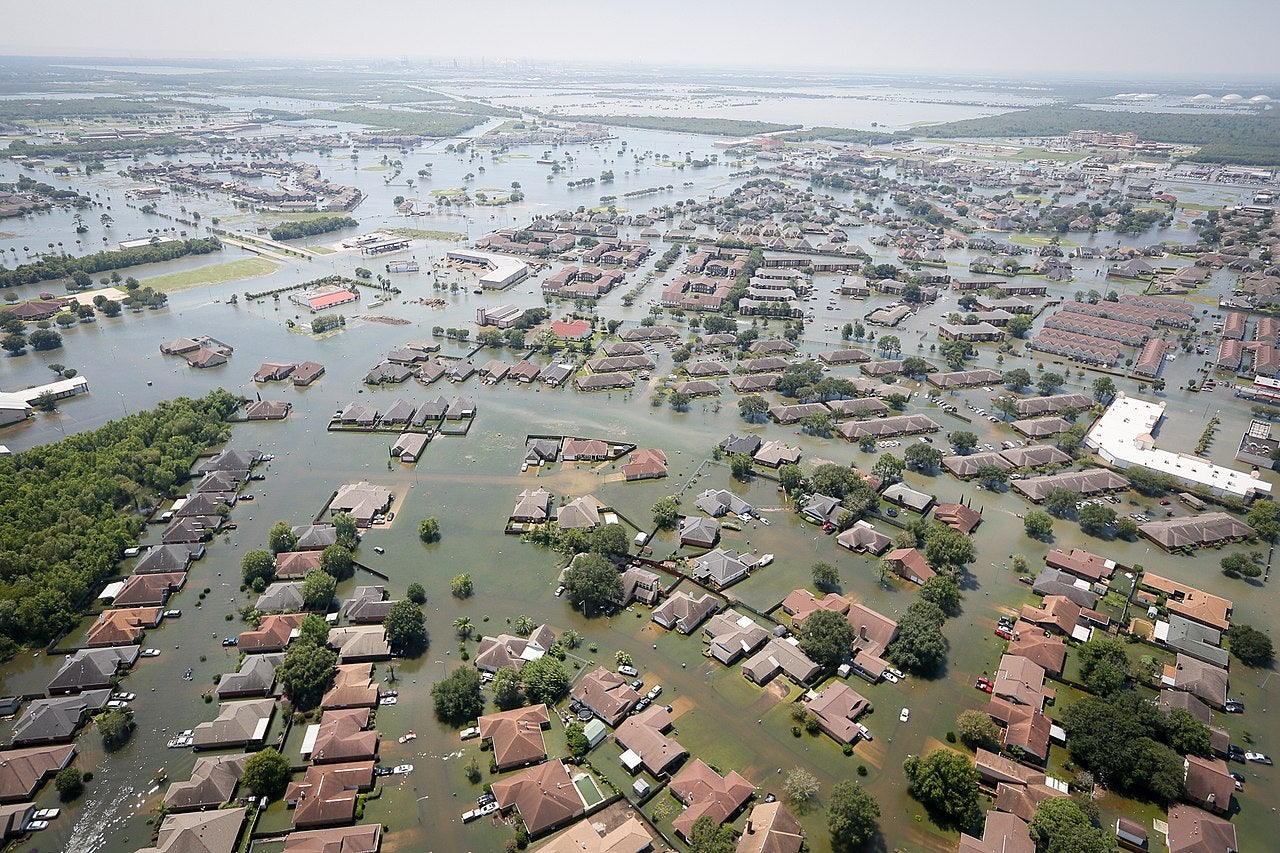
So when you think about the dangers in burning fossil fuels for energy, you can add atmospheric soot to the list, right behind greenhouse gases.

5 Comments
This was one of the best written stories on the complex issue of global warming I’ve seen and is easily understood. I had not realized that soot accounts for 40 percent of springtime warming that Co2 does nor that soot only stays a few weeks in the atmosphere. This tells me that if we’d cut out all industrial activity for a few weeks, the atmosphere would clear itself of soot, which would slow down the warming (I know we couldn’t do that, but now I can see a short-term benefit of not polluting.
The study found that global warming since 1985 has been caused neither by an increase in solar radiation nor by a decrease in the flux of galactic cosmic rays. Some researchers had also suggested that the latter might influence global warming because the rays trigger cloud formation. I am write a blog which gave complete information about Global Warming.
These issues are well covered by http://www.RealClimate.org.
Avoid chimney fires!
Mad Hatter in your mouth pussy