Climate change solutions
We deliver game-changing environmental solutions that have a real impact for people around the globe.
By Dynisha Benson, Legal Intern, and Tonya Calhoun, Senior Director, Community Engagement
The United States already hosts more than 3,000 operational data centers, and the AI boom is fueling one of the largest waves of industrial development in decades. As demand for computing power surges, data center construction is accelerating across the country. That rapid growth is putting increasing pressure on electricity grids and water supplies, especially in drought-prone regions.
Addressing these challenges will require large-scale investments and reforms to make our energy and water systems more efficient and resilient. But communities are already feeling the impacts today and are looking for solutions.
For too many communities, the first time they’re brought into the development process is when a data center breaks ground. Sites have been selected, permits approved, contractors hired and construction plans finalized, all without appropriate opportunity for community input. With many local governments feeling the pressure to accept developer conditions or risk losing out on the potential economic value of a new data center, residents often feel like they’re reacting instead of leading.
While many of the rules shaping the costs, energy, pollution and water impacts from data centers are made at the state level, residents and local leaders deserve a seat at the table and input on infrastructure that will affect them. Responsible data center development centers community priorities and emphasizes transparency, long-term planning and agreements that secure tangible benefits for families and businesses in areas that host these projects.
Developers are moving quickly to take advantage of the massive amounts of capital being invested into data centers, and that means state and local governments seeking tax revenue are increasingly fast-tracking development by shortening or bypassing traditional public participation requirements or granting these projects critical infrastructure status. Some developers rely on non-disclosure agreements with landowners, utilities and local governments during early-stage site selection. These agreements can shield critical details from public view, including project timelines, infrastructure demands, environmental impacts and even the identity of the company behind the project.
When approached by developers, local leaders have an obligation to keep their constituents informed about these projects. That can include hosting town halls and listening sessions to hear community concerns, collect questions, and offer clarity on development proposals. Local leaders can even invite developers themselves to participate in these meetings and directly respond to residents’ perspectives. Spaces like these not only build trust but also equip decision makers with information that can regulate further development.
Some states and communities are beginning to push back as concerns grow over the pace and transparency of data center development. Public opinion is increasingly skeptical of large data center projects, particularly when residents believe decisions are being made without meaningful local input or clear information about potential impacts on electricity costs, water resources, land use and quality of life.
In New Jersey, lawmakers are considering multiple proposals aimed at increasing transparency, limiting secret development agreements, strengthening public oversight and ensuring utility customers are not left paying for infrastructure upgrades tied data center growth. Under New Jersey’s Municipal Land Use Law, communities have the right to review information such as site plans, intended land use, traffic impacts, noise, environmental effects and infrastructure demands before decisions move forward.
Data center developments typically require multiple approvals, including zoning decisions, utility interconnection agreements, and air and water permits. Local leaders should determine what authority they have over zoning and permitting and which decisions are made at the state and federal level.
Communities can partner with land use, energy or environmental experts early in these approval processes to shape their outcomes. Strong technical comments focused on water use, grid impacts, emissions, cumulative regional impacts and ratepayer costs can carry particular weight with regulators. Environmental attorneys, legal clinics, and technical assistance organizations can help residents navigate the process and advocate for greater transparency.
For processes outside of local control, there are typically public comment periods or advocacy opportunities where local leaders and communities can make their voices heard.
In Pennsylvania, cities, towns and municipal associations, along with environmental groups like EDF, ratepayer advocates and others, all actively weighed in on Public Utility Commission rules regarding how data centers should cover their grid costs.
Early engagement in data center development can secure meaningful concessions in the form of community benefit agreements, including enforceable water-use limits, renewable energy commitments, commitments to hire locally and stronger noise protections. In cases where communities aren’t brought into the process until later, local leaders can and should still create avenues for input and oversight. Mayors and city councils can establish an advisory board to collect resident feedback on how tax revenues from data centers are spent and inform their top spending priorities.
The path toward a mutually beneficial outcome starts long before construction begins. Communities deserve transparency before deals are signed, opportunities to organize before hearings are scheduled and meaningful input before permits are approved. As debates over data centers intensify in statehouses and communities across the country, early and earnest public engagement will play an increasingly important role in determining how and where these facilities are built.
Utah and New Mexico have provided other oil and gas-producing states with a road map for addressing the long-standing and growing problem of orphaned wells.
By updating outdated well bonding requirements, both states are requiring oil and gas companies to set aside enough money to plug wells, rather than leaving taxpayers with the bill.
Orphaned wells, which no longer produce oil or gas, and no longer have a responsible operator of record, can leak oil, gas and other toxic chemicals into our air and water. If a company walks away from its legal duty to maintain and plug the well, the taxpayers are often saddled with the costs.
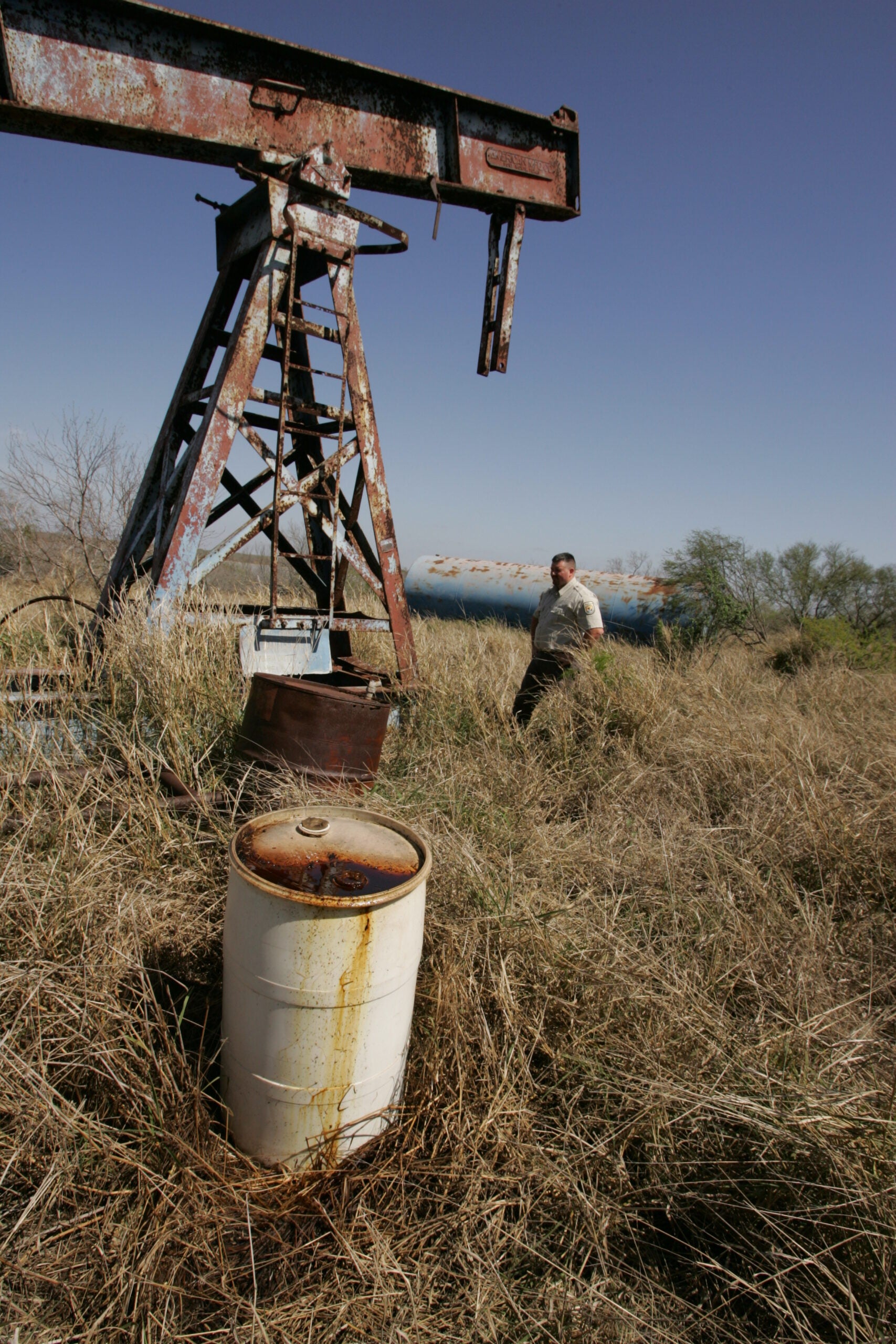
Federal investments under the REGROW Act have provided critical funds to find and plug existing orphaned wells, but plugging the backlog alone will not solve the problem. States also need stronger financial assurance, inactive well management and well transfer rules to keep today’s aging wells from becoming tomorrow’s orphaned wells.
In the last few weeks, we and our partners helped secure major wins in New Mexico and Utah that modernize antiquated bonding rules and help stop the orphaned well pipeline.
Both states took a risk-based approach to financial assurance requirements, applying amounts closer to the full cost of well closure for financially weaker operators and low- and non-producing wells, with the details tailored for each state. Both states arrived at the same key conclusion: blanket bonds covering multiple wells is a privilege, and not a right, and should only be available to operators who pose minimal risk of orphaning their wells.
Later this summer, the Texas Railroad Commission (RRC) will begin rulemaking for SB 1150, a 2025 law designed to address the growing number of the state’s inactive wells.
In January, Texas surpassed its previous record of 11,000 orphaned wells and 115,000 inactive production wells, which the RRC estimates will cost more than $15 billion to plug. If these wells are allowed to become orphaned, Texas taxpayers could be stuck with the costs.
Under the new law, wells drilled more than 25 years ago cannot stay inactive for more than 15 years and must be plugged unless they receive an extension or an approved closure plan through 2040. The RRC is tasked with developing rules around this new law, including safeguards for transfers of inactive wells – stout ambition is warranted given the recent spike in this well population, the immediate precursor to orphaning.
Utah and New Mexico have shown that states can act before wells become orphaned. Texas now has an opportunity to build on those lessons by requiring adequate financial assurance, derisking well transfers and ensuring operators either return inactive wells to productive use or plug them.
Like many other parts of the country, Florida needs more transmission to deliver electricity where demand is greatest. A modern electric grid depends on it.
Because new grid infrastructure requires major capital investment, the best practice is to optimize planning so selected projects can meet multiple system needs while minimizing costs for customers over the long term. This proceeding illustrates the risks of evaluating transmission projects in isolation rather than considering whether broader regional planning could identify more cost-effective solutions.
As electricity demand grows and extreme weather intensifies, utilities must invest in grid infrastructure that maintains reliability, strengthens resilience and delivers the lowest-cost electricity to customers. Those investments should meet a straightforward standard: before customers pay hundreds of millions (or even billions) of dollars for new infrastructure, utilities must demonstrate that a project is necessary, supported by evidence showing it is the most cost-effective solution available.
But in Florida, nearly all transmission infrastructure is built based on isolated, local reliability assessments that rarely consider the economic or resilience needs of the broader power system. Despite federal requirements, Florida Power & Light and the state’s grid planning organization have consistently failed to produce studies that rigorously assess the grid from a regional perspective.
Nor have they agreed to build, or even consider, a regional transmission project that benefits multiple utilities and their customers under a single investment. Such an approach would route power flow more efficiently, create a more resilient network with alternate pathways for electricity to reach consumers during stress events, and drastically reduce overall system costs.
Instead, Florida families and businesses are forced to foot the bill for massive infrastructure projects that often ignore cheaper, more effective alternatives. Florida’s investor-owned utilities have zero incentive to pursue lower-cost options or share project costs. Because of how they are regulated, their financial incentive points in the opposite direction: The more infrastructure they build and own, the higher their guaranteed profits – which customers pay on their bills. The rate of profit Florida’s utilities are allowed to earn is also rising, and now among the highest in the country. Meanwhile, customers face increasingly unaffordable electric bills, with the average household bill up 20% since 2021.
State utility commissions exist to restrain this dynamic: The larger the price tag, the more rigorous their scrutiny must be. This is critical to their mission of ensuring reliable service at fair and reasonable rates for customers. In this case, however, the Florida Public Service Commission failed to apply that level of scrutiny before approving FPL’s $782 million Andytown-Oasis transmission project. That is why EDF is asking the Florida Supreme Court to review the Commission’s decision.
In March, FPL petitioned the Commission for a “determination of need” to construct the Andytown-Oasis project, one of the most expensive local transmission projects ever proposed in Florida. If it moves forward, FPL’s captive customers will bear the full cost. Recognizing the staggering financial impact, EDF intervened to ensure the proposal received the rigorous public scrutiny it demands.
As with most of its major infrastructure builds, FPL based its proposal on a highly localized reliability assessment, concluding that four new high-voltage transmission lines, several upgraded substations, and a new substation were necessary to serve customers in Miami-Dade County.
EDF’s experts identified significant flaws in FPL’s analysis, raising questions as to whether an assessment designed around a narrow set of reliability scenarios could justify a project of this size. By ignoring regional planning mandates and operational alternatives, FPL failed to evaluate solutions that could address multiple system needs simultaneously and deliver far greater long-term value for customers.
Rather than addressing these issues, FPL sought to exclude our expert testimony through a series of unsuccessful motions. We successfully opposed those efforts, ensuring the Commission had the benefit of independent analysis identifying flaws in FPL’s proposal. EDF has worked in Florida for decades and represents thousands of members in the state, many of whom are FPL ratepayers with a direct stake in this decision.
Planning transmission one project at a time, while ignoring current and likely future conditions across the broader system, misses opportunities to solve multiple grid challenges with a single, efficient investment. Across the country, modern planning approaches are driving a paradigm shift with the recognition that evaluating the grid regionally (not just within one utility service territory or pocket thereof) will identify projects that improve reliability, reduce congestion and lower costs across the entire electric system.
EDF asked the Commission to consider how broader regional planning could inform whether FPL’s proposal was truly the most prudent and cost-effective solution. Instead, the Commission concluded that regional planning was entirely irrelevant to its determination of need and even claimed it lacked jurisdiction to consider the federal regional planning processes Florida utilities are legally required to undergo, despite the Commission’s documented role as an indispensable party to regional planning decisions.
By putting blinders on, the Commission deprives itself of critical knowledge about the utilities it regulates and abdicates its statutory obligation to oversee prudent transmission planning. The consequences reach far beyond this single case: If regulators refuse to consider regional planning when evaluating massive capital projects, Florida ratepayers will keep missing out on better, cheaper energy solutions and continue overpaying for electricity.
The ultimate irony? FPL fully understands the immense value of regional transmission from its own experience decades ago. In the mid-1980s, FPL built a 628-mile transmission corridor connecting its grid with Georgia Power’s system to import cheaper out-of-state coal generation and displace its expensive oil units.
That initiative, worth more than $1 billion in today’s dollars, was a major interregional project that bridged Florida with the broader Southeastern grid while benefiting consumers. FPL proved decades ago that regional transmission can drive down system costs. The Commission must require it to do so again.
Proper review also requires looking beyond the utility’s preferred hardware solutions. Decades of innovation have produced advanced hardware and software, including Grid-Enhancing Technologies, that can address many transmission needs at lower cost and with far quicker deployment. Yet utilities rarely select them because cheaper solutions mean lower guaranteed returns.
FPL never evaluated whether these faster-to-deploy, lower-cost “non-wires” technologies could address its stated reliability needs, and the Commission gave it a free pass. FPL’s alternative project proposals merely changed the geographic route, not the underlying technology, of the Andytown-Oasis project. Yet regulators debated only these alternative paths for the same expensive wires.
Absent from the review was any meaningful evaluation of options like dynamic line rating, advanced power flow control, transmission-tied battery storage, or generation re-dispatch, all of which can relieve grid congestion and maximize existing capacity while minimizing power outage risk for a fraction of the cost of new lines. By failing to require utilities to study these technologies, the Commission lets monopolies default to the most capital-intensive option available.
The Commission’s review moved at an extraordinary pace. For a nearly $800 million capital investment, EDF had only 13 days to digest FPL’s sprawling filings, analyze hundreds of pages of technical grid modeling, prepare comprehensive expert testimony, and file our motion to intervene.
Despite those constraints, our experts exposed glaring holes in FPL’s load forecasting assumptions that inappropriately attributed speculative data center growth to Miami-Dade County, challenged its isolated modeling that applied incorrect line ratings and highlighted its failure to evaluate regional or non-wires alternatives. That participation helped ensure these issues became part of the record the Florida Supreme Court will now review.
Strong regulatory decisions depend on comprehensive, rigorous records. Independent experts and consumer advocates help ensure regulators see the unvarnished facts rather than operating in an echo chamber. However, when the proceeding is so compressed and the Commission’s review process is forced to be so cursory, it inhibits other stakeholders from participating and usually limits the inputs to the utility’s own assertions, making that echo chamber virtually impossible for the Commission to avoid.
This appeal is about much more than a single transmission project. As electricity demand surges nationwide, utilities are proposing ever larger investments even though federal rules require them to plan transmission across service territories, looking twenty years ahead and weighing reliability, economic, and public policy benefits. When utilities move forward with projects before adequately evaluating whether broader regional solutions could meet the same needs at lower cost, they can short-circuit tomorrow’s regional investments, saddle customers with higher bills and erode the incentive to build a truly interconnected grid.
The strongest transmission projects are the ones that withstand careful review because the evidence shows they are needed, cost-effective, and in the public interest. EDF’s appeal asks the Florida Supreme Court to apply that standard before Florida’s largest transmission project in recent history lands on customers’ bills.
Medium- and heavy-duty electric vehicles are hitting the road in 2026, and we’ve collected last month’s most exciting news. In 2025, EDF delivered monthly deployment updates on the biggest zero-emission transportation stories. By the end of 2025, it was clear that momentum was sustained throughout a challenging year. This year will undoubtably see more big announcements, and we’ll be here to showcase the biggest orders and deployments of zero-emission trucks happening around the country.
841 medium- or heavy-duty zero-emission vehicles were announced during the month of June. These announced spanned several vehicle types and use cases, including terminal tractors, Class 8 tractors and school buses. The range of announcements continues to demonstrate fleet confidence in zero-emission vehicles across the spectrum of use cases.
Electric terminal trucks have record month
Orange EV announced record order volume in June, including a single order for 600 trucks, the largest in the company’s history. Additionally, Port of Long Beach announced the deployment of 15 electric terminal trucks to aid in port operations, while APM Terminals Los Angeles announced a purchase order of 40 trucks, all manufactured by Orange EV. Both Port of Long Beach and APM Terminals Los Angeles had electric terminal trucks in operation prior to June announcements. Orange EV says they are seeing yard fleets place larger orders after initial trials, and that electric terminal trucks are past the early adoption stage due to superior total cost of ownership, uptime, reliability, fuel savings and service guarantees.
Tesla Semi gains momentum after entering mass production
Several fleets highlighted upcoming Tesla Semi deployments in June, including Hight Logistics, ArcBest and Bali Express. Hight Logistics currently operates several Volvo VNR and BYD electric tractors but shared the upcoming addition of 15 Tesla Semis to their fleet. ABF Freight, part of ArcBest, is following up a successful pilot program with a purchase order of two Tesla Semis for less-than-truckload (LTL) routes. Bali Express, currently operating six electric trucks, is adding 20 additional EVs to their fleet for drayage operations, which will include Tesla Semis.
Electric school buses continue to improve air quality
San Francisco, CA and South Bronx, NY area schools will see a combined deployment of 150 electric school buses over the next few years. South Bronx observes childhood asthma rates more than twice the national average, and the buses will contribute to increased air quality outcomes in both cities. Student mobility provider Zūm has announced the planned deployment of 105 buses for the San Francisco Unified School District, and GVC, a family-owned school bus company serving children with special needs in the Bronx, announced 45 new electric school buses to replace aging fossil fuel-powered buses. Each deployment will be accompanied by new charging stations to support the buses.
Now is a critical time for fleets to invest in medium- and heavy-duty electric trucks. These vehicles improve public health and help combat the climate crisis by reducing greenhouse gas emissions and air pollution. Unlike traditional diesel-powered trucks, electric trucks produce no tailpipe emissions, which significantly cuts down on health-harming pollution. Adoption represents a key step toward a more sustainable and resilient transportation industry.
Check back here next month to see a collection of the most exciting zero-emission vehicle announcements from July. In the meantime, check out EDF’s Electric Fleet Deployment & Commitment List to track announcements as they happen in real time, and view all June announcements.
Check out last month’s announcements here.
Satellite data confirms what frontline communities have been saying for years: methane leaks are a serious problem in the San Joaquin Valley.
New analysis of observations collected by MethaneSAT during 2024 and 2025 shows that the oil and gas operations in the San Joaquin Basin emit 18 tonnes of methane every hour, roughly 20% higher than estimated by the U.S. EPA’s inventory, and twice as high as the state figures from the California Air Resources Board.
Methane is a potent greenhouse gas, with over 80 times the warming power of carbon dioxide in the 20 years after it is released into the atmosphere.
The likely reason for these high emissions sits within California air quality rules: an outdated provision in leak detection requirements that exempts thousands of wells producing so-called “heavy oil.” The new findings present regulators with a ripe opportunity to correct the crucial omission.
Massive Loophole Undercuts Strong Regulations
CARB has regulated methane from the oil and gas industry since 2018, making significant progress reducing emissions from storage tanks, intentionally polluting equipment such as gas-driven pneumatic pumps and controllers and other sources. In fact, the state has some of the strongest leak detection and repair standards in the country.
But there’s a decade-old loophole in the rules: wells producing heavy oil are exempt from regular leak detection and repair requirements, based on 1990s figures incorrectly indicating that such wells were responsible for less than one percent of all emissions leaking from infrastructure in the state.
That’s a surprising figure given that tar-like heavy oil accounts for over 60% of the state’s active wells and two-thirds of current oil production. As a result of the loophole, operators of more than 27,000 heavy oil-producing wells are exempt from state inspection requirements.
New Technology and Methods Show a Fuller Picture
CARB exempted heavy oil wells from inspections in 2018 based on industry-reported emissions collected in 1993 and 1995. CARB created the exemption without access to modern methane measurement tools, but since then, new technologies make it much easier to collect accurate data.
In just the last decade, aircraft and satellites have revolutionized our ability to measure emissions of methane, and researchers can now use handheld detectors and mobile monitoring units that can accurately characterize emissions from low-producing wells.
The agency has made major strides incorporating new tools into its methane monitoring system via the California Methane Satellite Project and Carbon Mapper, building a successful track record of finding and limiting the largest methane leaks. CARB’s approach to addressing the largest leaks is cutting-edge and sets the standard for U.S. states.
However, improvements are needed to better assess emissions from low-producing well sites. A recent study found that smaller sources (less than 100 kilograms per hour) dispersed over wider areas account for over 80% of total oil and gas methane emissions in the San Joaquin production basin.
Assuming the average emission rate observed by MethaneSAT is constant, annual oil and gas methane emissions in the region would be over 157,000 tonnes. That’s enough natural gas to supply 220,000 California households for a year, and with more near-term climate impact than continuously running three coal-fired power plants.
The new MethaneSAT observations confirm the prevalence of dispersed emissions from smaller sources, such as the region’s many heavy oil wells which have never been subject to regular inspections under state law.
On-the-ground leak detection work by the organization FracTracker underscores the problem with heavy oil wells: a 2022 investigation in Bakersfield uncovered 49 low-producing and idle heavy oil wells leaking methane — exempt from the state’s leak detection and repair standards.
Additional analysis of the region’s emissions sources continues to implicate heavy oil. A first look at where San Joaquin oil and gas methane is coming from finds that exempted wells may contribute roughly half of total observed emissions — a significantly larger share than the “less than 1%” estimate that informed the inspection exemption.
This loophole exposes communities living near oil and gas production to hazardous air pollutants such as benzene and toluene. Ozone-forming volatile organic compounds emitted alongside methane degrade the San Joaquin Valley’s air quality. In response to these persistent health threats, community organizations have conducted leak inspection work themselves using optical gas imaging cameras that make methane leaks visible.
“Of the 95 wells and tanks we did independent inspections of using our OGI cameras, 38% were leaking,” said Cesar Aguirre, Director of the Air and Climate Justice Team at Central California Environmental Justice Network. “We’ve been told too many times by the air district and ARB that they are unable to enforce repairs because of the heavy oil exemption in the state’s methane regulations. These leaks are more than just abstract contributions to the state’s greenhouse gas emissions. They represent real health impacts to community members, including increasing their cancer risks and adding to respiratory stress and disease for my friends, family, and community who are already living in the most polluted air in America.”

Looking ahead: closing loopholes and meeting federal standards
Governor Gavin Newsom has repeatedly pushed for ambitious international leadership to tackle climate change and set an expectation for California to stay in the global forefront of climate action. Ending their outdated leak detection and repair exemption can help meet the state’s climate objectives.
Unfortunately, the emissions inventory CARB uses to track methane progress was built using an approach that has well-documented flaws. Moreover, their emissions figures are built from the same 1990s data that rationalized the heavy oil exemption.
Annualizing MethaneSAT’s measurements finds that oil and gas emissions in the San Joaquin alone are twice as high as CARB’s 2023 estimates for the region’s oil and gas industry. It’s impossible to accurately measure progress towards climate targets when the yardstick is broken. Constructing a more accurate emissions inventory and closing the heavy oil exemption should be high on CARB’s priority list.
In May 2025, CARB presented a timeline to adopt a state plan consistent with the 2024 U.S. EPA methane rule and strengthen standards for existing sources which includes closing the loophole for heavy oil wells. But in November 2025, the Trump administration delayed state plan deadlines to January 2027.
CARB will need to move a plan forward this year to meet that deadline. Despite recent turbulence, CARB has excellent near-term opportunities to clean up California’s oil and gas sector.
By closing the heavy oil inspection loophole, it’s possible to reduce pollution and energy waste without affecting consumer prices at the pump or on their electricity bills. Strengthening standards only costs pennies on the dollar while delivering major climate and air pollution benefits.
They should not wait.
Across the country, regulators are making decisions that will shape the energy system for decades as they navigate rising energy costs, growing electricity demand, grid modernization and the accelerating energy transition. Meaningful public participation helps build stronger evidentiary records, improve accountability and lead to better outcomes for communities.
I recently joined Carolyn Parrs on her Just Power podcast to discuss why community voices matter in energy decision making and what regulators, utilities and advocates can do to help ensure those voices are heard. One message stood out: an open door is not the same as a seat at the table.
Most utility regulatory proceedings are open to the public. Anyone can attend a hearing, submit comments or follow a case. But meaningful participation requires more than access.
As a former utility commissioner, I saw firsthand how difficult it can be for community members to engage in complex regulatory proceedings. For residents already balancing work, family responsibilities and rising energy costs, participation can feel out of reach.
Strong records require diverse perspectives
Consider a grandmother who cannot afford to run her air conditioner during a heat wave and must sit in dangerous heat to keep her utility bill manageable. That story may never appear in a technical filing, but it provides critical information about how energy decisions affect real people.
Community members bring perspectives that data alone cannot capture. Technical data in energy proceedings gains meaning when combined with the experiences of people living with the consequences of regulators’ decisions, helping regulators understand the practical impacts of utility investments and energy policies.
Strong decisions require strong evidentiary records, and strong records are based on diverse perspectives.
Participation must start before decisions are made
To participate meaningfully, communities must be brought into the conversation before key choices are made, while their input can still shape outcomes. That requires providing clear information in multiple languages, sharing it through trusted communication channels and creating opportunities for participation that fit people’s daily lives.
Meetings should be held at times and locations that work for working families, caregivers and community leaders. People should not have to travel long distances or navigate complicated processes simply to understand decisions that will affect their lives. Meaningful engagement requires meeting people where they are and creating practical opportunities for participation.
Being heard matters
Being heard does not mean every recommendation is adopted. It means communities can see how their perspectives were evaluated and understand why decisions were made.
People deserve to know how their concerns are considered and addressed. Regulators may not agree with every recommendation raised during a proceeding, but participants should be able to see how their comments informed the final decision. Without evidence that their concerns were considered, communities’ trust erodes. Opposition to utility plans may increase. That is why meaningful participation requires transparency, responsiveness and accountability.
Progress is possible
Progress is possible when regulators intentionally reduce barriers to community participation in energy proceedings. In Massachusetts, recommendations from the stakeholder report Overly Impacted and Rarely Heard helped spur several important reforms, including an intervenor compensation program to support community participation in regulatory proceedings, expanded public outreach efforts and new resources to help residents better understand regulatory processes.
Massachusetts also strengthened language access at public hearings, established resources to help residents navigate regulatory proceedings and added environmental justice expertise to the Energy Facilities Siting Board. These reforms demonstrate that participation barriers can be overcome through thoughtful policy changes and sustained commitment.
Other states can learn from and adapt the Massachusetts progress. At a time when commissions across the country are confronting similar challenges, sharing lessons learned and building on proven approaches can help improve energy decision-making nationwide.
Building community voices in energy
Environmental Defense Fund is helping support strong energy decisions through Community Voices in Energy, a growing platform that provides resources, case studies and examples from across the country. Our goal is to help advocates, community leaders and residents better understand energy issues and participate more effectively in regulatory processes.
As the energy transition accelerates, states will be the focus of consequential decisions about affordability, reliability, who will be affected by infrastructure investments and who will have access to the benefits of a modernized electric grid. The people most affected by those decisions deserve meaningful opportunities to participate, be heard and help shape outcomes.
An open door is important. A seat at the table is better. But the strongest decisions are made when community voices help shape the conversation from the start.
Learn more about EDF’s Community Voices in Energy initiative at communityvoicesinenergy.org. Join our LinkedIn group to engage with others on this topic and to hear or share the Just Power podcast conversation.