Climate change solutions
We deliver game-changing environmental solutions that have a real impact for people around the globe.
As government and industry leaders gather in Rotterdam for the World Hydrogen Summit, the hydrogen sector is entering a new phase. The past several years were defined by announcements, ambition and supply targets. The next phase is being shaped by tougher questions: where hydrogen makes the most economic sense, how demand can be scaled in priority sectors and what rules will govern emerging global markets.
Last month, the International Organization for Standardization approved new methodologies for calculating greenhouse gas emissions from hydrogen and ammonia production. As public funding, industrial policy and long-term offtake agreements — in countries across Europe, Asia and the Middle East — increasingly depend on emissions thresholds and certification systems, the methodologies underpinning those systems are becoming economically consequential, and not just technically important.
The new methodologies are an important step forward. But they also reveal a growing gap between rapidly evolving science and the way hydrogen and ammonia emissions are currently being accounted for and addressed.
Hydrogen and ammonia are more than a carbon story
Hydrogen and ammonia are often discussed through a narrow carbon lens: how much CO2 (and in some cases, methane) they emit compared to fossil fuels. That comparison matters, particularly for sectors like steel, fertilizers, chemicals and shipping where alternatives remain limited.
But hydrogen and ammonia also create other climate, safety, and environmental risks that are frequently overlooked in lifecycle assessments and policy frameworks.
Hydrogen can warm the atmosphere when leaked or vented. Ammonia systems can release reactive nitrogen compounds that contribute to climate change, air pollution and ecosystem damage. These impacts may occur outside the smokestack, but they still affect the environment and ultimately determine whether these fuels deliver the climate outcomes policymakers and investors expect.
Best practices exist to mitigate losses to the atmosphere and minimize risks. But as hydrogen markets mature and credibility and accountability replace ambition, these emissions can no longer be treated as secondary issues.
Hydrogen loss could weaken climate benefits
Hydrogen has an important role to play in decarbonizing hard-to-electrify sectors. But hydrogen is also a small and highly diffusive molecule that can be released during production, from pipelines, valves, compressors, storage tanks and end-use equipment.
When released into the atmosphere, hydrogen contributes to warming by interacting with methane, ozone and water vapor chemistry. The Intergovernmental Panel on Climate Change recognized this effect decades ago, and scientific understanding has advanced even further since then.
Science shows that current estimates of hydrogen’s warming potential are robust enough to inform policy and business decision-making now. Yet hydrogen’s indirect warming effects remain absent from the ISO methodologies.
That omission matters because loss rates directly affect climate performance. Research suggests that every 1% hydrogen loss can erode near-term climate benefits by 3%.
Since we need hydrogen for hard-to-electrify sectors — to enhance both energy security and fuel diversity — the takeaway is that hydrogen systems need to be built and operated with emissions performance in mind from the beginning. Strong system designs, leak detection, monitoring and infrastructure standards are essential if hydrogen is to deliver on its climate promise.
Ammonia’s overlooked reactive nitrogen impacts
A similar risk exists for ammonia, which is made from hydrogen, currently used in fertilizer production, and is increasingly being explored as a low-carbon fuel for shipping.
Ammonia combustion does not release CO2, making it attractive to parts of the maritime sector seeking alternatives to heavy fuel oil. But ammonia’s overall emissions profile is more complex than many current accounting systems reflect.
Ammonia itself is highly toxic, and its production handling(e.g. storage, transport, refueling and effluent management), and combustion can release reactive nitrogen compounds, including nitrous oxide (N2O), nitrogen oxides (NOx), and ammonia itself — either leaked across the value chain or emitted as unburned fuel in the engine (often called ammonia slip). Beyond direct emissions, NOx and ammonia can be transformed through the nitrogen cycle into additional N2O (referred to as “indirect N2O”) via atmospheric and environmental pathways.
These emissions matter. N2O is a potent greenhouse gas (273 times more powerful than CO2 over 100 years), while excess reactive nitrogen input to the environment contributes to air and ozone pollution, biodiversity loss and aquatic ecosystem damage.
The new ISO methodology includes direct N2O emissions from combustion, but other reactive nitrogen impacts across the value chain — including ammonia losses and the formation of indirect N2O — remain largely unaccounted for.
That gap could become increasingly important as ammonia scales as a marine fuel. Our latest research finds that without effective controls, reactive nitrogen emissions from ammonia fuel systems could be up to 185% higher than those associated with current marine fuels.
Standards must evolve with the industry
None of this means hydrogen or ammonia should be dismissed. Both will play an important role in industrial decarbonization and clean transportation systems where direct electrification is difficult. But the next phase of hydrogen market development will depend not only on deployment volumes, but also on confidence that these systems are delivering genuine climate benefits.
This is why standards matter. ISO deserves credit for creating a common foundation for hydrogen and ammonia emissions accounting. Consistent methodologies are critical for enabling trade, investment and international market development. But standards are not static. They need to evolve alongside the science.
The hydrogen economy is being built now. Infrastructure decisions made over the next few years will shape energy systems for decades.
What gets measured will shape what gets financed, regulated and ultimately deployed. If hydrogen and ammonia are to earn long-term public and political trust, future standards must account not only for carbon emissions, but also for the indirect climate effects that increasingly define these fuels’ real-world impacts
The Pennsylvania Public Utility Commission’s new model tariff for large-load customers marks an important step for consumer protection from rising electricity costs. The Commission deserves credit for establishing a strong policy designed to shield households and small businesses from the costs of new transmission lines built for large energy users. Now comes the challenge: turning that policy into meaningful action while filling in the many remaining gaps.
A strong standard for assigning costs
Most importantly, the order formally endorses the “but-for” test to assign grid upgrade costs to the large-load customer that triggered the upgrade. Specifically, the order instructs utilities to charge large load customers for system upgrades that “would not have been needed ‘but for’ the interconnection of the Large Load Customer…irrespective of whether other customers would benefit from [the upgrade].” EDF and several other commenters recommended this approach because it provides one of the clearest protections against shifting costs onto existing customers.
The order goes even further by requiring large-load customers to pay these costs up front through “Contribution in Aid of Construction” payments. This decision matters for several reasons. It helps ensure grid upgrades stay with the customer driving them. It avoids utility carrying costs, which effectively function like a 7-8% interest rate on infrastructure spending. It reduces the administrative burden of tracking large-load customers’ long-term payment obligations. And combined with other model tariff provisions that would require large load customers to make minimum monthly bill payments, it helps ensure that those customers also contribute toward the costs of the existing utility system.
Many states are considering rules to assign costs to large-load customers; Pennsylvania may be the first to direct large-load customers to pay these costs up front.
Turning policy into savings
Still, translating these principles into real customer savings will require continued leadership and oversight, for several reasons. First, the order is not binding. It provides optional guidelines that utilities may adopt (or not) in future proceedings. EDF looks forward to working with other advocates to ensure that utilities build upon the strongest elements of the framework.
Second, implementing “but-for” cost allocation will not always be simple. Determining which customer(s) triggered a transmission upgrade can be technically complex and difficult to track. Many of the relevant discussions occur deep within PJM subcommittee meetings that most consumer advocates lack the resources to monitor closely. State regulators will play a critical role in scrutinizing these decisions and protecting customers from unfair cost shifts.
More work ahead on flexible demand
The order did not make significant progress on “non-firm” or “interruptible” service, which allows utilities to curtail electricity to large-load customers during periods of grid stress. Expanding interruptible service is one of policymakers’ most effective tools for limiting near-term grid costs tied to data center growth. But these structures are highly complex and can be controversial. Rather than creating a new framework tailored to large loads, the Commission opted to rely largely on utilities’ existing interruptible service tariffs, which will often not be a good fit for large loads. Policymakers and advocates still have significant work ahead to unlock the full potential of this approach in Pennsylvania.
Protecting vulnerable customers
The order also requires large-load customers to contribute to utilities’ low-income customer assistance programs. This is an important step. Large-load customers are driving up system costs and rates, and it’s reasonable for them to assist the households most vulnerable to higher energy bills. However, the order only reallocates existing funding, rather than increasing total program funding to keep up with rising costs associated with large loads. The order also recommends a tiered payment structure for large-load customers that will probably require further refinement. These questions will need to be addressed in future utility proceedings.
A new path for grid upgrades
Notably, the order recommends allowing large-load customers to build certain grid upgrades themselves rather than waiting for utilities to complete the work. The Commission acknowledged this as “an out-of-the-box proposal” – while self-build options already exist for electric generators, Pennsylvania may become the first state to extend this concept to transmission-connected consumers. Utilities (understandably) raised concerns about safety and oversight, but the Commission determined – and EDF agrees – that these concerns can be addressed. If implemented carefully, self-build could help accelerate grid upgrades by leveraging the financial resources of large-load customers.
The work is just beginning
Overall, the Commission’s order establishes an important foundation for protecting customers from some of the risks of large loads. It also makes clear that much more work remains. In her comments on the order, PUC Vice Chair Barrow urged utilities “to be bold in crafting rules that offer more complete solutions” to the challenges posed by data centers. She is right. Legislators, regulators, utilities and fellow advocates all have a role to play in ensuring the rapid growth of large-load customers strengthens the grid without driving up costs for Pennsylvania families and businesses.
Medium- and heavy-duty electric vehicles are hitting the road in 2026, and we’ve collected last month’s most exciting news. In 2025, EDF delivered monthly deployment updates on the biggest zero-emission transportation stories. By the end of 2025, it was clear that momentum was sustained throughout a challenging year. This year will undoubtably see more big announcements, and we’ll be here to showcase the biggest orders and deployments of zero-emission trucks happening around the country.
April announcements from major U.S. carriers preceded the start of ACT Expo on May 4th, where major shippers and carriers, OEMs, and fleets will convene to shape what’s next in freight and commercial transportation. These announcements reflect the significance of this moment: even as regulatory signals shift, companies are continuing to invest and signal what they need to scale. The next phase will be shaped by how companies engage, and whether they use their voice and influence to help build the policy, infrastructure and market conditions they depend on to succeed. EDF works with fleets to help enable sustainability leadership and translate it into market and policy progress.
Einride to deploy 75 electric trucks for Amazon’s US freight network
Amazon is expanding their zero-emission vehicle operations by adding 75 Class 8 Einride trucks to their freight network, focusing on middle-mile transportation. Amazon has focused on their partnership with Rivian, aiming to add 100,000 Class 2b electric vans to their fleet, with around 30,000 vans deployed in 2026. The 75 heavy-duty trucks will move orders between Amazon’s fulfillment centers, sort centers, air facilities and last-mile delivery stations. Einride will support charging infrastructure across five locations.
FedEx Introduces New Electric Vehicles to its Operations in Puerto Rico
FedEx has introduced 26 electric delivery vans to its fleet in Puerto Rico, replacing older diesel vehicles and bringing the electric vehicle total to 19% of the local fleet. The deployment consists of Mercedes-Benz eSprinter vans that will operate across major cities like San Juan. FedEx continues to transition its fleet to zero-emission not only in the U.S., but across Latin America and the Caribbean to align with its global goal of achieving carbon-neutral operations by 2040 through a phased move to zero-emission delivery vehicles.
Averitt set to deploy battery-electric yard tractors
Averitt will deploy battery-powered electric yard tractors at service centers across Tennessee, supported by the state’s Medium- and Heavy-Duty Vehicles Grant Program. The company remains committed to sustainability initiatives including investments in fuel-efficient equipment, innovative technologies and initiatives designed to reduce emissions and conserve resources. These efforts are part of a strategy to operate responsibly while delivering consistent, dependable service to customers.
Now is a critical time for fleets to invest in medium- and heavy-duty electric trucks. These vehicles improve public health and help combat the climate crisis by reducing greenhouse gas emissions and air pollution. Unlike traditional diesel-powered trucks, electric trucks produce no tailpipe emissions, which significantly cuts down on health-harming pollution. At the same time, these vehicles can help fleets manage exposure to volatile fuel prices and improve long-term operating cost stability. Adoption represents a key step toward a more sustainable and resilient transportation industry.
Check back here next month to see a collection of the most exciting zero-emission vehicle announcements from May. In the meantime, check out EDF’s Electric Fleet Deployment & Commitment List to track announcements as they happen in real time, and view all April announcements.
Check out last month’s announcements here.
In advance of the 90th Texas Legislature, which convenes in January 2027, Environmental Defense Fund completed a detailed and thorough analysis of Texas Emissions Reduction Plan grants and nitrogen oxide emissions over the lifetime of the program. Using more than two decades worth of data provided by the Texas Commission on Environmental Quality, the newly released briefing paper details how TERP has transformed in recent years and provides recommendations for how the Legislature can further maximize efficiencies and increase market-driven investments — all without raising any new taxes or fees.
TERP provides financial incentives for projects that decrease emissions of NOx and other pollutants from mobile sources and non-road equipment and is administered by TCEQ. It includes 11 unique grant programs, including a number of advanced clean truck grants that provide significant funds for fleets to transition to cleaner trucks. In the most recent two-year budget cycle, TERP awarded over $412 million to fund 3,879 incentive grant projects that are estimated to result in the reduction of 6,137 tons of NOx emissions. Based on EDF analysis, this represents the second largest reduction of NOx emissions in the program’s history. TERP can do even more with more funding, and the additional funding is already available.
There is currently $2 billion in revenue collected for TERP prior to 2019 that is sitting untouched in a general revenue dedicated account. These funds were collected prior to TERP reforms five years ago and are used to help certify the state’s budget. For years, the conventional wisdom at the Texas Capitol was that the $2 billion in the general revenue dedicated GR-Dedicated TERP account was necessary to certify the state budget, and TERP can simply operate on new revenues collected each biennium. While that may have made sense years ago, it doesn’t made sense today — Texas has more than $26 billion in the Economic Stabilization Fund, better known as the “rainy day fund,” which is a state savings account that collects excess oil and gas revenues and makes them available for emergency appropriations. In fact, Texas’ economy has been so strong for so long that the Legislature has been able to create a number of new long-term infrastructure funds — including ones for water, transportation and broadband — while still maintaining record surpluses.
With Texas’ strong economic foundation, now is the time to use these dedicated TERP funds for their intended purpose.
For the 2028-29 budget, the Legislature should consider taking 20% of the balance, or $400 million, from the GR-Dedicated Account NO. 5071 and transferring it to the TERP Trust Fund No. 1201, to be used to supplement newly collected TERP revenue.
The funding increase can, and should, compliment ongoing reforms being considered for TERP. EDF has worked closely with the Legislature on a consolidation bill that would make it simpler for companies to apply for funds. For example, an entity seeking a newer regional haul truck and accompanying infrastructure would have to review application materials for as many as six different grant programs, each with their own specific requirements that open at different times of the year. For entities trying to align their budgets and timelines for vehicle and equipment replacement schedules, navigating the large number of grants can be a significant barrier to participation. A TERP consolidation bill will make it easier for companies to apply, and free up considerable agency time. Additionally, the additional dollars that would come from increasing TERP funding by $400 million would also include, by law, a percentage of funds available for the administration of the TERP program. Those funds could help cover costs of any additional full-time employees required for the increased project activity.
As elected officials and TCEQ prepare for the 90th Texas Legislature next year, the policy opportunity for TERP is tremendous. Using revenue already collected for TERP and consolidating several grant programs can boost the program without increasing taxes, revenues or fees by a single dollar — doubling the economic opportunities for companies seeking clean transportation projects, as well as emissions reductions in key areas of the state.
California regulators halted the Angeles Link hydrogen pipeline, but the need to decarbonize industrial energy use has not gone away. As the state charts next steps, it needs to develop a viable decarbonization strategy for its largest gas users: heavy industry.
A proposal aimed at hard-to-electrify industrial gas operations
In 2022, Southern California Gas Company proposed Angeles Link, a dedicated green hydrogen pipeline that would serve the Los Angeles Basin. Their goal was to deliver hydrogen to large industrial users, power plants and other customers that cannot easily electrify.
The concept centered on building new pipeline infrastructure designed specifically for hydrogen rather than trying to force it through an existing gas system that was not built to handle it safely or reliably. Purpose-built infrastructure would avoid many of the safety and material compatibility challenges associated with repurposing pipelines designed for methane transport.
SoCalGas positioned the project as a way to support regional hydrogen production and reduce emissions in hard-to-electrify sectors. At the same time, it asked regulators to approve recovering early development costs from natural gas ratepayers, raising concerns about cost allocation and financial risk.
Ratepayers should not bear the risk
After years of debate, regulators drew a clear line and denied SoCalGas’s request to recover costs for the next phase of Angeles Link, effectively putting the project on hold. The decision protects residential customers from paying for infrastructure designed primarily for large industrial users, a central concern throughout the proceeding. It also reinforces a key principle: ratepayers should not carry the risk of speculative infrastructure investments.
At the same time, the proceeding surfaced broader questions that remain unresolved. Should regulated utilities play a role in developing hydrogen infrastructure? If so, under what conditions, and who should pay? Those questions will shape California’s path forward.
Hydrogen must deliver real climate value
The decision also underscores a deeper point. Clean hydrogen could play a role in reducing greenhouse gas emissions, but only if it delivers real climate benefits. That depends on how it is produced, transported and used.
Leakage is central to that equation. Hydrogen is not a direct greenhouse gas, but it contributes to warming through atmospheric interactions. Leaks from pipelines are not a one-time issue; they could create a steady stream of emissions over time, which can erode or even negate the intended climate benefits of hydrogen use.
This puts pressure on system design. Any future hydrogen infrastructure must minimize the distance between production and end use, utilize materials that can safely contain hydrogen and meet stricter performance standards than those applied to natural gas systems. If leakage rates are too high, the system risks undoing the benefits it has promised.
Hydrogen blending is not a decarbonization solution
While the state is not moving forward with a dedicated hydrogen pipeline, it should not assume there are viable climate benefits to blending hydrogen into the existing natural gas pipeline network. That system was built for methane, and hydrogen behaves differently. Its smaller molecules can escape more easily through seals, fittings and certain pipe materials, and it can weaken metals over time, increasing the risk of leaks and failures.
Utilities already struggle to manage methane leaks, and introducing hydrogen would add unnecessary complexity, raise costs for all customers, and deliver limited benefits. Blending achieves limited greenhouse gas emissions reductions relative to its cost. As seen in the below chart, by contrast, electrification provides a more direct, cost-effective path to cut emissions across many applications, especially for residential uses. While climate action is urgent, blending is not a practical substitute for a well-designed strategy to decarbonize industrial energy use.
California still needs an industrial decarbonization strategy
The underlying challenge remains: decarbonizing large industrial gas customers. Unlike homes, many industrial processes rely on a fossil fuel to trigger chemical reactions or generate high-temperature heat that is difficult to electrify with current technologies. For these applications, hydrogen may be one of the few viable lower-carbon options. But deploying it raises important questions about cost, risk and system design.
A more targeted approach is needed. Policymakers should assign costs to the customers who directly benefit, require shareholder investment to reduce risk to ratepayers and leverage public and federal funding to support early infrastructure development.
At the same time, regulators should set strict leakage and performance standards and tie approvals to demonstrated results over time. This approach allows progress while protecting customers from unnecessary costs and ensuring hydrogen delivers meaningful emissions reductions.
This is a reset, not the end
Angeles Link will not move forward as proposed, but the need it aimed to address is real. California now has an opportunity to move forward with greater discipline and clarity.
The state should stay focused on real emissions reductions for the industrial sector, with hydrogen playing a targeted role in a broader industrial decarbonization strategy
By Alice Alpert
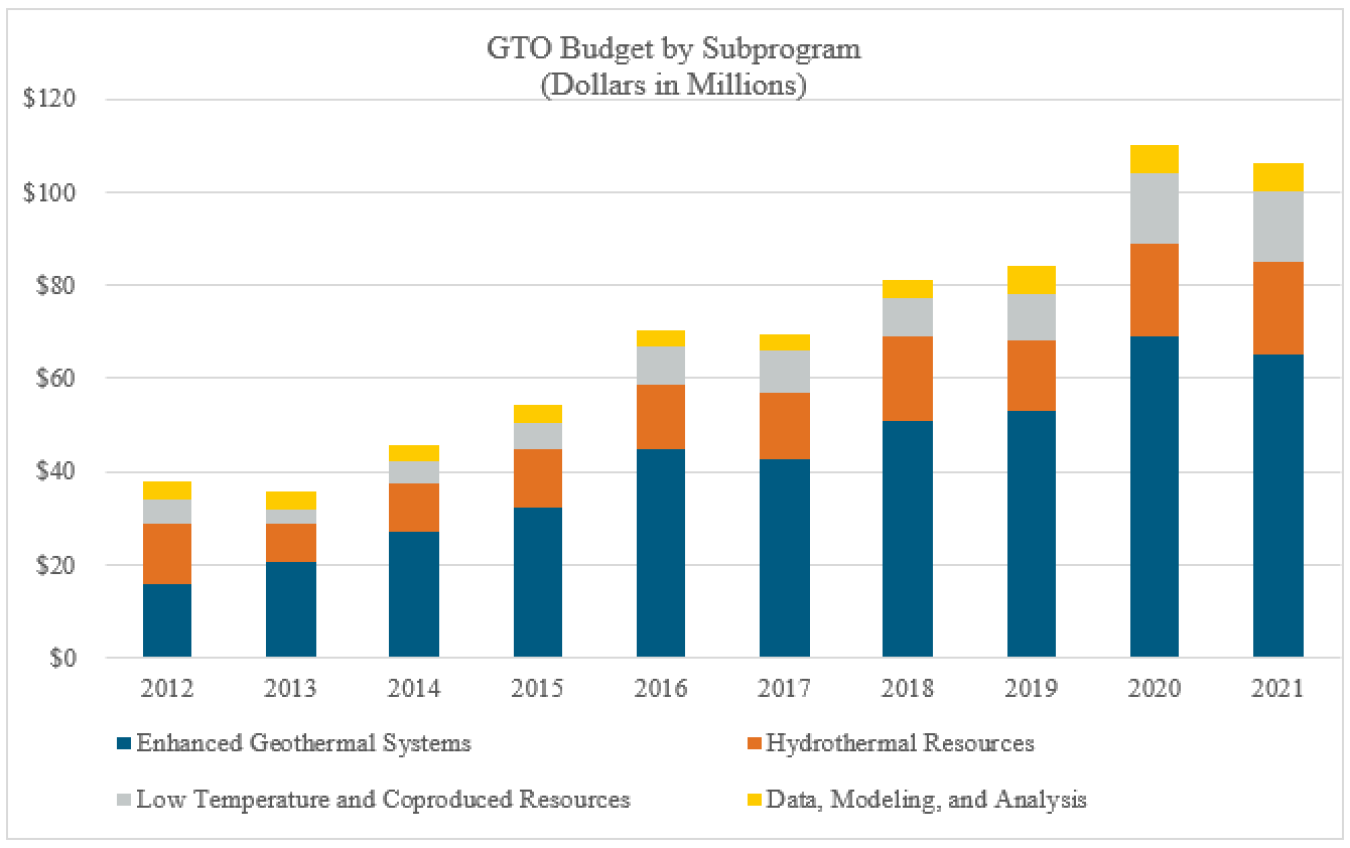
When we talk about clean energy, solar panels and wind turbines usually steal the spotlight. But there’s another player waiting in the wings: Enhanced Geothermal Systems. This family of technologies could provide reliable, round-the-clock power — something renewables like wind and solar can’t always guarantee. Recently, EDF convened a group of academic and government researchers, industry and non-profit actors to examine challenges to scaling EGS sustainably and how to take action on them. We released a workshop report with more detail but here’s what you need to know.
Earth energy is always on
Geothermal energy brings heat from inside the earth up to the surface for electricity or heat. Conventional geothermal power has been in use for nearly 100 years and makes use of natural fluid systems (think hot springs). EGS takes this idea further by creating fluid “plumbing” systems in places where they don’t exist naturally. Using advanced drilling techniques borrowed from the oil and gas industry — like directional drilling and hydraulic stimulation — EGS can unlock heat from deep, hot rock formations. It could also be used to store energy and doesn’t need a lot of space
The potential is huge. According to the U.S. Department of Energy, EGS could supply up to 90 gigawatts of power by 2050 — enough to power millions of homes and support U.S. datacenters’ booming energy demand.
Getting geothermal right, now
While conventional geothermal systems are mostly in the mountain west, EGS could potentially be deployed outside that region to support the electricity needs of large populations and industrial areas. And while investments in EGS have historically been low, private investment and public research continue to rise.
Despite its promise as a clean, always-on energy source, EGS faces significant challenges before it can play a role to meet U.S. electricity needs. Now is a critical time to get our ducks in a row. A multi-pronged approach for sustainable large-scale deployment is necessary to avoid bottlenecks or impacts that could affect the industry’s future.
Prong 1: Prove effectiveness
Prong 2: Develop and use guardrails.
Luckily, they are closely connected, and if actors work smart, we can make progress on both paths faster than one alone.
Showing results
Projects are expensive upfront, and investors want proof they’ll pay off. While the earth’s heat itself is fairly well understood, there is more work to do to know whether a given well and system will be able to bring heat up to the surface efficiently:
Build some guardrails
Before any new technology is deployed it needs to be safe. This means having operational and regulatory guardrails to make ensure that geothermal development is sustainable — ecologically and socially — and to communicate safe operations to communities and regulators.
Treating these challenges together can unlock the wider puzzle and accelerate the development of sustainable EGS. To EDF that means:
For example, research to characterize the subsurface could also contribute to developing advanced seismic protocols. And because injected fluid affects earthquakes, combining reporting for water use and fluid injection volumes could also improve seismic protocols. Besides, showing investors that the technology is safe and acceptable to the public is necessary for further investment. Many of these efforts are occurring, but not necessarily in a way that maximizes efficiency and ensures that guardrails are in place before deployment.
EGS is a practical solution to one of our biggest energy challenges: how to keep the lights on without burning fossil fuels. Scaling it up sustainably will take collaboration among scientists, industry, regulators, and communities. But if we get it right, EGS could become a cornerstone of the clean energy transition.