Tag Archives: Fisheries

EDF Oceans Program Mourns the Passing of Elinor Ostrom, Influential Economist and Nobel Prize Winner

It is with great sadness that EDF’s Oceans program mourns the loss of Elinor Ostrom, a Nobel Prize-winning economist who led groundbreaking research to better understand the “tragedy of the commons,” or the idea that shared public resources such as forests and fisheries will be depleted without proper regulatory controls.

Dr. Ostrom challenged the idea that regulations had to be federally mandated or ‘top-down,’ instead advocating for grassroots solutions and local engagement to address increased pressures on our resources.  Her research has been a foundation for EDF’s work on important issues such as Catch Shares, where direct involvement by local fisherman and stakeholders in fisheries management decision-making is critical to secure fishing jobs and strengthening fish populations.   We can attribute the switch from “command-and-control” style management of our fisheries here in the U.S., to a new, more decentralized and inclusive system, directly to Dr. Ostrom.

Her many accomplishments, insights and breakthroughs as the first woman in history to win the Nobel Prize in economics have impacted the work of our leadership and Oceans programs.  We owe Dr. Ostrom a debt of gratitude and will honor her work by continuing to foster local engagement in environmental and resource management issues around the world.

Posted in Uncategorized | Also tagged | Comments closed

President’s Budget Includes $28 Million for Catch Shares

President Obama released his Fiscal Year 2013 budget earlier today, and we are pleased to see that it includes $174 million for sustainable fisheries work by the National Oceanic and Atmospheric Administration. The appropriation will fund the science and management needed to support the commercial fishing industry that’s responsible for 1 million jobs and yields more than $32 billion in income every year.

The president’s budget includes $28 million for the National Catch Share Program, a critical part of the nation’s strategy to return its fisheries to abundance and keep fishermen on the water.  It is the same level adopted by the Congress last year.  We applaud the president and Congress for their support of catch share programs and we look forward to working with Congress to ensure that important fishery management functions have adequate funding and fishermen have all the tools they need, including catch shares.

Posted in Catch Shares | Also tagged , , | Comments closed

New Study Shows That Catch Shares Meet Economic and Conservation Goals

Reprinted with permission from SeafoodNews.com

SEAFOOD.COM NEWS [seafoodnews.com] Jan 12, 2012 By Kate Bonzon

The following article was written by Kate Bonzon, who works for EDF and was one of the authors of a new scientific paper published in Marine Policy that analyzed the performance of 15 catch share programs in the US and Canada. She argues the data shows these programs met most of their goals, especially in the area of conservation, reduced discards, and increased revenue to harvesters. There was a shift in jobs from a larger number of part time jobs to a smaller number of full time jobs, which had varying social impacts depending on the fishery.

America's fisheries, and the fishing communities they support, have struggled for decades to find a way to both rebuild depleted fish stocks and allow fishermen to earn a decent living. But it has become increasingly evident over the years that traditional management practices – such as drastically curtailing the fishing season – were failing to achieve either of these goals: fleets shrunk, revenues dropped, fishermen were often forced to put out to sea in bad weather, and the industry grew highly unstable. Fish stocks, meanwhile, continued to decline.

The latest effort to achieve that balance – a management approach known as “catch shares,” has generated much discussion among fisheries stakeholders over whether this approach is any better or worse than previous efforts. Now, a recent analysis of 15 fisheries in the United States and British Columbia published in the journal Marine Policy, provides data that clearly show significant environmental and economic improvements in fisheries that have made the transition to catch shares, an approach that allocates fishermen a share of the total allowable catch in exchange for making them accountable for staying within the catch limit.

Commercial discards reduced. Percentage reduction vs. baseline year (year before catch shares)

Discards declined substantially with catch share fisheries.

Read More »

Posted in Catch Shares | Also tagged , , , | Comments closed

Obama Administration Considers Moving NOAA to Department of Interior

Today, the Obama Administration announced plans to consolidate parts of the federal government, which may include moving the National Oceanic and Atmospheric Administration (NOAA) to the Department of Interior. With responsibility for managing the largest sovereign ocean territory in the world, NOAA is a critically important agency.  When considering moving NOAA to the U.S. Department of Interior, policy-makers should ensure that the agency’s mission-critical functions, including management of the nation’s fish stocks, are protected and strengthened.

Such a reorganization could have huge implications for the people who work hard at sea catching the fish we like to eat.  I hope we can have a vigorous debate that looks carefully at the costs and benefits of any plan to move NOAA to Interior and make sure that the public, the nation’s fishermen, and the nation’s fish resources would truly benefit from it.

Posted in EDF Oceans General | Also tagged , , | Comments closed

New Study Evaluates 15 Fisheries in the U.S. and British Columbia Before and After Catch Shares

Can a Change in Management Solve the World’s Most Pressing Marine Conservation Challenge and Foster Vibrant Coastal Communities? A new study published in the journal Marine Policy finds that reforming how fisheries are managed can successfully restore and maintain healthy fish populations and benefit both fishermen and fishing-dependent communities.  The study evaluated 15 fisheries in the U.S. and British Columbia before and after adopting "catch shares” — a type of fishery management increasingly common worldwide.

Catch shares, the study found, delivers “clear gains in environmental performance (and) major economic improvements” as well as dramatic improvements in safety for fishermen.  The improvements were found across a range of fisheries in the Pacific, Atlantic and Gulf of Mexico and extended to fishermen from both small and large vessels, using a diversity of gears and targeting a variety of fish.  In contrast, the study found that these same fisheries performed poorly under traditional fishery management in virtually all areas.

Overall, the study is a dose of good news at a time when most news we hear about oceans is bad.  The results also come at a time when some in Congress are pushing to eliminate fishermen’s ability to pursue catch shares for their fisheries.  The findings point to a clear choice about which strategy the nation should pursue to achieve abundant oceans that also allow fishermen and fishing-dependent communities to prosper. Read More »

Posted in Catch Shares | Also tagged , , , , | Comments closed

One Year In: Catch Share System Shows Significant Promise For Improving the West Coast Groundfish Fishery

A year ago this week, West Coast trawlers who fish for over 90 species of groundfish – including cod, sole and rockfish – started operating under a catch share management system. The shift for the $40 million-a-year fishery has been called the biggest change in commercial fishing regulations on the West Coast in 50 years.

So far, results have been impressive, particularly a near end to wasteful, so -called “regulatory discards” – fish that traditional regulations required fishermen to toss overboard, often dead.

Fisherman Geoff Bettencourt from Half Moon Bay, California reflected in an opinion piece in the San Jose Mercury News:  “Under the old system, fishermen had little or no incentive to avoid overfished species or to behave like the natural conservationists that we are… As someone who remembers 2000, when the West Coast groundfish fishery was formally declared a disaster, I'm feeling better than I have in a long time about its future.” Read More »

Posted in Catch Shares, Pacific | Also tagged , , , , , , , | Comments closed

Twenty Years of Coastal Research and Conservation in Cuba

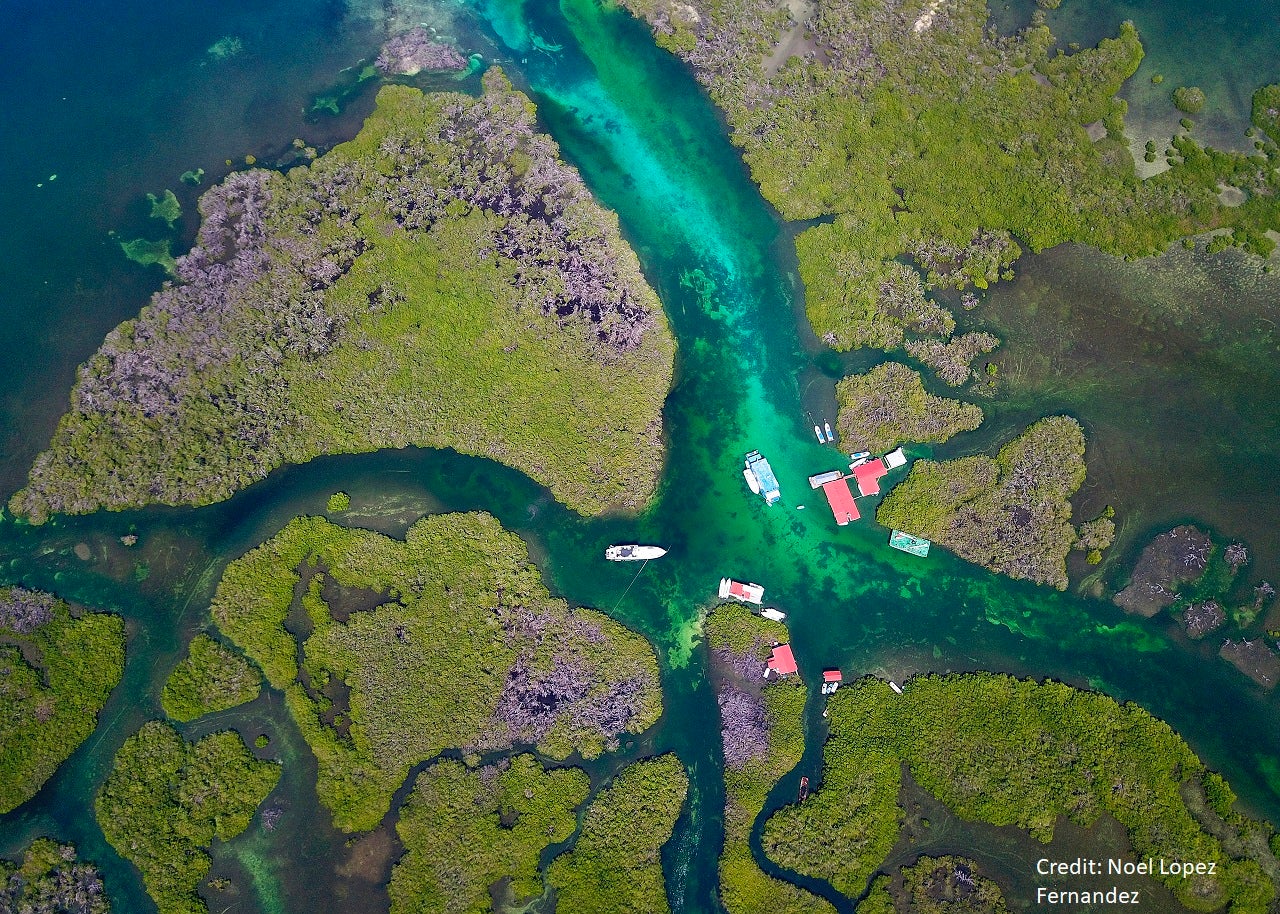
Mangroves in the Gardens of the Queen National Park provide important fish habitat.

Mangroves in the Gardens of the Queen National Park provide important fish habitat.

Congratulations to my friends at the Cuban Center for Coastal Ecosystem Research in Cayo Coco, Cuba.  On November 28, the Center celebrated its 2oth anniversary –20 years of conducting critical research on Cuba’s rich and diverse coastal ecosystems.  Last month, the Center’s founder Celso Pazos Alberdi, and director Adán Zuñiga Rios, invited me and several colleagues to visit the Center to get a first-hand look at what they do.

The Center, which is housed in the Ministry of Science, Technology, and Environment, provides much of the science that policy makers and managers use to develop environmental policies and programs for coastal areas.  Their work is also aimed at ensuring that tourism and other economic development in coastal areas is environmentally sustainable. That’s no small task.

With over 3,000 miles of coastline—and more than 4,000 islets and keys– Cuba is the largest island in the Caribbean and is unmatched in biodiversity.  Mangrove swamps, sea grass beds, and coral reefs provide breeding, nursery and feeding grounds for many commercial fish species and also for endangered migratory species like marine sea turtles, sharks and manatees.  Cuba’s coastal areas are also home to some of its most important economic sectors—tourism, fisheries, and energy development. Read More »

Posted in Uncategorized | Also tagged , , | Comments closed

Powerful Changes Underway in the Pacific Groundfish Fishery

On November 28th, the New York Times published an article about some of the powerful  changes underway in the Pacific groundfish fishery.

With the first year of that fishery's new catch share program coming to a close in January, early results are impressive: wasted bycatch has dropped from approximately 20 percent of overall catch to an astonishing one percent, and fishermen are fundamentally changing how, when and where they fish.

The West Coast catch share program holds fishermen individually accountable to an annual quota for each species and requires them to stop fishing when they reach their limits. This new accountability is driving an innovation boom in the fishery. Fishermen are developing entirely new approaches to avoiding over-fished species, while catching their more plentiful target stocks.

One example of such innovation is the "risk pool" approach mentioned in the New York Times article, which was developed on the West Coast by fishermen working closely with the Environmental Defense Fund and The Nature Conservancy. In risk pool arrangements a group of fishermen agree to put their over-fished species quota into a common pool based on an understanding that they will have access to the quota pool to cover any unexpected catch of those species. To ensure the group stays within its overall allotment, participating fishermen establish where, when and how they will fish in order to avoid over-fished stocks. This kind of cooperation is almost unheard of in non-catch share fisheries where competition – not communication – is the rule. Read More »

Posted in Catch Shares, Pacific | Also tagged , , , | Comments closed