








‘Finding the Ways that Work’ in California Fisheries
Posted: in Pacific
Written By

Share
By Guest Blogger, Huff McGonigal, fisheries consultant to EDF and the lead on our California fisheries projects with the spiny lobster fishery.
For the last 10 years, California has been working to create one of the most extensive networks of Marine Protected Areas (MPAs) in the world. When it’s complete later this year, this network will help protect California marine ecosystem for generations to come. But while MPAs will form a cornerstone for marine management in the state, simply closing these areas to fishing will not ensure sustainable fisheries off California. Healthy fisheries, and the communities and jobs that depend on them, require that focus now be shifted to effective management of the 84% of state waters that remain outside the MPA network.
The challenge in California, as in many states, is the persistent lack of agency resources available to move fisheries management forward in a meaningful way. This is exacerbated by a progressive law in California called the Marine Life Management Act that requires that fisheries be managed under Fishery Management Plans (FMPs). While the law’s concept of holistic management is a good one, the expense of creating these plans has largely kept them from being developed and management regimes have therefore remained stuck.
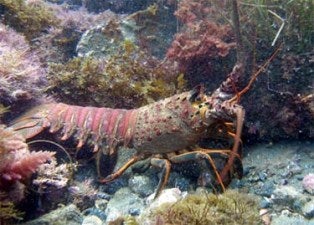
In 2008 EDF was approached by leaders of the spiny lobster fishery who were seeking to better control their fishing effort in order to maintain the fishery’s sustainability and economic viability. There was concern in the fishery that every year there was increasing pressure for fishermen to use more and more traps in order to compete for lobster and for fishing grounds. Further, as fishing grounds are lost to MPAs, fishing will be squeezed into an even smaller area, making these problems more acute. However, the requirement that change be carried out through a FMP presented a major obstacle. The state’s budget problems were worse than ever and the traditional approach, where the Department of Fish and Game (DFG) develops the FMP internally, was not possible. DFG and the fishery both agreed to try a new approach where DFG retained oversight of the process but where the majority of development would be carried out by contracted, outside expertise. EDF worked hand in hand with industry, DFG, and other partners to develop a budget and a broadly supported grant proposal to the Ocean Protection Council to secure the funding necessary to make this new model a reality.
After an extensive peer review, the Ocean Protection Council funded the full request amount of $990,000. In doing so it formally opened a new avenue for new fisheries management tools and approaches in California. Not only will this allow the lobster fishery to adjust to the new MPA network, but it represents a scalable model where national and international expertise can be directly engaged in FMP development and for a third of the cost of traditional FMPs.
There is now a pathway in California for coupling and integrating the MPA network with thoughtful, strategic management of fisheries – where closed areas are complemented by well managed open areas, and vice versa. To do this successfully will establish California as a true leader in ocean governance, and in the end, this is what it will take to ensure a healthy ecosystem, sustainable fisheries, and strong fishing communities.